
A facet of American cinema that is getting increasing irritating is the pop psychology and bland ‘weirdness’ of dream and fantasy sequences. From the films of David Lynch to Richard Kelly’s Donnie Darko, to the recent Kaboom by Gregg Araki and Philip Ridley’s Heartless, there is an ubiquity of one particular facial expression: bemusement.
David Lynch is the film director who arguably pioneered the cinema of meaningless ambiguity in which things are ambiguous, but not for any apparent reason beyond the need for films that are reasonless. To his credit, Lynch did make a highly promising debut with Eraserhead, a haunting mood piece that did not make sense in a traditional way. It is now largely understood as a film that deals with Lynch’s own fear of childbirth and the responsibilities that come with it. Similarly Blue Velvet is about the evil under the surface of quaint American suburbia and the evil that lurks in the subconscious of all of us.
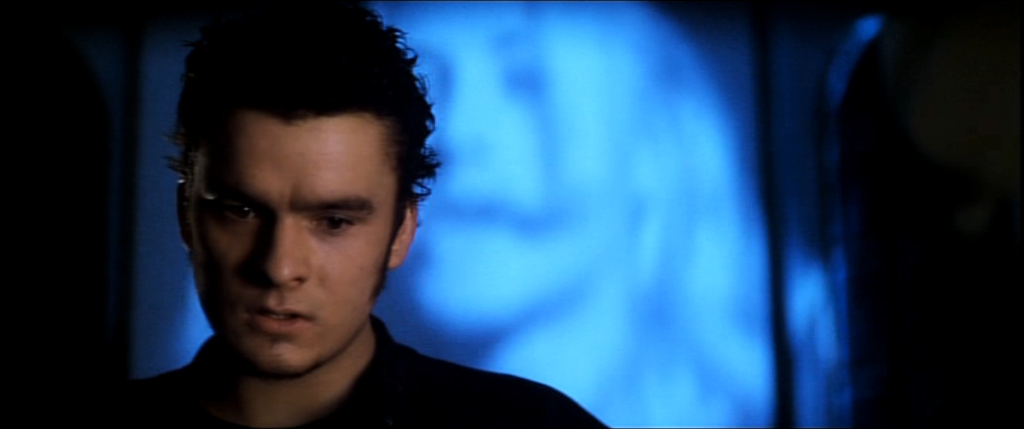
Since, however, Lynch has taken to making films that make little sense, ones that he himself has admitted to not understanding himself. Lost Highway is a film that looks at the transience of identity, spinning an initially wish fulfilling yarn about a man’s ability to turn into someone else to escape crushing quilt. However, despite its admittedly intriguing concept, most of the film’s running time is spent with Bill Pullman wandering endlessly around dark corridors with a bemused expression. It is a film that becomes a meaningless ode to style as Pullman wanders through a variety of settings while the camera pans around showing us the weird lighting and the outdated furniture. Lost Highway, like Mulholland Dr. and the crushingly long Inland Empire, is a film that shuns conceptual depth and meaning for a shallow showcase of moody lighting and scoring. Characters become ciphers and things happen to them, though not for any reason (logical or illogical), but merely so Lynch can have another scene in which something weird happens. Then he wheels in an actor with the bemused facial expression.


Worse was Gregg Araki’s excessively and falsely hip Kaboom, a film that revels in its own meaninglessness. As a result, we are treated to bits of Lynchian gothic horror and droning music and people running around in animal masks (a feature of Donnie Darko that didn’t mean anything and has since resurfaced in Kaboom and Philip Ridley’s Heartless). The film bores it’s audience into submission with the sight of lead actor Thomas Dekker walking down a corridor with a bemused expression on his face, discovering all kinds of ‘weird’ things. Of course, there’s also an enigmatic woman wandering around, another irritating trope in these films. The film is a gleeful expression of absolutely nothing – it has absolutely nothing to say. It thinks simply being enigmatic is enough, but it isn’t enigmatic about anything – it just is enigmatic. It jumps around, makes sense on a plot level, then it ends. And in the end, there is very little reason for having seen it.

Heartless is a similar case. It is about something on a thematic level – initially at least - but it quickly tires of themes and becomes a collection of scenes, all ripped off from Lynch and Kelly. It’s dark and it’s moody and Jim Sturgess walks around with a hood over his head because that’s what Donnie Darko does. Eventually, the film becomes merely a collection of extended scenes of Sturgess walking in and out of eerie settings with flickering lamps and ‘weird’ noises, pulling the most irritating facial expression in cinema history – bemusement.
But why is this facial expression so irritating? It is simply because it sums up the sensibility behind the making of films like those above. Their sole purpose is the manufacture of cult oddities that have nothing to say and in which a ‘trippy’ tone is more important than coherence. They are not avant-garde because avant-garde had a point to make – Buñuel’s Un Chien Andalou (which Dekker watches in Kaboom because Araki has pretensions beyond his capabilities) and L’Age D’Or were political and social critiques as well as a valorisation of love in its purest form. From their beginnings to their endings, these films showed clear authorial intention with the latter beginning as a documentary on scorpions and ending with a scorpion-like “Jesus as the Marquis de Sade” sting on the tail. To show and create bemusement has become the key reason these films above are made, not in order to fool people into thinking that ‘strange’ or ‘confusing’ is equitable with ‘profound’ but merely to get someone to say ‘cool.’ Ultimately, Donnie Darko is the worst offender as it withholds information from its audience, making them work out the film’s convoluted plot for themselves for absolutely no reason. To show and create bemusement remains the film’s sole purpose and effect. It doesn’t fit into any boxes, but it doesn’t mean anything either. It is as shallow as the worst Hollywood blockbuster and it is MTV filmmaking at its very worst.

