I find it very hard to care about the Oscars. And it isn’t
particularly because they make bad decisions (they do, more often than not) or
because they are so highly considered (they are, but just why is never clear).
It is because they are unavoidable.
Level-headed film critics (few of
those) always write and talk about the Oscars when they are closing in, always
predicting that this film and this performance will make the nominations or get
the award. Most reviews end up sounding the same, with a typical review of,
say, 12 Years A Slave merely ending up a list of the Oscars that the
critic thinks it will win. Lupita Nyong’o and Chiwetel Ejiofor are not so much
acting as preparing acceptance speeches. And why not since the film is so
geared to the Oscars with its For Your Consideration trailer of the people in
the film that you might want to remember later to the long scenes of
Oscar-friendly clips - Chiwetel Ejiofor talking about freedom and hope and
Michael Fassbender going all method as a drunken lout, who is really only
falling over and shouting.
Meanwhile, Lupita Nyong’o, who
delivers a performance of some power and depth, is written about only as a
newcomer who is sure to hit it off with the Academy, as if it wasn’t a
performance in a film at all, but a carefully calculated career move – see also
Anne Hathaway in Les Miserables. The same went for Barkhad Abdi’s
performance in Captain Phillips, which had everyone writing about
Oscars. And, to tell the truth, having seen both films before the hype really
started to get moving, neither performance was particularly good. And certainly
not the Top 5 in their category for the year, although Best Supporting Actress
has had a fairly limited field in recent years.
It all reeks of a certain degree
of stage-managing. Having recently read ‘Manufacturing Consent’ by Noam Chomsky
and Edward S. Herman, it is hard not to get a sense that some publicist
somewhere wrote that Lupita Nyong’o and Barkhad Abdi (and 12 Years A Slave,
Michael Fassbender, Leonardo DiCaprio, Jonah Hill, Cate Blanchett and Sally
Hawkins to name a few others) were deserving of Oscar attention. The first
critics, with little to go on but the film’s press materials and their own
opinions, which seem to be valued less and less in critics these days, end up rewriting what the publicists say, creating word-of-mouth
about the very performances handpicked by the publicists and elevating them to
the kind of attention that gets them the nominations. And the Academy takes
note because they’ve made bad decisions in the past that has hurt their
reputation and are constantly under scrutiny to pick a winner. Suddenly an
average-to-good performance becomes exalted and it is impossible to watch the
film without some awareness that the thing to look out for is Lupita Nyong’o,
Barkhad Abdi, Michael Fassbender, Leonardo DiCaprio, Jonah Hill, Cate Blanchett
or Sally Hawkins. Which means that the Oscars become predictable at a stage in
the year when everything should be absolutely up in the air. Meanwhile, something
like 12 Years A Slave (decent, not great) becomes ‘one of the greatest
films ever made’ and a must-see, promoted blindly by critics trying to get in on the hype before there even is a hype, and destined to slowly but surely fall from grace
until it becomes known as just another bad Oscar decision. Which, I believe, is
detrimental to the film and unfair as well as being a total waste of time.
This is how some films can be
elevated way beyond their station – for instance, Driving Miss Daisy over
Do The Right Thing. One is a simplistic drama about race that hides some
sort of message of tolerance in the presumably much more palatable tale of a rude old
woman while the other is complex, controversial, realistic and left unresolved
like the issues it addresses. Now, Do The Right Thing probably didn’t
have the publicists that something like Driving Miss Daisy would have
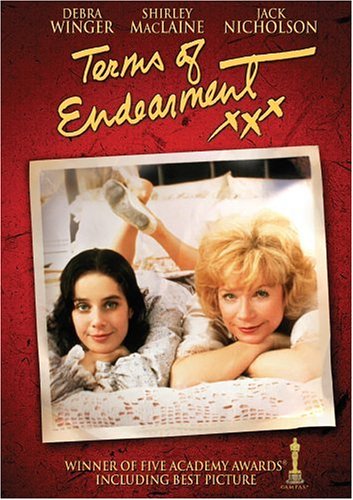
had. And it wasn’t such an easy sell to the Academy that liked Terms of
Endearment (the ultimate “give me an Oscar” film) and Out of Africa (Meryl
Streep’s most cumbersome accent) only a few years before. It was also a much
more complete work – in other words, it couldn’t be broken down into that performance
and that clip. Plus, it was stylistically experimental, which never
helps. In other words, a film’s quality is second to whether or not that film
can be easily marketed and endorsed as Oscar material.
Other big publicist moments
include getting Martin Scorsese an Oscar (for The Departed but not for Who’s
That Knocking On My Door, Mean Streets, Alice Doesn’t Live Here
Anymore, Taxi Driver, Raging Bull, King of Comedy or Goodfellas)
and awarding The Lord of the Rings: The Return of the King with thirteen
Oscars, not for the film but for the entire trilogy. Bruce Dern has finally got the recognition he deserved - as if only the Oscars can make a worthwhile tribute. The publicist can, hence,
create a controversy around the Oscars, create a sense of a wound that needs to
be dressed. Ever since Crash won over Brokeback Mountain, the
Academy has intentionally sought out the less obvious choice, the more
adventurous choice, in an effort not to make the same mistake again, picking The
Departed, No Country For Old Men and Slumdog Millionaire over
more traditional winners like The Queen, Atonement and The
Reader. But it isn’t so much that these choices are better or worse, it is
that they were wanted. There was a public pressure to give the Oscar to
something less obvious. And it was the publicists that created it from
absolutely nothing.
Public pressure created from
nothing? Think about the Oscar mistakes as independently and truthfully as you
can and then ask yourself whether you really care. Do you really care about Ordinary
People beating Raging Bull? Dances With Wolves over Goodfellas?
The English Patient over Fargo or Secrets & Lies? Shakespeare
in Love over Saving Private Ryan? Crash over Brokeback
Mountain? The loser in each case is almost invariably the more loved and
the better seen. And also, crucially, the more influential, the Oscar loss
never diminishing that film’s acclaim. Ultimately, in terms of film history,
the Oscars mean absolutely nothing. Hazarding a guess, more people have seen Duck
Soup or King Kong (neither even nominated) but not Cavalcade (which
won that year). Out of Africa or Back to the Future. In short,
the Oscars are insignificant and have pretty consistently failed to provide an
accurate, or even worthwhile, insight into film history as it happens. Who
really thinks Argo is the best film of 2012? Really? Deep down. So
insignificant are the Oscars that it is the publicists who work to convince you
that they matter – otherwise why promote their films to the Academy at all.
They make up controversies where there weren’t any, because most people
couldn’t care less.
This is not to propose that the
Oscars should be scrapped, since the film industry has so few ceremonies that
celebrate cinema. But, instead of wasting so much time trying to second guess
the Oscars and repeating opinions endorsed by film publicists, wouldn’t it be
more worthwhile to think about each film as a finished product and not a horse
that has still got a race to run? To debate the merits of a film as a piece of
art or entertainment or as the latest innovation without trying to give your
arguments some kind of misjudged credence by writing about its awards chances. When,
apart from during the Oscars, does anyone let a group of people you don’t know
pick nine or ten American or British films at random for them to get excited
about?
According to the Academy, the
cream of US/UK cinema is 12 Year A Slave, American Hustle, Captain Phillips, Dallas Buyer’s Club, Gravity, Her, Nebraska,
Philomena and The Wolf of Wall Street. None of these films are
bad (I haven’t yet seen American Hustle, Her and Philomena)
and there are at least two great ones, but it isn’t a particularly diverse or
interesting list. It would suggest that cinema is healthy but fairly stagnant.
These nine films are the fruits of the labour of the publicists, who managed to
promote these nine films over edgier, more difficult, more interesting films.
The Oscar choices ultimately ignore much more than they reward and they limit
cinema to what is most easily marketed.
So ignore them and stop writing about them.


