Showing posts with label top 10. Show all posts

Tuesday, 5 January 2016

ARTICLE: The Top 10 Films of 2015


Another new year and another list of best films. Unlike last year, in which I felt that there were not enough films good enough to make up a top ten, 2015 has enough films for a decent list. But first the ones that missed out.

Blackhat was a well-made thriller with a serious intensity that made it feel like it mattered. The same went for horror films with It Follows. For throwaway comedies, Shaun The Sheep Movie and Mistress America were both surprisingly enjoyable. Force Majeure was a rather cruel film, but its glee at some very human failings was infectious. Equally, Brooklyn was a sober and well-presented drama, as was Miss Julie, albeit less successfully. And 2015 was not missing a true, and difficult, art film to challenge how we watch films and respond to them thanks to Lav Diaz’s From What Is Before.


10. West was another excellent drama just slipping in ahead of Brooklyn, another film about immigration. It is also anchored by a great central performance from Jӧrdis Triebel and an authentic and interesting outsider view of our history and ourselves.

9. Another excellent drama was Far From The Madding Crowd, a more feminist reimaging of the Hardy novel and the Schlesinger film. I have since seen the older and much-loved film (but still not read the book) and while Thomas Vinterberg’s version is missing some of the grit of the original, it has a greater feeling of sincerity and respect for the characters, as well as pace. Mulligan, Schoenaerts and Sheen all shine with thoroughly believable and likeable characters.

8. Almost despite myself, I thoroughly enjoyed Bridge of Spies thanks largely to Spielberg’s direction, Hanks’ performance and the classical storytelling – looking now at this, Far From The Madding Crowd and Brooklyn, it seems a good year for old-fashioned filmmaking. The film gets nearly unbearably tacky in its final moments, but it is great way to spend two hours in the hands of a filmmaker and star who know exactly what they are doing.

7. Less classical was The Tribe, which was another film to challenge how we watch and understand films and how we identify with disability in cinema. The film is a nasty, harrowing crime film and is unrelentingly bleak, but it is as riveting and new as it is shocking.

6. Whiplash was another great drama, though less because of the performances, though both Miles Teller and J. K. Simmons do fine work. This is a film intended to be taken in one sitting and it has a forward momentum unlike any other film this year, making everything else look sluggish. It is the fastest film of the year and one in which the direction and editing and sound are fantastic.

5. Glassland was another powerful drama, but one that seeks to unsettle where others may tend towards quiet enjoyment. The film challenges our concepts of alcoholism, saintliness, self-sacrifice and the modern day capitalist Ireland. Though a great critique, it is also a powerful drama with even more fantastic performances (a good year from performances too) – this time from Jack Reynor and Toni Collette. It promises that Gerard Barrett will be one of our most serious and committed filmmakers.


4. Like the other two documentaries in the top 4 (a great year for documentaries), Sean McAllister’s A Syrian Love Story matches the importance of its subject matter with the humanism in its approach. A Syrian Love Story is an important film about Syria today, but it is also an involving story about how revolution, imprisonment and exile can effect a family. The documentary intercedes in a cruel story that is too often represented in dehumanised terms and should work as a corrective to any other narrative about Syria.

3. Equally The Look of Silence, which challenges the status quo in modern day Indonesia by excavating some hidden truths about the country’s past and making the perpetrators face up to them, is as much about the human victims left along the way. It is a film of very real risk and daring, but it makes the case for the proper care of the victims of a government still largely in control and still scaring its citizens into silence.


2. Dreamcatcher is another documentary that defies the common narrative, this time about sex work and the economic and emotional challenges that throw people into it. By focusing on a grassroots movement, the Dreamcatcher Foundation, the film gives a voice to victims and, again, acts as a powerful corrective. Dreamcatcher, like A Syrian Love Story and The Look of Silence, achieve so much because they make their points underneath the real stories of real victims and they approach these victims with the respect and compassion that they deserve. All three are about the power and importance of resistance – and all three might actually make a difference.

1. Sometimes, however, a fiction film can capture the desperation and horror of a situation in such a way that it leaves its mark just as well as any factual telling might. It seems slightly disrespectful to place Timbuktu ahead of such important documentaries, but I still cannot forget the final few seconds.


Tuesday, 6 January 2015

ARTICLE: The Best Films of 2014


It hasn’t been a particularly good year for cinema, though there are six genuinely great films (two or three even innovative) and at least one very funny comedy. Infer pessimism or optimism for the state of cinema if you wish, but it isn’t a particularly good sign if there are not enough films great enough to make up a Top 10. Although, looking back over previous Top 10’s, it may simply be a case of a tightening of standards. Either way, most Top 10’s look foolish after a few years anyway so why not this Top 6.

6. Only Lovers Left Alive. Good, fun, optimistic cinema. Jarmusch pokes fun at the idea that living forever would be a depressing and boring experience and fills his frame with everything he thinks makes living an endlessly surprising, exciting and enjoyable experience.

5. Two Days, One Night is a moving and quiet drama about a woman trying to overcome her depressive tendencies in order to fight to keep her job. It is a slight film – probably too slight for many viewers – but this kind of emotional journey into the everyday is becoming more and more important. The ending is one of complex emotions – triumph, failure, empowerment and the awareness of more struggles to come – and the film is refreshingly direct and small, but never simplistic or meaningless.

4. Starred Up has been sold as a bruising, laddish prison film full of vicious violence but it is so much better than that. The performances are so uniformly excellent that it would feel only insulting to single out Jack O’Connell, brilliant as he is. It is a film of explosive anger in tiny rooms and it makes for riveting, disturbing viewing but it is the vision of officialdom ignoring people who need the most help that packs a valuable political punch.

3. It feels rather cynical to put such an outrageous and overblown film in front of two films that are so important and realistic, but The Wolf of Wall Street is the ultimate outrage film. If you hate Di Caprio’s Belfort after the first ten seconds, half the fun is watching him plumbing more and more depths. Taking such delight in such hatred may seem unhelpful, but Scorsese has attempted to show the mentality that threw us all into economical turmoil and he doesn’t pull any punches – particularly with a triumphant, emotional concluding speech that dares you to be roused. Cynical, nasty but daring, angry and, yes, important.

2. By contrast, Nymphomaniac has nothing particularly of value to say about politics or the world, but it was one of the most enjoyably cinematic films of the year, and probably the one that will diminish the most in the cold light of television. It is provocative and risky as you would expect, and no matter who you are, there will be something in it that stumps you and forces you to think – even if it is something about an emperor and his new wardrobe (for me it was the use of Rammstein in the first five minutes). It is thoroughly entertaining and challenging, bursting with ideas and invention and not giving a damn if you and your prejudices get left behind. As confident as unsparing as Godard at his best.

1. Equally innovative though much more likable and emotionally resonant was Richard Linklater’s immensely likable and incredibly (considering the production) laidback Boyhood. Made with so much assurance, nothing seems to happen in the film and yet the film is so full of recognizable and relatable moments of drama that it seems packed. Watching it it can be difficult to think of another film that has so much of life in it and yet feels so simple and effortless. Powerful, emotional and brilliant.

Other films that I liked this year include Fruitvale Station, In Bloom, 71, the actually very funny 22 Jump Street and The Homesman. There were a lot of films that were less successful but remain worth mentioning, so I will – The Past, Camille Claudel 1915, Keeping Rosy, Here Be Dragons, Stranger By The Lake, Norte, The End of History, Dallas Buyer’s Club, Oxi: An Act of Resistance and, yes, Rob The Mob.


Wednesday, 1 January 2014

ARTICLE: The Best Films of 2013


The top four films of the year are all from the USA, which ought to be a disgrace, but there are just that good.

11. Museum Hours was an endlessly fascinating wander through the unknown avenues of art and cinema, being a fictional narrative, a documentary, a city symphony, an essay film, an art lecture and a rumination about how life effects art and vice versa. It encourages its viewers to look at the world differently and has a highly egalitarian view of what constitutes art. As a result, it is fascinating, unpretentious and, in some small way, inspiring.

10. Reality starts badly, appearing to mock its celebrity obsessed characters until, following one odd gear change after another, you realize that, despite yourself, you are rooting for them to succeed. With a great ending to finish it all off, it ends up being a funny, moving, unexpectedly profound film about our culture and ourselves.

9. The Place Beyond The Pines is a story of generational conflict, pain that lasts longer than memories and the passage of time. It is powerfully moving and surprisingly simple. Derek Cianfrance adds immensely to his portfolio, while retaining the Cassavetes-inflected style that made Blue Valentine works so well. Brilliantly made, it is a film of ambition that actually manages to succeed on its own terms.

8. Like Someone in Love is another film that plays around with identity and story from Abbas Kiarostami but here, unlike the stilted and clinical Certified Copy, he is also having fun. The themes are given centre stage to such an extent that it becomes a little one-note, but Kiarostami is always able to add a new situation or a new idea to add further interest and complexity. Alongside No. 5, it uses ambiguity better than any film this year.

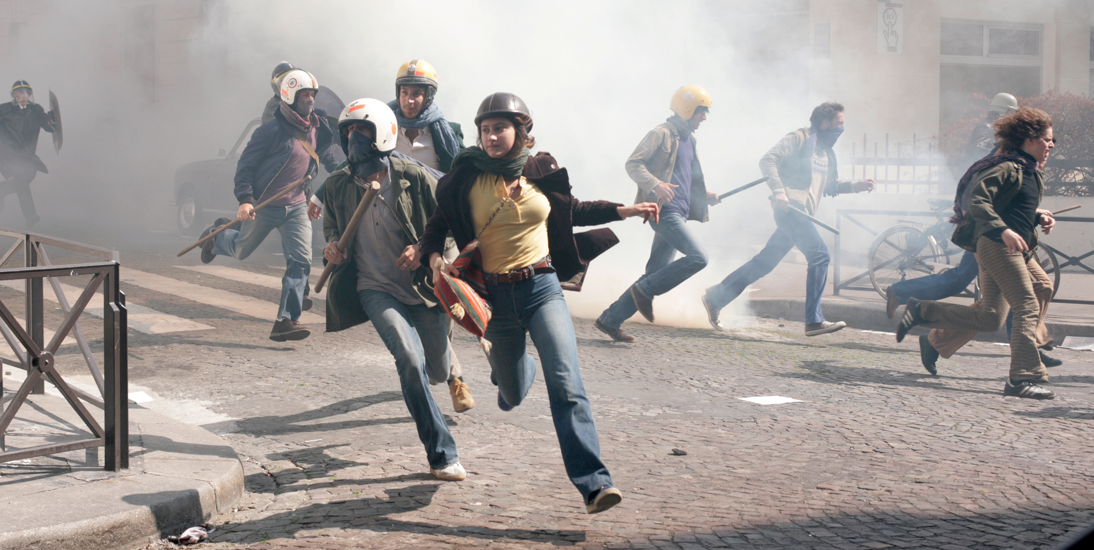
7. Something In The Air may subtly criticise the ethics of the revolutionary young, but it is primarily a work of nostalgia, one that is all the sadder because the traces of that intellectual antiauthoritarianism are becoming more and more distant. Nonetheless, it is a lot of fun, particularly if you are interested in 1960s-70s French cinema and the politics behind much of it, and very well made.

6. Gloria. An uplifting film about a middle-aged woman in search of love, which is never ironic or patronising. Paulina Garcia is brilliant in the central role and Sebastián Lelio directs with a compassionate camera that seeks and finds wonderful moments of humanity, romance and humour.

5. Beyond The Hills is a brilliant investigation of the power of faith on the individual and on the group. Based on a real case, but far from accusing or exploitative, it examines the power of religion by refusing to tell the audience whether the possession and subsequent exorcism that led to murder is real or merely acts of hysteria. It is brilliantly shot, well paced and proof that visual and editing tricks are not necessary to sustain interest. The performances in particular make it such a powerful film.

4. The same goes for Captain Phillips, which is either simply military porn or an uncomfortable display of America’s military power all the world over depending on who you ask (for me it’s the latter), but it is without a doubt a powerful, haunting examination of humans under pressure. On the boat and off it, the film displays an admirable sense of fair play, showing the toll taken on both the hijackers and hostages. The end, far from bombastic, is powerfully sad and the best work that Tom Hanks, and Paul Greengrass, have ever done.

3. To The Wonder is another beautiful film by Terrence Malick, which defies anyone to write about it. It is, at the end of the day, a film that has to be seen to be fully appreciated and no writing about the film’s themes (matching the failure of love in a relationship with the failure of faith in a priest) or imagery (finding the infinite in a shot of sunlight on a fence) is going to prove otherwise. It is possibly the truest film of the year – i.e. the film least likely to be adapted effectively into another medium. Pure cinema.

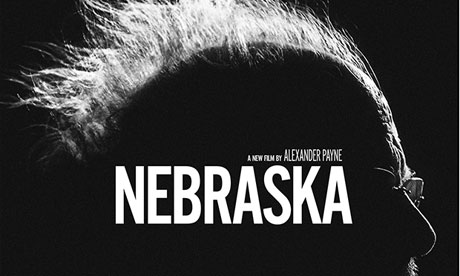
2. Alexander Payne would most likely always earn a place on these lists as long as he keeps making films. Nebraska is a lovely, pleasing little film that is all the more effective because so few filmmakers bother making films about people anymore – though this year seems to be a good year for that. This film (and Nos. 1,4,5,6,9 and 10) is ultimately about people and is, hence, about our lives, our families and our friends. While films with more of an agenda may be more worthy of praise (a decision I made in 2012 with The Descendants and This Is Not A Film), films like Nebraska are more than important, they are necessary.

1.  Before Midnight is the best film of the year and it may even be the simplest. With this series, Richard Linklater, Ethan Hawke and Julie Delpy have created two characters that are so believable and so likeable that we can simply just watch them. Without the romantic genre trappings or the ever-approaching deadline of the first two films, Before Midnight is the most realistic and the most melancholy. However, it is also incredibly respectful and moving, allowing any character to have their moment – Xenia Kalogeropoulou does more with one monologue than many actors do with entire films. It is a film in which the characters live and breathe, think and talk, have pasts and hopefully futures.


Also-rans include:

As I refer to above, some films are worth mentioning for their importance, even if they are less successful as films in themselves. In that case, special mention goes to The Act of Killing and Dirty Wars


Sunday, 13 January 2013

ARTICLE: The Top 10 of 2012


Films that were good but missed the Top 10 include:


Young Adult - in which director Jason Reitman and writer Diablo Cody return after less successful solo projects to deliver a surprisingly funny, sad and angry piece of genre criticisl that was worthy precisely becuase it was adult. Another good indie comedy was Whit Stillman’s Damsels In Distress, worthwhile for its sense of humour and its almost total incongruity – and the fact that it has an appendix. Whimsical, funny and entirely enjoyable would also described To Rome With Love, not one of Woody Allen’s best but a nice, cheery film nonetheless.
 
A Dangerous Method was a fascinating talking piece full of interesting ideas, performances and techniques. That it may not even be the best Cronenberg film of the year goes to show how great this filmmaker remains. This description also works for Cosmopolis with the addition of the powerful performance from Paul Giamatti. Both are riveting cinema.

The Woman In Black is messy and unoriginal, but it was fun to watch with an audience that didn’t see it all coming. Similarly The Best Exotic Marigold Hotel is nowhere near good enough, but it was likable. And 21 Jump Street gets a mention for being surprisingly funny.

Rampart is like some of James Ellroy’s best recent fiction – morally complex and full of incident but awkwardly repetitive and a little too long. Woody Harrelson gives what must surely be one of the best dirty cop performances in cinema. Less complex, but incredibly dark and funny was William Friedkin’s Killer Joe, which was equally fun and offensive, and an incendiary, challenging film. Looper was intriguing and full of ideas, though less successful in hindsight – worth a mention because it beats out all the other dumb, male-centric action blockbusters and contains a critique of their conceptions of moral violence.

Room 237 was a thoroughly enjoyable trip into the labyrinth that is Stanley Kubrick’s The Shining. A group of ardent fans spin their interpretations about what the film is saying - some enlightening, some nonsense but all revealing the joy of film watching and film discussion.

10. Five Broken Cameras was a powerful portrait of a peaceful struggle against oppression and some much needed insight into a people who are too easily presented in the West as terrorists. Like the writings of Edward W. Said, it is convincing precisely because of the moral and humanist force of its argument.

9. Rust and Bone is a film with too much at stake and too many dramatic devices on show, and yet it manages to be entirely convincing and often very moving for the majority of its running time, mainly thanks to Cotillard and Schoenaerts. Audiard continues to show an ability to reinvigorate pap into powerful and realistic cinema.

8. Breaking Dawn – Part Two. It was not the best of the series but it was a very good closer, one that remained thoroughly enjoyable despite some rough patches. It deserved its money for being a blockbuster that focuses on emotions and characters rather than on CGI and battles and for being one of the few films released to focus on strong females and to aim at a female audience.

7. The Turin Horse is apparently the swansong of Béla Tarr and is possibly even more powerfully apocalyptic than von Trier’s Melancholia, precisely because its focus is so much more intimate and, hence, so much more devastating. It says a lot about mankind, that, for all our progress, we still depend on a few simple things that we cannot control. A powerful visual and emotional work that is also intellectually satisfying as only the best of arthouse cinema can be.

6. The Master was fascinating simply because it was so open to interpretation and yet many of its successes are simply down to talent. Phoenix and Hoffman are both great and the writing and direction is focussed and evocative. A lot of the joy of The Master is in seeing a collection of talented artists doing a very good job.

5. The Angels’ Share is the funniest film on the list but it might also be the most politically important in the current climate of cuts and the demonization of those on welfare. Loach continues to bring the concerns of those too often ignored to the foreground and, though he is in a lighter mood than normal, his message and his anger have not been blunted.

4. Martha Marcy May Marlene is a well-made thriller with a lot of interesting ideas about society and indoctrination and some techniques that recall the best of the French New Wave. Sean Durkin proves himself to be one to watch and is already one of the most interesting of a new generation of American filmmakers.

3. What Richard Did is another film that leaves a lot up to the audience and it is specific yet general enough to point to a lot more issues than its plot would seem to accommodate. At once simple yet complex, it features a powerful performance from Jack Reynor and an evocative subtlety of technique and purpose from director Lenny Abrahamson. One of the few films of the year in which the camera is placed precisely where it needs to be for exactly as long as it should be.

2. The Descendants. Alexander Payne has become a skilled director of comedy-dramas in which the emotions and the laughs are not at each other’s throats but instead pleasantly co-exist. The Descendants is his most human film and his least distanced and critical. It is very funny but also very moving – ultimately, it is an incredibly well observed and likable film.

1. This Is Not A Film. It was difficult to decide whether The Descendants or Jafar Panahi’s multi-faceted study of cinema and imprisonment should get the top spot, but I opted for This Is Not A Film because it is the more important and innovative. In a very short running time, Panahi questions the power of cinema, whether political or otherwise, and the need for a filmmaker to make films. Defying categories, it is also a documentary about Panahi’s house arrest, an essay film about his ideas about what cinema, and art in general, fundamentally is and a powerful act of defiance.

UPDATE: The Hunt, Thomas Vinterberg's fantastic and powerful companion piece to Festen should be placed at No. 3.
See also: The Top 10 of 2011

Sunday, 15 January 2012

ARTICLE: Top 10 of 2011

  2011 saw a lot of stinkers and was a rather slow starter, but it saw a lot of good ones, on which to dust off some superlatives. Here are a few that didn’t make the list:
  The King’s Speech was a great film about the relationship of a future King and his speech therapist, which works as a great comedy-drama and has some great performances. Matt Damon had a fantastic double-hitter with the surprisingly moving and insightful Hereafter and the ideas-driven, very clever and also emotionally charged The Adjustment Bureau. Wasteland was a rather entertaining documentary about turning rubbish into art, which managed to be entertaining as well as an informative polemic about the waste that we produce. Ken Loach took a change of pace with an unlikeable character in the flawed but still engrossing and angry Route Irish. Animal Kingdom was an exciting and surprising crime film that worked as both a thriller and a slower paced study of menace and corruption. Werner Herzog’s documentary Cave of Forgotten Dreams wasn’t the masterpiece that Grizzly Man was but it still proved to be full of his strange sense of humour and infectious in its awe and reverence. How I Ended This Summer was a brilliant little parable about miscommunication set in the Arctic Ocean that was exciting, beautiful and ultimately tragic. Source Code was a clever thriller with a lot of ideas behind it and a Hollywood blockbuster that wasn’t about the special effects. Rare as that may be, Super 8, a monster movie that had the temerity to be about people and not about big aliens, soon followed it. Palme D’Or winner The Tree of Life divided people and was only initially successful, but remains a film full of risk, sincerity and beauty. The Guard and Wake Wood proved to be very successful films that prove that the Irish film industry is maturing, delivering, respectfully, a comedy that is actually funny and a horror film that was actually scary. The Ides of March is almost comically cynical but remains a worthy reminder that politics and film can still be a riveting combination. Wuthering Heights was an atmospheric and arty rendering of the much-filmed novel that managed to be entirely original and exciting cinema. We Have A Pope, apart from a few difficult tonal shifts, proved to be a funny and zany look at the inner workings of the Vatican.

  10. The Deep Blue Sea. Terence Davies’ return to narrative cinema was a brilliantly shot film with a beautifully poetic, mostly silent opener where a rising camera matches a crescendo in some beautiful classical music. However, what really holds the interest are the performances with Rachel Weisz delivering what is most likely her best performance, and Simon Russell Beale giving a tear-inducing study of a proud but heart-broken man. A melancholy classic.
                                                
  9. Midnight in Paris. Woody Allen has been getting a lot of flak, mostly undeservingly. Yet another comeback, Midnight in Paris is a lovely little movie with a nice idea played straight and engagingly as well as being full of some great gags. The kind of film that has you leaving the cinema with a big, goofy smile on your face.
               
  8. 13 Assassins. A thrilling action film that also manages to be a disturbing horror film and a rather funny buddy comedy. Along the way, there are some moving moments, during which time the film becomes an involving drama. It all leads up to a big, long final battle sequence that may be among the best ever made.

  7. Tyrannosaur. It wasn’t the best Peter Mullen film of the year, but it was a tough and sincere drama about people caught in a violent world. It is a disturbing film, but it is also an important film that has a deep faith in humanity and matches the many scenes of cruelty and abuse with scenes of genuine warmth.

  6. Melancholia. Big and loud but certainly not dumb, Lars von Trier’s film is a fascinating insight into depression as well as a merciless examination of humanity coming to terms with an inescapable extinction. It is a powerful film that is so effective it may be one of those films that you never forget.

  5. Abel. A gentle little comedy about childhood and coping with life’s more awkward twists and turns. It is a whimsical film that is completely enjoyable and one that, refreshingly, never runs out of steam – even though you would bet it will as you watch it. Full of ideas and inventions, it is a fantastic debut from Diego Luna.

  4. Il Quattro Volte. A film about life and our unbreakable links with nature, it manages to say a lot without saying anything – it is practically a silent film. Around half an hour of the film is devoted to the life of a goat and it manages to be hilarious and heartbreaking. The story and the message are told entirely through the imagery – innovative and true filmmaking.

  3. The Twilight Saga: Breaking Dawn – Part One. The best of the series so far, it is full of great performances and one that is not afraid to be completely heartfelt and sincere. Not unlike Il Quattro Volte, a lot is said without dialogue and there are many near silent sequences. Entirely convincing, almost tear-inducing, romantic and riveting, this series (name another big Hollywood blockbuster franchise that is so devoted to a young woman trying to define who she is) is deeply moving and an important reminder that you don’t need fighting robots to have a hit.

  2. A Separation. Almost joint-first, Asghar Farhadi’s masterpiece was a disturbing study of a no-win situation and a call for more communication. The plot’s intricacies are only so tragic because they are so convincingly real. Packed with great performances, it was a deeply upsetting film and a riveting drama, one that everyone should see.

  1. Neds. It has been the film of the year since it’s release in early January and nothing managed to steal its spot. Peter Mullen’s terrifying and riveting film about gang culture in 1980s Glasgow is drama at its finest and is one of those films that is close to having no false notes. Socially conscious and sincere filmmaking matched with one of the best performances of the year from unknown Conor McCarron, it is also really very funny. For once, a film in which a very real talent is not wasted.

UPDATE: Due to a re-appraisal, The Tree of Life should be at No. 1.