Showing posts with label film article. Show all posts

Thursday, 31 December 2015

ARTICLE: 2015 Round-Up


I have been a little better keeping up with this year’s films – probably thanks to seeing a lot less of them. Some I didn’t review were:

Fear Itself was an interesting documentary that charts a thematic history of horror cinema exclusively through a parade of film clips. There is a nominal plot about an insomniac who has been the victim of a traumatic experience who now finds solace in the catharsis of old horror films. Clips are often chosen to match her voiceover throughout the film, which usually fit quite well. However, it is difficult to pay attention to the wandering voiceover, as interesting as it sometimes is, when there is so many clips playing out in front of it. The clips are helpfully titled so that you don’t waste time trying to figure out the films. It is a nasty, relentless and effective montage, but it is hard not to think that little has been gained.

Listen Up Philip is another film that achieves little. At the beginning of the film, we hate Philip. In the middle of the film, we hate Philip. At the end of the film, when it finally relents, we still hate Philip. Alex Ross Perry’s script is literate alright, but it isn’t particularly human. Its target is clearly a kind of literary snobbery but, unlike Scorsese’s gleefully shameless and inventive challenges to audience identification, Listen Up Philip simply wallows in bitterness and nastiness. It ends up if not a hateful film then at least a very boring one.

Another film that bores with one idea throughout is (and I will be trying to link each film as thinly as I can) The Spongebob Movie: Sponge Out of Water. Unlike Shaun the Sheep Movie, which has as many mad ideas as good, solid jokes, Sponge Out of Water’s primary register is shrill craziness and it remains so throughout. It isn’t that it is never funny (there are a few small moments) but it is so overblown and strange that it rarely has time to make us believe in any of it – all right for a fifteen minute episode but barely survivable for ninety minutes. It doesn’t help that the few actual jokes are pretty lazy. Any good will you might have toward Spongebob will be exhausted.

Another film that might leave you incredulous and exhausted is Jean-Luc Godard’s Goodbye To Language, which defies all categorisation, all simplistic synopsising and most first impressions. The first viewing leaves you clueless, the second gives you a slight thread and in the third, you lose that thread but find another one. It is an examination about the way we think and the way we are brought up to think through language, challenging the conventions of language by some highly complex editing. It is a political film, an historical film and a modern paean to love and nature. And the main character is Roxy, a dog. Most reviews of the film, which went straight to DVD in the UK, focus on the critic’s own incomprehension, but I believe that it is a film to be studied and that each subsequent viewing reveal more. I fully intend to review it properly when I get to it in my ‘Les politiques de Godard’ series.

Last of all was the mini-series Show Me A Hero, The Wire in miniature and an excellent drama about housing, local politics, race, class and the media. The anger of its critique, the honesty of its drama, the power of the performances, the cleverness of the script, even the final shot, all make it the best thing on TV in 2015.


Tuesday, 6 January 2015

ARTICLE: The Best Films of 2014


It hasn’t been a particularly good year for cinema, though there are six genuinely great films (two or three even innovative) and at least one very funny comedy. Infer pessimism or optimism for the state of cinema if you wish, but it isn’t a particularly good sign if there are not enough films great enough to make up a Top 10. Although, looking back over previous Top 10’s, it may simply be a case of a tightening of standards. Either way, most Top 10’s look foolish after a few years anyway so why not this Top 6.

6. Only Lovers Left Alive. Good, fun, optimistic cinema. Jarmusch pokes fun at the idea that living forever would be a depressing and boring experience and fills his frame with everything he thinks makes living an endlessly surprising, exciting and enjoyable experience.

5. Two Days, One Night is a moving and quiet drama about a woman trying to overcome her depressive tendencies in order to fight to keep her job. It is a slight film – probably too slight for many viewers – but this kind of emotional journey into the everyday is becoming more and more important. The ending is one of complex emotions – triumph, failure, empowerment and the awareness of more struggles to come – and the film is refreshingly direct and small, but never simplistic or meaningless.

4. Starred Up has been sold as a bruising, laddish prison film full of vicious violence but it is so much better than that. The performances are so uniformly excellent that it would feel only insulting to single out Jack O’Connell, brilliant as he is. It is a film of explosive anger in tiny rooms and it makes for riveting, disturbing viewing but it is the vision of officialdom ignoring people who need the most help that packs a valuable political punch.

3. It feels rather cynical to put such an outrageous and overblown film in front of two films that are so important and realistic, but The Wolf of Wall Street is the ultimate outrage film. If you hate Di Caprio’s Belfort after the first ten seconds, half the fun is watching him plumbing more and more depths. Taking such delight in such hatred may seem unhelpful, but Scorsese has attempted to show the mentality that threw us all into economical turmoil and he doesn’t pull any punches – particularly with a triumphant, emotional concluding speech that dares you to be roused. Cynical, nasty but daring, angry and, yes, important.

2. By contrast, Nymphomaniac has nothing particularly of value to say about politics or the world, but it was one of the most enjoyably cinematic films of the year, and probably the one that will diminish the most in the cold light of television. It is provocative and risky as you would expect, and no matter who you are, there will be something in it that stumps you and forces you to think – even if it is something about an emperor and his new wardrobe (for me it was the use of Rammstein in the first five minutes). It is thoroughly entertaining and challenging, bursting with ideas and invention and not giving a damn if you and your prejudices get left behind. As confident as unsparing as Godard at his best.

1. Equally innovative though much more likable and emotionally resonant was Richard Linklater’s immensely likable and incredibly (considering the production) laidback Boyhood. Made with so much assurance, nothing seems to happen in the film and yet the film is so full of recognizable and relatable moments of drama that it seems packed. Watching it it can be difficult to think of another film that has so much of life in it and yet feels so simple and effortless. Powerful, emotional and brilliant.

Other films that I liked this year include Fruitvale Station, In Bloom, 71, the actually very funny 22 Jump Street and The Homesman. There were a lot of films that were less successful but remain worth mentioning, so I will – The Past, Camille Claudel 1915, Keeping Rosy, Here Be Dragons, Stranger By The Lake, Norte, The End of History, Dallas Buyer’s Club, Oxi: An Act of Resistance and, yes, Rob The Mob.


Friday, 28 February 2014

ARTICLE: The OFCS Presents: The Best of the Best Picture Oscar Winners


The OFCS (Online Film Critics Society) recently launched a poll for its members to rank the films that have won the Academy Awards for Best Picture, from 86 and 1, worst to best, in order to mark the coming Academy Awards ceremony. Having already written an article about how much of a waste of time the Academy Awards are and why they should just be ignored, it is with some feelings of hypocrisy that I now provide links to and commentary on the results of the poll.


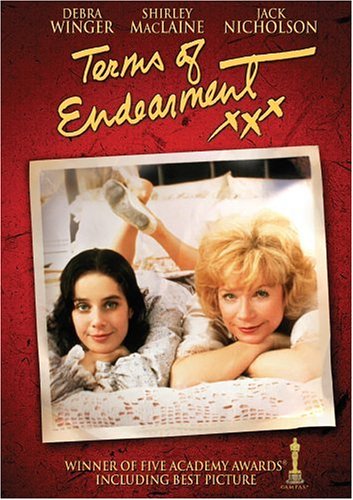
To be honest, I thoroughly enjoyed The Greatest Show on Earth, one of the films I had to catch up with in order to be able to rate it for this poll. It is long and fairly dumb, but it is a good entertainment if you are in the right mood. And it certainly isn’t the worst winner when there are films like Argo, A Beautiful Mind, Gladiator, Forrest Gump (very glad to see this painful film so low), Terms of Endearment, My Fair Lady, Around The World in 80 Days, Cavalcade and The Broadway Melody in existence. As for the underrated – Braveheart, The Life of Emile Zola and Shakespeare in Love should definitely not be this low.


Ordinary People gets a lot of unfair criticism for beating Raging Bull but if you ignore the Oscars, as I thoroughly advise, it becomes a very good film. Why are films tainted by the awards they win?


Glad to see Rocky and The Artist this low, but A Man For All Seasons and Kramer vs. Kramer?


No real complaints here, though Grand Hotel getting this far is a surprise - as is The Hurt Locker, which should really be lower. And The Lost Weekend should be much higher.

Part 5: Films 20-1

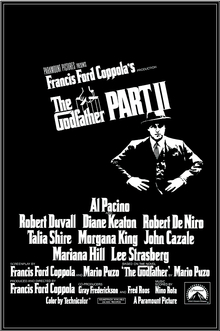
Fairly happy here, since these films do seem to represent a consensus on the best of the Best Picture winners. I am glad to see The Apartment and The Bridge on the River Kwai so highly placed, though I wonder why All About Eve is so high on the list. And for my money The Godfather Part II is superior to the first. 

Part 6: 12 Years A Slave

Now that 12 Years A Slave has won, as it was always going to, you can see where it ranks amongst the other Best Picture winners....way too highly.


In all, some decent results and now we can get back to ignoring the Oscars properly.


Wednesday, 29 January 2014

ARTICLE: The Oscars - One Big Whinge


I find it very hard to care about the Oscars. And it isn’t particularly because they make bad decisions (they do, more often than not) or because they are so highly considered (they are, but just why is never clear). It is because they are unavoidable.

Level-headed film critics (few of those) always write and talk about the Oscars when they are closing in, always predicting that this film and this performance will make the nominations or get the award. Most reviews end up sounding the same, with a typical review of, say, 12 Years A Slave merely ending up a list of the Oscars that the critic thinks it will win. Lupita Nyong’o and Chiwetel Ejiofor are not so much acting as preparing acceptance speeches. And why not since the film is so geared to the Oscars with its For Your Consideration trailer of the people in the film that you might want to remember later to the long scenes of Oscar-friendly clips - Chiwetel Ejiofor talking about freedom and hope and Michael Fassbender going all method as a drunken lout, who is really only falling over and shouting.

Meanwhile, Lupita Nyong’o, who delivers a performance of some power and depth, is written about only as a newcomer who is sure to hit it off with the Academy, as if it wasn’t a performance in a film at all, but a carefully calculated career move – see also Anne Hathaway in Les Miserables. The same went for Barkhad Abdi’s performance in Captain Phillips, which had everyone writing about Oscars. And, to tell the truth, having seen both films before the hype really started to get moving, neither performance was particularly good. And certainly not the Top 5 in their category for the year, although Best Supporting Actress has had a fairly limited field in recent years.

It all reeks of a certain degree of stage-managing. Having recently read ‘Manufacturing Consent’ by Noam Chomsky and Edward S. Herman, it is hard not to get a sense that some publicist somewhere wrote that Lupita Nyong’o and Barkhad Abdi (and 12 Years A Slave, Michael Fassbender, Leonardo DiCaprio, Jonah Hill, Cate Blanchett and Sally Hawkins to name a few others) were deserving of Oscar attention. The first critics, with little to go on but the film’s press materials and their own opinions, which seem to be valued less and less in critics these days, end up rewriting what the publicists say, creating word-of-mouth about the very performances handpicked by the publicists and elevating them to the kind of attention that gets them the nominations. And the Academy takes note because they’ve made bad decisions in the past that has hurt their reputation and are constantly under scrutiny to pick a winner. Suddenly an average-to-good performance becomes exalted and it is impossible to watch the film without some awareness that the thing to look out for is Lupita Nyong’o, Barkhad Abdi, Michael Fassbender, Leonardo DiCaprio, Jonah Hill, Cate Blanchett or Sally Hawkins. Which means that the Oscars become predictable at a stage in the year when everything should be absolutely up in the air. Meanwhile, something like 12 Years A Slave (decent, not great) becomes ‘one of the greatest films ever made’ and a must-see, promoted blindly by critics trying to get in on the hype before there even is a hype, and destined to slowly but surely fall from grace until it becomes known as just another bad Oscar decision. Which, I believe, is detrimental to the film and unfair as well as being a total waste of time.

This is how some films can be elevated way beyond their station – for instance, Driving Miss Daisy over Do The Right Thing. One is a simplistic drama about race that hides some sort of message of tolerance in the presumably much more palatable tale of a rude old woman while the other is complex, controversial, realistic and left unresolved like the issues it addresses. Now, Do The Right Thing probably didn’t have the publicists that something like Driving Miss Daisy would have had. And it wasn’t such an easy sell to the Academy that liked Terms of Endearment (the ultimate “give me an Oscar” film) and Out of Africa (Meryl Streep’s most cumbersome accent) only a few years before. It was also a much more complete work – in other words, it couldn’t be broken down into that performance and that clip. Plus, it was stylistically experimental, which never helps. In other words, a film’s quality is second to whether or not that film can be easily marketed and endorsed as Oscar material.

Other big publicist moments include getting Martin Scorsese an Oscar (for The Departed but not for Who’s That Knocking On My Door, Mean Streets, Alice Doesn’t Live Here Anymore, Taxi Driver, Raging Bull, King of Comedy or Goodfellas) and awarding The Lord of the Rings: The Return of the King with thirteen Oscars, not for the film but for the entire trilogy. Bruce Dern has finally got the recognition he deserved - as if only the Oscars can make a worthwhile tribute. The publicist can, hence, create a controversy around the Oscars, create a sense of a wound that needs to be dressed. Ever since Crash won over Brokeback Mountain, the Academy has intentionally sought out the less obvious choice, the more adventurous choice, in an effort not to make the same mistake again, picking The Departed, No Country For Old Men and Slumdog Millionaire over more traditional winners like The Queen, Atonement and The Reader. But it isn’t so much that these choices are better or worse, it is that they were wanted. There was a public pressure to give the Oscar to something less obvious. And it was the publicists that created it from absolutely nothing.

Public pressure created from nothing? Think about the Oscar mistakes as independently and truthfully as you can and then ask yourself whether you really care. Do you really care about Ordinary People beating Raging Bull? Dances With Wolves over Goodfellas? The English Patient over Fargo or Secrets & Lies? Shakespeare in Love over Saving Private Ryan? Crash over Brokeback Mountain? The loser in each case is almost invariably the more loved and the better seen. And also, crucially, the more influential, the Oscar loss never diminishing that film’s acclaim. Ultimately, in terms of film history, the Oscars mean absolutely nothing. Hazarding a guess, more people have seen Duck Soup or King Kong (neither even nominated) but not Cavalcade (which won that year). Out of Africa or Back to the Future. In short, the Oscars are insignificant and have pretty consistently failed to provide an accurate, or even worthwhile, insight into film history as it happens. Who really thinks Argo is the best film of 2012? Really? Deep down. So insignificant are the Oscars that it is the publicists who work to convince you that they matter – otherwise why promote their films to the Academy at all. They make up controversies where there weren’t any, because most people couldn’t care less.

This is not to propose that the Oscars should be scrapped, since the film industry has so few ceremonies that celebrate cinema. But, instead of wasting so much time trying to second guess the Oscars and repeating opinions endorsed by film publicists, wouldn’t it be more worthwhile to think about each film as a finished product and not a horse that has still got a race to run? To debate the merits of a film as a piece of art or entertainment or as the latest innovation without trying to give your arguments some kind of misjudged credence by writing about its awards chances. When, apart from during the Oscars, does anyone let a group of people you don’t know pick nine or ten American or British films at random for them to get excited about?

According to the Academy, the cream of US/UK cinema is 12 Year A Slave, American Hustle, Captain Phillips, Dallas Buyer’s Club, Gravity, Her, Nebraska, Philomena and The Wolf of Wall Street. None of these films are bad (I haven’t yet seen American Hustle, Her and Philomena) and there are at least two great ones, but it isn’t a particularly diverse or interesting list. It would suggest that cinema is healthy but fairly stagnant. These nine films are the fruits of the labour of the publicists, who managed to promote these nine films over edgier, more difficult, more interesting films. The Oscar choices ultimately ignore much more than they reward and they limit cinema to what is most easily marketed.

So ignore them and stop writing about them.


Wednesday, 1 January 2014

ARTICLE: The Best Films of 2013


The top four films of the year are all from the USA, which ought to be a disgrace, but there are just that good.

11. Museum Hours was an endlessly fascinating wander through the unknown avenues of art and cinema, being a fictional narrative, a documentary, a city symphony, an essay film, an art lecture and a rumination about how life effects art and vice versa. It encourages its viewers to look at the world differently and has a highly egalitarian view of what constitutes art. As a result, it is fascinating, unpretentious and, in some small way, inspiring.

10. Reality starts badly, appearing to mock its celebrity obsessed characters until, following one odd gear change after another, you realize that, despite yourself, you are rooting for them to succeed. With a great ending to finish it all off, it ends up being a funny, moving, unexpectedly profound film about our culture and ourselves.

9. The Place Beyond The Pines is a story of generational conflict, pain that lasts longer than memories and the passage of time. It is powerfully moving and surprisingly simple. Derek Cianfrance adds immensely to his portfolio, while retaining the Cassavetes-inflected style that made Blue Valentine works so well. Brilliantly made, it is a film of ambition that actually manages to succeed on its own terms.

8. Like Someone in Love is another film that plays around with identity and story from Abbas Kiarostami but here, unlike the stilted and clinical Certified Copy, he is also having fun. The themes are given centre stage to such an extent that it becomes a little one-note, but Kiarostami is always able to add a new situation or a new idea to add further interest and complexity. Alongside No. 5, it uses ambiguity better than any film this year.

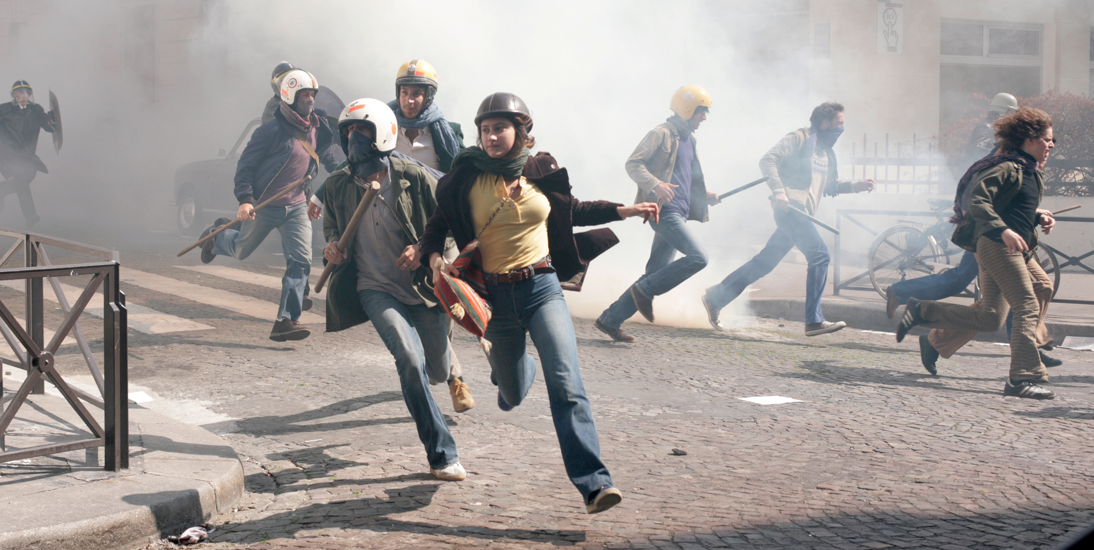
7. Something In The Air may subtly criticise the ethics of the revolutionary young, but it is primarily a work of nostalgia, one that is all the sadder because the traces of that intellectual antiauthoritarianism are becoming more and more distant. Nonetheless, it is a lot of fun, particularly if you are interested in 1960s-70s French cinema and the politics behind much of it, and very well made.

6. Gloria. An uplifting film about a middle-aged woman in search of love, which is never ironic or patronising. Paulina Garcia is brilliant in the central role and Sebastián Lelio directs with a compassionate camera that seeks and finds wonderful moments of humanity, romance and humour.

5. Beyond The Hills is a brilliant investigation of the power of faith on the individual and on the group. Based on a real case, but far from accusing or exploitative, it examines the power of religion by refusing to tell the audience whether the possession and subsequent exorcism that led to murder is real or merely acts of hysteria. It is brilliantly shot, well paced and proof that visual and editing tricks are not necessary to sustain interest. The performances in particular make it such a powerful film.

4. The same goes for Captain Phillips, which is either simply military porn or an uncomfortable display of America’s military power all the world over depending on who you ask (for me it’s the latter), but it is without a doubt a powerful, haunting examination of humans under pressure. On the boat and off it, the film displays an admirable sense of fair play, showing the toll taken on both the hijackers and hostages. The end, far from bombastic, is powerfully sad and the best work that Tom Hanks, and Paul Greengrass, have ever done.

3. To The Wonder is another beautiful film by Terrence Malick, which defies anyone to write about it. It is, at the end of the day, a film that has to be seen to be fully appreciated and no writing about the film’s themes (matching the failure of love in a relationship with the failure of faith in a priest) or imagery (finding the infinite in a shot of sunlight on a fence) is going to prove otherwise. It is possibly the truest film of the year – i.e. the film least likely to be adapted effectively into another medium. Pure cinema.

2. Alexander Payne would most likely always earn a place on these lists as long as he keeps making films. Nebraska is a lovely, pleasing little film that is all the more effective because so few filmmakers bother making films about people anymore – though this year seems to be a good year for that. This film (and Nos. 1,4,5,6,9 and 10) is ultimately about people and is, hence, about our lives, our families and our friends. While films with more of an agenda may be more worthy of praise (a decision I made in 2012 with The Descendants and This Is Not A Film), films like Nebraska are more than important, they are necessary.

1.  Before Midnight is the best film of the year and it may even be the simplest. With this series, Richard Linklater, Ethan Hawke and Julie Delpy have created two characters that are so believable and so likeable that we can simply just watch them. Without the romantic genre trappings or the ever-approaching deadline of the first two films, Before Midnight is the most realistic and the most melancholy. However, it is also incredibly respectful and moving, allowing any character to have their moment – Xenia Kalogeropoulou does more with one monologue than many actors do with entire films. It is a film in which the characters live and breathe, think and talk, have pasts and hopefully futures.


Also-rans include:

As I refer to above, some films are worth mentioning for their importance, even if they are less successful as films in themselves. In that case, special mention goes to The Act of Killing and Dirty Wars


Friday, 29 November 2013

ARTICLE: The OFCS Presents: The Best in Film Noir


The OFCS (Online Film Critics Society) recently launched a poll in order to find the 50 best film noirs. The results, and blurbs written by other OFCS members, are available here.

Part 1: Films 49-40

=40. The Set-Up


The Set-Up is a short but near perfect distillation of the film noir, with many of the key elements but with a big dose of heart. The camera roves through one space in real time (The Set-Up is one of the first films to be made in real time), powerfully conveying the limited choices open to Robert Ryan’s aging boxer. He is certain that he has one more good fight in him and his self-belief wins through only for there to be consequences thanks to his double-dealing manager. Ryan, in what is undoubtedly his best performance, gives the film hope and an emotional connection where otherwise it would be merely harshly realistic and relentlessly down dispirited. Brilliantly shot, you can see traces of The Set-Up in later great boxing films such as Raging Bull and Fat City.

=40. The Woman in the Window


One of the great ‘despair’ noirs, it unfolds with a horridly inescapable determinism. Unlike the other Lang/Robinson/Bennett/Duryea noir Scarlet Street, which is about cruel people being cruel to a dopey innocent, The Woman in the Window is effective since Robinson’s fall is so inevitable. When we first see him, his lecture theatre blinds have put him behind bars and he remains imprisoned in one way or another throughout the film. The Woman in the Window also has one of the best double-endings ever, both satisfying conclusions to different facets of the film – one completing Robinson’s cruel fate to devastating effect and the other concluding Robinson’s study of a trapped mild-mannered nobody.

Part 2: Films 39-31
Part 3: Films 30-20
Part 4: Films 19-11
Part 5: Films 10-1

3. The Third Man


One of the best film noirs for its realism, humour and story but also for its skewed approach. Holly Martins, a writer of cheap fiction, seems to know that he is in a film noir and acts like a heroic PI despite having absolutely no idea what is going on – at one point he hilariously mistakes his chauffeur for a kidnapper. He is the ultimate amateur detective, hopelessly naïve and gamely, often drunkenly, wandering through the story while other peoples’ lives are ruined. A subplot involving Alida Valli is the film’s real heart – the men run around with guns in sewers while Valli’s life is ruined by heartbreak and the all too real threat of deportation. One great scene sums this up beautifully – Martins blithely antagonizing the police while Valli desperately tries to shut him up, knowing that the consequences can be so much worse for her than for him.

Another oddity is the film’s interest in post-war Vienna, barely functioning under widespread crime and four different police forces that can barely communicate. The ruins of Vienna are evocatively presented, giving the constant impression that there is a lot going on just beyond the parameters of the story, one which plays out so casually that the big twists and turns seem almost irrelevant. Reed increases the confusion with tilted frames, cock-eyed perspectives and by coupling the images with Anton Karas’ brilliant zither score, which will stay in your head for days.


All of this is great, but little compared to the appearance of Orson Welles in what is surely one of the best character introductions in film history. Not to mention one of the best monologues (improvised by Welles) and one of the best final shots, powerfully expressive of heartbreak, longing and the end of a romance.


Monday, 8 July 2013

Monthly Film Challenge Part 4: F For Fake (1973)

F For Fake, Orson Welles


This month we look at a film that is a lot more fun: Orson Welles’ audacious F For Fake, which sees the great man having the time of his life with a cinematic format that can often prove to be a piece of work: the essay film.

Before you watch F For Fake, there are a few things that it might be worth reading up on, such as: Howard Hughes, if you don’t know, was a billionaire tycoon and famous recluse and allegedly deeply mysophobic; Clifford Irving wrote a fake autobiography of Hughes that fooled America; Orson Welles did an infamous radio version of “The War of the Worlds” that also fooled America; Pauline Kael, a highly influential film critic in the 1970s, wrote an article that claimed that Orson Welles took credit for the greatness of other people’s work in Citizen Kane – which deeply offended Welles; Oja Kodar was Welles’ mistress at the time of filming.

F For Fake begins as an apparent documentary on fakery and charlatans and much of the film’s running time focuses, though this is hardly the word, on Elmyr de Hory, a brilliant forger of paintings, and his biographer and subsequent rival Clifford Irving. However, the film is far from a straight biographical sketch as Welles freely moves where his myriad interests take him. The film is often incredibly fast-paced and it is easy for the inattentive viewer to get lost, with the cutting and the voiceover creating the impression of an improvisation in which Welles changes the subject, apologizes for not making much sense, calls it “mumbo-jumbo” and starts again for a different perspective. We often see Welles sitting at a dysfunctional editing table, trying to hammer the film into shape. This gives the impression of a film making itself right there in front of you, allowing the film to feel incredibly new and unique.


However, there is more, much more, to F For Fake than the ramblings of an eloquent master filmmaker, even if half the fun of the film comes from the fact that Welles is an infectiously bubbly and good-natured host. The film begins with a few magic tricks and this is what sets the film’s tone best – F For Fake is a film in love with trickery and it is all about what cinema can do to trick, such as when Welles’ clever editing creates a dialogue between two people who are not in the same room that results in the suggestion of a major revelation. Earlier in the film, he shows the effect that Kodar has on a series of men as she walks down a busy street, the film gleefully cutting and freezing while Welles claims that the actors were real people and gave their reactions at unawares and for free. Welles will promise, “During the next hour everything you will hear from us [Welles and his collaborators] is really true and based on solid fact.” Later, he will even repeat it in writing, yet we are never sure that we can trust him, especially because he is so excited by the subject of fakery. Ultimately, F For Fake keeps the viewer at unawares almost throughout, preferring that they question everything they see.

F For Fake is a film of many subjects, one of which is a questioning of art. Elmyr de Hory is frequently heard saying that if a painting hangs on a wall for so many years, then surely it is art. Elmyr de Hory’s fake paintings have apparently always fooled the experts. These so-called experts are one of the targets of the film – people who dictate the taste of their culture by their own opinions, and yet these opinions are rarely based on fact and can often be contradicted. Remember that Welles had a grudge against Pauline Kael at the time. Welles asks who the real fakers are; people who can paint like Picasso or the experts who arrogantly claim that their work is Picasso. But Welles goes further than this, stating that if the artist himself cannot tell a genuine work from a fake then what does it matter whose signature is on the painting. And, similarly, why should Picasso have all the acclaim and all the riches when other, impoverished artists are just as capable. Welles suggests a difference between genuine art and art for commerce and sees the experts as complicit with the market, turning art into golden investment opportunities via the cult of personality. For Welles, art is less to do with who and more to do with truth. And this is what leads us to the film’s best scene, a beautiful and profound sequence in which Welles visits the cathedral at Chartres, “the premier work of man perhaps in the whole Western world and it is without a signature.” Welles muses aloud on this cathedral, his words moving from praise to ruminations on art in general and on to man and life and death. Art, Welles’ own personal conception of the term, is movingly reaffirmed while its critics are questioned.

Welles presents a version of his own autobiography, in which he emphasises his own falsehoods: the lies that allowed him to act in the Gate Theatre in Dublin despite being an inexperienced sixteen year old and the infamous broadcast of “The War of the Worlds.” The effect of this broadcast is made clear: “I didn’t go to jail – I went to Hollywood.” He identifies strongly with Elmyr de Hory, whose own fakery was a result of his destitution after “experts” disregarded his own original paintings. Clifford Irving’s representation of Howard Hughes equally mirrors the original conception of Citizen Kane, which was to have been a fictionalised biopic of Hughes. In a few telling sequences, Welles goes to Las Vegas and points his camera at a hotel penthouse window, presumably where Hughes was eking out an existence. He looks at a series of Hughes myths, developing the idea that the truth will never be discovered from behind the series of myths and lies propagated by Hughes and others. Ultimately, a lot of F For Fake is unclear and a lot of the joy of the film is down to Welles’ own embracing of the fluidity of fiction and fact. At once, he presents a shot of himself reciting poetry about man and truth while distorted through a curved glass (suggesting “Through the Looking Glass”, The Lady From Shanghai and distorted truths) and yet cocks his gaze at the camera and mumbles ‘pretentious.’ As anyone can see, the running time of F For Fake is 85 minutes and even Welles himself delights in “lying [his] head off.”

As is probably obvious from the above, F For Fake is a fast-paced ideas-packed essay. It is a film that rewards multiple viewings and yet is always a lot of fun. Orson Welles delights in simply being a spinner of tales, the more convoluted and confusing the better. We often see him sitting down at a restaurant regaling assorted people with his stories and at times, the film suggests what it would have been like to have had dinner with Welles, his chatter moving seamlessly, and sometimes not so, through a wide range of topics, all interesting and all told with verve and humour. Indeed, a lot of the value of F For Fake is simply how enjoyable it is. Thematically complex and somewhat dark, F For Fake is probably the most fun you will have with an essay film. Exuberant, playful cinema at its finest.


So give it a go and tell us what you think.

Next month: La Chinoise

See also:


Saturday, 1 June 2013

Monthly Film Challenge Part 3: The Seventh Continent (1989)


The Seventh Continent, Michael Haneke

This month, we turn our attention to a film that is less formally innovative, but yet serves as a good introduction to a kind of discursive cinema that will return again and again in subsequent articles. The Seventh Continent attempts to have a conversation with its audience, asking them questions and suggesting answers rather than giving them. The film is in many ways a debate about the modern world, though one that is philosophical more than political. Many will disagree with the film’s suggestions yet the film is of value for its willingness to engage its audience, rather than merely sedate them with mild entertainment and easy answers.

The Seventh Continent is the feature film debut of Michael Haneke, the troubling and always controversial director of Hidden and The White Ribbon. This first film bears all the trademarks and preoccupations of Haneke’s later work alongside a deeply disturbing and challenging worldview. The Seventh Continent is the first part of Haneke's 'Trilogy of Glaciation', a term he was to regret, and is followed by the unconvincing Benny's Video and the repetitive 71 Fragments of a Chronology of Chance.

Georg (Dieter Berner) and Anna (Birgit Doll) are a professional couple, each married to their careers and to the accoutrements of life. They are, as far as they know, content. The only thorn in their side is Evi (Leni Tanzer), their young daughter, who frequently pretends to be ill or blind as a form of rebellion from their cold and oppressive existence.

The film is divided into three parts, each following them through one day, one in 1987, one in 1988 and the last in 1989. Georg and Anna awaken to the sounds of the news, always another international incident, which they blithely ignore. While Georg dresses, Anna goes to wake Evi up for school. They all breakfast together before climbing into the same small car to be individually dropped off by Georg on his way to work. Anna writes a letter to Georg’s parents, detailing how fine they all are and how it looks like Georg might get that promotion after all. Back home, they have dinner and berate Evi about her latest outburst. Then they go to bed.

Their second day, in 1988, is almost identical, though the seeds of discontent appear to be growing. The third day, in 1989, details their desperate attempt to escape from the shackles of routine and consumption. However, the odds are staked against them and success, at best, appears unlikely.


In Part One, the critique is strong and convincing. By watching these people going through their everyday activities, it becomes painfully clear how tedious our lives can be. Part Two follows them in another day – one that could have been the exact same day as all the shots are similar and all the actions familiar. While this may sound almost impossibly dull, Haneke lends these events his usual intellectual weight. The shots are usually fixed, with the camera kept tight on it’s subject, so that the sight of Georg tying his shoelaces becomes a mediation on the nature of time, routine and obsession, rather than conveying character or space. As is always the case with Haneke, the passing of time is captured by extremely long takes, which may become tests of endurance to the uninitiated, but remain powerfully expressive nonetheless.

The fact that Haneke not only refuses to cut away from these activities but also shows them twice allows him to create something of a dialogue with the audience. Open-minded audience members are encouraged to engage with the film. By making us watch everyday details, by confronting us with the mundane without any of the usual comforts such as an exciting story or interesting characters, Haneke gives us the space to think about how we lead our lives. The Seventh Continent is certainly conversational, although it is one that is fiercely chaired by Haneke. It makes for a tough watch, and Haneke is certainly a malicious filmmaker, but the result is fascinating and persuasive.

With Part Three, Haneke gives us an alternative to deadening routine and capitalist consumption. Though Georg and Anna may appear content with their lot in Parts One and Two, Haneke uses quiet, ambiguous moments in which a dinner guest and later Anna burst into tears, without any apparent reason. It seems that though, on the surface, everything is fine, once the characters find a moment to reflect, they see things the way they really are. They realize what they have lost and how unimportant the things that have distracted them really are. Part Three shows Georg, Anna and Evi, locked up in their apartment, quietly resolved to sort their lives out. Intended as an attempt to escape, what they end up doing is destructive rather than constructive and it is pursued with the same deadening sense of repetition and routine that had made their lives previously so insufferable. Ultimately, desolation closes this profound and unsettling mediation on the way we lead our lives and the weight of a soulless, mechanized world.

Fascinating as it is, The Seventh Continent is not without its flaws. Many shots do go on too long, becoming merely a measure of Haneke’s own self-indulgence. Part Two is largely a repetition of Part One and somewhat labours the point. As in the majority of Haneke’s work, screens - televisions, computers, windows – are ever present, with the unhappy news of foreign lands constantly being ignored by Georg and Anna, uncaring precisely because they are trapped with their own problems. Though it is an important point, Haneke’s presentation of it may only diminish what is a vital critique.

The film also uses some awkward symbolism. Early in the film, Evi pretends to have suddenly become blind while at school. Though one of her teachers quickly outsmarts her, the metaphor is loud and clear. Evi may be pretending to be blind, but her parents actually are blind, only they don’t know it. As a result, the film is a little hectoring. Haneke would go on to make Funny Games, one of the most pompous and wrong-headed diatribes in cinema, so a touch of the polemic should always be expected with Haneke.

The Seventh Continent is a rumination, an artistic expression of malaise in which it’s characters approach freedom with the same deadening ritual with which they approached their dead-end lives. Critics of the film have suggested that it is merely an intellectual whinge without any real substance or message and that Georg and Anna should just get over it. However, the film was based on an actual case in which an Austrian family committed group suicide. The Seventh Continent plays as an examination of discontent, it is not, no matter how hard Haneke would like you to believe, real life – although it was initially based on an actual murder case in Austria. Not everyone can shrug off his or her problems and the film is committed to showing that the way we live is not necessarily for everyone. As a presentation of the vacuous routines and the inescapable entrapment of a modern, urban society, it remains a powerful work.

The Seventh Continent, despite its flaws, is an essential film for anyone who wants something more from their cinema. Not only will it make you question the way you live your life, it will also chip away at your preconceptions about what cinema is – art, essay or entertainment. Bearing in mind that, with Hidden and The White Ribbon, Haneke was to learn how to be subtle, The Seventh Continent shows an artist who is in the process of becoming the great filmmaker that he is today (that foolish shot-for-shot American remake of Funny Games notwithstanding) and is a valuable film on many levels.

So give it a go and tell us what you think.


Next month: F For Fake

The Seventh Continent, Michael Haneke


Friday, 22 March 2013

Monthly Film Challenge Part 2: Un Chien Andalou (1929)


Un Chien Andalou, Luis Buñuel


So, from an innovative science-fiction/ documentary/ philosophical treatise to one of the best known of the Surrealists’ films, The Monthly Film Challenge turns to 1929’s Un Chien Andalou, a remarkably compact sixteen-minute experimental work from Luis Buñuel and Salvador Dalí. Unlike La Jetée, Un Chien Andalou is a surprisingly simple work in terms of what it is trying to say. Basically it is the story of a couple’s strained sexual relations and their eventual break-up. Underneath this is a study of how bourgeoisie culture, traditions and education block the way towards true love. What is challenging about the film, however, is the way that the message is conveyed as opposed to the message itself. The aesthetics of Un Chien Andalou are essentially like those of a dream, where the traditional means of telling a story are avoided in order to create a work that may seem practically incomprehensible; and yet is surprisingly clear.

The protagonists of Un Chien Andalou are presented simply as Man (Pierre Batcheff) and Young Girl (Simone Mareuil), just as they are in Buñuel and Dalí’s other great early Surrealist work, L’Age d’or. The film is less interested in them as characters, instead studying them as symbols. Man and Young Girl are meant to stand for all young men and women. The film is essentially divided into four parts, the first three separated by an intertitle that may or may not have anything to do with the events onscreen. There is little point in moving through the film and providing an exact interpretation on what happens in each section, since anyone’s ideas are equally valid as long as they’ve seen the film, but it might instead be interesting to look at some of the ideas thrown up by each part and how they relate to one another.

The first part is entitled “Once Upon A Time” and is only about forty seconds in length and yet it is one of the most notorious scenes in cinema history. It features a graphic close-up of a woman’s eye being slit by a straight razor. The scene was intended to shock a complacent audience, warning them that they will have to do more than simply watch the film – they will have to engage with it. Buñuel, who played the barber in this scene, is not so much attacking the woman’s eye as attacking his audience’s traditional ways of seeing. Similarly, the scene’s title and the imagery of the cloud and the moon suggests a fairy tale feel and brings about certain expectations in its audience. These are subverted by the famous match-cut in which the image of a cloud passing over the moon is followed by an image of a razor passing over an eye. The mix of beauty and brutality knocks the viewer out of their comfort zone and the film’s willingness to trick forcibly reactivates their brain. The viewer must think about the film critically in order to work out what it is that the film is saying. As the opening of the film, this section attempts to put the viewer in the right frame of mind to watch what will then follow.

“Eight Years Later” marks the film’s shift into its second part. As is typical of the Surrealists, this intertitle makes no real narrative sense, suggesting that there is a narrative connection between the homicidal barber and the Man and Young Girl to whom we are about to be introduced. Although there is a symbolic, or possibly even a thematic, link between these people, the intertitle is essentially meaningless. This section is by far the longest in the film and it is full of incident. We are introduced to Man as he cycles shakily down a road, wearing a ridiculous frilly costume and a box tied around his neck. We are made to take notice of the frills and the box by some very deliberate close-ups, showing that Un Chien Andalou does indeed have a reasoning behind it and that the filmmakers are willing to use traditional film language to communicate it. The overall suggestion is that the Man is sexually immature and effeminate. The Young Girl is the opposite. She is sitting at home, clearly ill at ease, her sexual desire for the Man, indicated by intercutting shots of her with shots of the Man approaching, all the stronger because it has obviously never been fully consummated. Her frustration is obvious – she throws down a book she is reading which shows a sexless image of a woman in a bonnet working at a sewing machine. When she sees the Man fall off his bike, she is disappointed again – the Man lies prostrate on the ground, useless. The film is essentially about sexual immaturity and sexual frustration.

The Young Girl’s frustration is suggested further by the highly suggestive sequence in which another woman tries to prod a severed hand back to life. A crowd forms, horrified at this open display of sexuality and yet they cannot turn away. Eventually, a policeman breaks it up and places the severed hand back in its box. This is Buñuel’s critique of the repressive nature of a bourgeoisie society, which is equally horrified and fascinated by sexuality and which needs a police force to keep them a check. This woman is subsequently run over whilst in despair at her suppression, the crowd caring a lot less about her violent death than they did about her sexual openness. This idea of a bourgeoisie society that keeps sexuality chained down recurs later when the Man, in a fit of an animalistic sexual passion, attempts to devour the Young Girl, only to be first fended off by a tennis racket (a symbol of bourgeoisie leisure/distraction) and then held back by the weight of two bishops and two pianos with dead horses inside them. It is clear what Buñuel and Dalí think about what the bourgeois culture does to man’s natural sexuality. Similarly, though the Young Girl openly wishes that the Man would gain sexual competence and even an animal passion, when he finally does she is terrified by him, suggesting that her attempted rejection of her bourgeoisie upbringing has failed. The film is full of suggestive and surreal imagery, which I won’t go through since the joy of this film is that it is entirely up to you.

The second part of the film is revealed to be largely the Young Girl’s dream – one that begins with her mourning the death of her sexual desire in the image of the second woman being run over by a car but which turns into a bourgeoisie nightmare of uncontrolled sexual passion. Though it can be understood in narrative terms as a dream, it charts the inner landscape of the Young Girl, laying bare her thoughts and feelings in terms to her sexuality and her thwarted relationship with the Man.

The third part of the film, beginning with the intertitle “Toward Three in the Morning”, charts the man’s inner landscape as he lies in bed and reflects on his own upbringing. A second man arrives and berates the Man for his frilly clothes and his sexual incompetence. He punishes the Man by making him face the wall – a typical school punishment, which, like a stream of consciousness, reminds the Man of his schooldays, the site of his education and the beginning of the repression of his sexual drive. This second man is revealed to be his younger, more sexually free self – as indicated by an image of his hands gleefully shaking a cocktail shaker, revealing his lack of concern over masturbation where before an image of masturbation was horrible and eerie, suggestive of self-mutilation such as the image of a hand infested with insects. In the end, the Man kills his younger self when two schoolbooks he is holding turn into guns. A comical funeral is held for the Man’s younger self.

The Young Girl’s own sexual death is considered next, when she sees a Death’s Head moth, familiar from The Silence of the Lambs. That the repressive nature of the Man might be the death of her is suggested when the Man removes his own mouth in order to resemble the Death’s Head moth. Reacting against this, the Young Girl uses her mouth to assert her own sexuality with a series of sexually suggestive gestures, from putting on lipstick to sticking her tongue out. Ultimately, she rejects the Man and leaves the apartment.

The fourth part of the film is not marked by an intertitle but instead by a surprising shift in space. The Young Girl leaves the apartment and is somehow now on a beach. Here, she meets a version of the Man that she prefers. Stripes have stood for a sexual maturity throughout the film, especially when the Young Girl trades the Man’s plain tie for a striped one just before his passionate outburst. Here, the Man is wearing stripes but he is also wearing typically bourgeoisie clothes as well, suggesting a compromise between sexual passion and social strictures that she can accept. He is initially troubled, holding up his watch as if he is aware that their days are numbered. She is not bothered and they embrace. However, their journey across the beach seems rocky and with his final intertitle, “In Spring”, which does the same to the viewer’s expectations as “Once Upon A Time” did earlier, Buñuel reveals that this marriage of convenience can only lead to death.

Though not thematically complex, the joy of watching Un Chien Andalou comes from the ability to decide what to take from it yourself. Technically, the film is brimming with invention and it is an exciting film to watch for the amount of ideas that it throws around. It has a conventional message – true love is thwarted by our repressive society – but it is far from conventional in how it presents this message. Just like La Jetée, it packs a lot into its short running time and it is one of the most innovative and important films ever made.

So give the film a go and tell us what you think. 

Next month: The Seventh Continent

Or see Part 1 of the Monthly Film Challenge: La Jetée

Wednesday, 20 February 2013

Monthly Film Challenge: La Jetée (1962)

Chris Marker, La Jetée


This is the first of a monthly series of articles that will look at some of the more difficult films available. The series will be a challenge to those who think they know cinema – people who have seen A bout de soufflé and Tokyo Story and get both. The challenge will be to watch the film featured and then read the article and then watch it again – usually the first viewing will be unsuccessful, something I can vouch for by my own experience. These films are nearly impossible to come to cold, and the article is designed to assist. However, these articles are not intended to be the last word on these films, most of which are much too complex to be accurately considered in so brief a time. They are merely meant to be an examination or rumination on these films that are too often ignored or turned off halfway through. The opinions of anyone who watches the film all the way through is equally valuable and welcome. They are difficult films but they remain films that no one who claims to really know cinema can ignore. First up is a relatively less difficult film, Chris Marker’s 1962 classic La Jetée. Please note that there will be spoilers as I will be looking at the film as a whole.

First, let’s begin with what is generally known about La Jetée, a brilliant blend of the science fiction and essay film. It is a film composed almost entirely of still images, as admittedly is all of cinema. Terry Gilliam remade it in Hollywood as Twelve Monkeys and its influence was most recently visible in blockbusters such as Source Code and Looper. Recently, Sight and Sound placed it as the joint 50th greatest film of all time. It is 29 minutes long.

The plot is as follows: World War III has devastated the world. The survivors live underground where they are under the control of a group of mad scientists who are experimenting with time travel in an effort to save the present with the help of the past and future. One man (Davos Hanich), who has a particular strong memory of a woman (Hélène Chatelain) from the past, proves the most capable of time travel as a result. When he is finally sent back, he falls in love with the woman, but when he attempts to escape the scientists tragedy strikes.

La Jetée is a masterpiece of science fiction, being both palpably otherworldly yet brimming with ideas about the real world. Chiefly, the film is about the nature of memory and of the cinema. The film’s still images present the idea of film at its most stripped down. The film conveys movement and action by increasing the tempo of the editing and by presenting out-of-focus snaps in place of more obviously framed and constructed photographs. The fact that the still images come to feel like a film reveals the mechanics and artifice of the cinema and how easily it plays on our minds. One later sequence in which the time travelling man witnesses the woman he loves waking up is most fascinating and requires a separate paragraph.

In this scene, Marker skilfully fades still images into each other, creating the impression of movement where there isn’t any, revealing that cinema, for all its drama and power, is merely the fact of two images melding into each other and creating the impression of continuous movement. However, there is much more to this revelatory scene that an exposé of the artifice of cinema. Throughout the film, Marker frequently equates images with memories. At the beginning of the film, the beautifully dispassionate voiceover of James Kirk (in the English version, Jean Négroni in the French original) explains, “This is the story of a man marked by an image of his childhood. The violent scene which upset him and whose meaning he was to grasp only years later happened on the main pier at Orly, Paris airport, sometime before the outbreak of World War III.” The use of the words ‘image’ and ‘scene’ where references to memory would be less incongruous consciously reference the cinema and its effect on our minds. The man is marked, hence, by an image/memory and it is precisely this ‘marking’ that allows the man to time travel, a strong image making for a strong memory. This is captured perfectly in the scene in which the woman wakes up. Here, the still images of the woman waking morph into the impression of movement, a strong static image being relived through memory.

When the devastation of Paris is revealed, the very nature of the black-and-white still photography used gives the scene the impression of authenticity, recalling real war-time photography. Marker reveals how easy it is to be taken in by images and how much trust we attach to them. The shift to the underground is matched by a shift into unnatural images as the film moves into science fiction, apparently leaving reality behind. When the man first travels through time, his movement into the past is marked again by a return to natural imagery, a peacetime landscape and a peacetime bedroom. The film comments on how the very realness of the images is what makes them all the more false in the context of Marker’s science fiction, creating the impression of a return to the past without the audience having moved anywhere. While Marker plays with the falsity of his images, his priority, however, is revealing the corrosive effect of images.

This is clear from the opening, describing a man ‘marked by an image.’ In the underground, the lead scientist always wears big goggles, that recall two camera lenses, and the man cannot time travel without a large eyemask. Memories affects human beings as images do, entering through the eyes and corroding and altering the mind. The scientists’ experiments have caused death and madness – with Marker showing one victim of madness lit from beneath, his hollow eye sockets lost in deep shadows, an eviscerated skull. The lead scientist with his camera/goggles may be using the camera as a defence against corrosive imagery or as a new way of seeing. Time travel destroys most human minds as it destroys the ability to distinguish between images/memories and reality, past and present. The man can only time travel because his memory from the time is such a strong image. Similarly, the sequence where the man first finds himself in what might be a museum is ambiguous. He is either travelling through time and through his own memories, the decay of the statues reflecting the passage of time and/or the vagueness of his memories. Later, in a second museum sequence, we will briefly see the man and the woman framed behind borders and set behind glasses just like the exhibits – as if they too are only items for a time since passed. The march of time is both inescapable and unknowable.

This is ultimately the conclusion of the film. The man travels into the future, which is better protected than the past – no memory brings him there. In the future, the man wears sunglasses constantly, as protection from or the result of strong imagery – an image that is not a memory becoming a present that is not a reality. Similarly, when the people from the future appear to him, Marker using scratches and blotches on the film stock to represent the fact they have traversed the fabric of time without the help of the image/memory but by destroying it. The people of the future are able to do this because of some unknowable technology, but the man’s own denial of time meets with a much more tragic outcome. The man returns to the pier at Orly in the end to re-live this childhood moment, to become a part of the image/memory of the girl that has obsessed him for years. However, re-living a moment of time is forbidden to him and his entry is brutally cut short. He is shot down as he runs to the end of pier, which reflects either the end of time or the jumping of point from which he will escape time. The march of time must go on and the man learns that there is “no way out of time.”

Ultimately, La Jetée may be a rumination on aging and the passing of time. The man wants more than anything to return to a site of childhood fascination and innocence. The child is there to be wowed by the airplanes and is instead wowed by a woman. The violent event that so “marked” this child reflects the onset of maturity, its destructive qualities emphasised by the immediately following devastation of Paris: “And soon afterwards, Paris was blown up.” The man’s attempt to return to his childhood and to “that face which was to be a unique image of peacetime [read childhood] to carry with him through the whole wartime [read life]” is fundamentally a denial of time and reality. The man’s death is ultimately the result of his inability to move beyond childhood, to accept the inevitability of aging and death.


So give the film a go and tell us what you think.

La Jetée. Chris Marker


See also: Part 2 of the Monthly Film Challenge: Un Chien Andalou