Showing posts with label martin mccann. Show all posts

Wednesday, 5 November 2014

REVIEW: '71 (2014)


Since ’71 is a film set in Northern Ireland during the Troubles from the perspective of a British soldier and filmed entirely in England, one could be forgiven for feeling suspicious. Either the film is going to be grossly inaccurate or it is going to be like those American Vietnam war films that focus entirely on naïve American soldiers and ignore both the destruction and carnage they wrought and the suffering of the Vietnamese people. It is a credit to the quality of Gregory Burke and Yann Demange’s work, as well as that of the cast, that ’71 avoids these pitfalls.

Gary Hook (Jack O’Connell) is in boot camp, having only just joined the army, when he and his unit are sent off to Belfast. After a brief lesson in the history of the conflict, Hook is brought to the Falls Road to assist the RUC during a house search. Thanks to the tactics of the RUC, a riot soon breaks out. Hook is left behind during the panicked evacuation and is soon chased by two IRA gunmen (Martin McCann and Barry Keoghan). Lost and wounded, Hook tries to stay alive in a hostile environment.

The film works primarily as a thriller, giving only a short, potted introduction to the history of the Troubles. The film’s title, referring to the year 1971, seems to be a plea for a well-read audience to take the film as a thriller only and seems consciously set prior to internment and Bloody Sunday in an effort not to annoy anyone potentially offended by the sympathetic portrait of the British army in Northern Ireland. The soldiers here are seen as decent but lost, and there is a nice moment in which they are attacked by children throwing balloons of urine at them. The greener soldiers react with laughter, clearly finding the image of such furious children outlandish. The film does offer some criticisms of the British Army, though it is the commanders and the MRF, as well as the RUC, who are shown to be the most criminal. There is a rivalry between the Provisional IRA and the Official IRA and there is a band of unidentified Loyalist terrorists, too busy with their own schemes to help Hook out.

This is all that the film offers by way of historical context and, as simplistic as it may be, it is well integrated into the film, which is essentially a nighttime thriller in the vein of Walter Hill’s The Warriors or Carpenter’s Assault on Precinct 13 or certain moments from The Wanderers. Some of the film’s best moments are the surrealist visions of Belfast at night in the middle of a riot. Hook walks along a dark and empty street only for petrol bombs to suddenly explode and a crowd of faceless people to appear, running right for him. Essentially it is a film about a young man trapped in a hostile environment trying to stay alive, and the film’s use of the Troubles as a backdrop is respectful but also mere scenery. The film is not a ‘Troubles film’ particularly because its focus is on the human drama and on the suffering of all of those involved. By the end of the film, the ludicrousness of violence and war is the most strongly felt message, not one about the innocence of the British Army. The film does not take sides on who was right and who was wrong and is more about the hysteria and the fear and the paranoia. In this sense, the film also doubles as a good ‘Troubles film’ because, like In the Name of the Father, Bloody Sunday and Omagh, it replaces context and didacticism with a focus on the humanity and pain underneath.


Suggesting that ’71 is a humanist vision of the Troubles may be overstretching the point, but the film is remarkable, first, for being very well made, very well written and very well performed and, second, for taking a divisive issue and moulding it into a thriller that doesn’t feel exploitative and insensitive. The issue of the legacy of the Troubles has not yet been resolved in Northern Ireland, and a film like ’71 is hardly going to help much, but when the film depicts the last in its series of pointless, defeatist murders, there is little politics and little justification. Instead, there is only pain and exasperation. And that sure beats the hell out of our own attempts to deal with the Troubles (see A Belfast Story).


Thursday, 20 March 2014

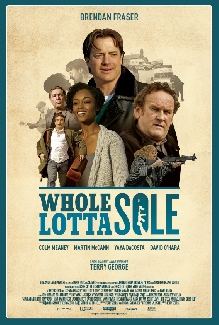
REVIEW: Whole Lotta Sole (2012)


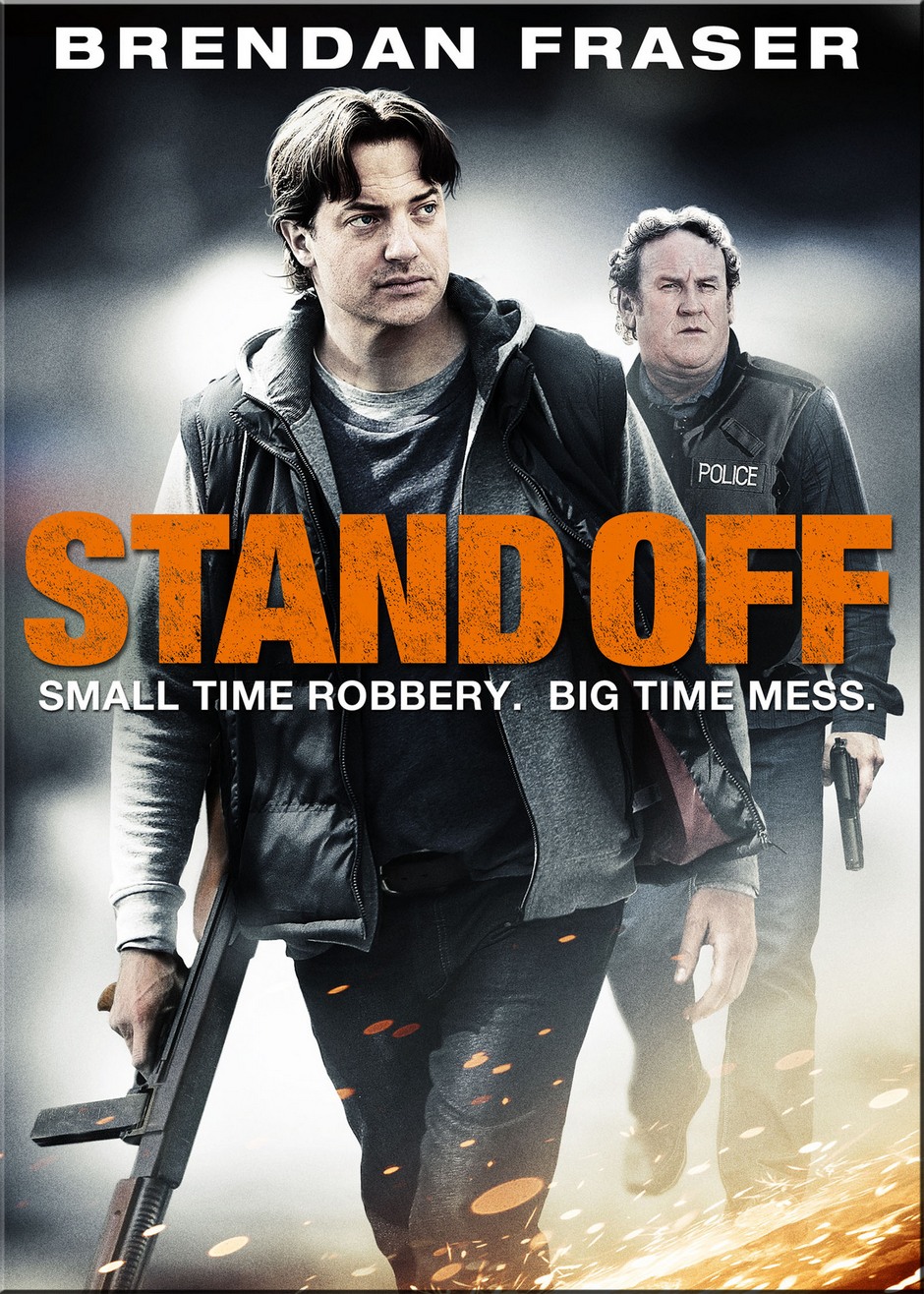
Whole Lotta Sole is Terry George’s follow-up to The Shore, his Oscar-winning short film. Contrasting with the reception of the short (sold-out screenings, a lot of news coverage, rounds of applause), this new feature, filmed in Belfast and Downpatrick, played once locally in the 12th Belfast Film Festival in 2012. Afterwards, it disappeared, wondering into the smaller and more obscure US and UK film festivals, before being released as a straight-to-DVD feature under the pointless title Stand-Off with a blurb that makes no reference to Belfast or The Shore and a remarkably feeble tagline – ‘Will Appeal To Fans of Snatch and The Guard.’ Where The Shore was praised as the great leap forward for a viable film industry in Northern Ireland, George’s follow-up seems to have given a lie to that notion.

As the DVD has it: In an attempt to protect his family and pay off his gambling debts to a local gangster, Jimbo robs the local fish market unaware that it s owned by the gangster. On the run, he hides out in an antique shop where he takes hostage a group of people, including Maguire (Brendan Fraser) who may (or may not) be his father. Surrounded by the police, the SAS and the gangsters crew Jimbo must use his wits (and some antique guns) to try and stay alive.

Jimbo, by the way, is played by Martin McCann, one of the more talented local actors, but presumably not a big enough name for the back of the DVD.

Anyway, the film, such as it is, is very much a crime comedy, a staple of Irish cinema since I Went Down did so well. Since then, however, the genre hasn’t produced many greats, merely a few fun but disposable gangster comedies. Only In Bruges managed to be properly subversive and create something dark and original out of these kinds of tropes. The villain of Whole Lotta Sole is a gangster called Mad Dog Flynn (David O’Hara) so it was never particularly promising. The story of the film – as it plays out in the film and not as described on the DVD – is slightly off-kilter and the opening moments throw in so many strange characters that the film might only prove unconvincing to a local audience and bewildering to everyone else. Father and son policemen, the Wellers, (Colm Meaney and Michael Legge) are introduced long before they are needed and a family of over-the-top gypsies seem to be there for no reason until midway in the film. Maguire seems to be the main character but the film never takes the time to introduce him – the plot unfolds slowly with a lot of twists and turns, which requires many of the characters to be initially unknowable – and he disappears from the screen for long periods of time. Sophie (Yaya Alafia), Maguire’s love interest, has nothing whatsoever to do. The dialogue is poor too, with mostly vague lines given by characters who often appear confused and lost. An early confrontation between Flynn and Jimbo’s wife Annie (Mary McCrossan) seems either to be full of meaning or awkwardly made up on the spot. The plot, when it is all revealed, relies heavily on odd circumstance and coincidence and the stand-off of the DVD title is devoid of tension since it is all played as slapstick.

As a comedy though, it is only slightly diverting. Detective Weller’s exasperation with the SAS is a comic nod to Northern Ireland’s current situation and it is believable but lacking in wit. Weller is equally exasperated that no one recognises that quote from Cool Hand Luke. Colm Meaney is stuck with more bad dialogue about ‘those days’ though it isn’t as embarrassing and morally dubious as the truly awful A Belfast Story – which, incidentally, got a cinema release. Weller is also exasperated by his son’s secret conversion to Catholicism, which seems to be trying to make light of The Troubles and the divisions still prevalent in Northern Ireland (if not spuriously attempting to suggest that they no longer exist) but it doesn’t go anywhere. In fact, most of the references to The Troubles in the film are bizarrely pointless, some possibly even misguided. When the twists have played out and all is revealed, the film has nowhere to go so it just wraps up with a few bangs haphazardly done and a truly awful ending in which the characters pose awkwardly in front of a fake holiday backdrop and wave to the audience in a last ditch attempt to charm a gypped audience.

Some far as acting goes, Meaney is better here than in A Belfast Story and Legge is decent. Brendan Fraser, presumably here for complicated co-production reasons, has nothing to do. The two kids Petie and Paulie (Jamie Kierans and James Napier respectively) are quite good but too many scenes rely too heavily on them for cheap laughs, while their parents (Amanda Hurwitz and Frankie McCafferty) are over-the-top. Martin McCann continues to prove himself as a talented and convincing actor, but he still hasn’t got a role to properly showcase his abilities. In certain scenes, he acts everybody off the set. He is also the only actor who doesn’t play it as a comedy and is the best for it.

Whole Lotta Sole is, then, another wasted opportunity for Northern Irish cinema – not as bad, or as funny, as A Belfast Story but nothing to be proud of. Like The Shore, it builds itself up and then goes nowhere. Neither of these films seems like the work of the Terry George who wrote In The Name of the Father and Hotel Rwanda – though it does feel like the Terry George who wrote The Boxer. The film’s release seems like a bewildering mistake until one actually sees the film – a ramshackle and uneven mess that is just plainly badly made. A lacklustre, misleadingly designed straight-to-DVD release being probably the most appropriate.

See also:
Perrier's Bounty
Jump
The Guard

Monday, 23 July 2012

REVIEW: Jump (2012)


  Jump is a 2012 film from Kieron J. Walsh, best known for When Brendan Met Trudy. While his previous film was informed by the French New Wave and the Celtic Tiger, his new, darker film seems much more in the thrall of the American independent cinema of the 1990s and early 2000s.

  Jump, a typical narrative-bending fashion, delves into two different stories, which occur in slightly different timelines. Memento-like, we see the effects of a particular action before we see the action itself. The plot itself is more by the numbers. Someone has stolen money from a scary gangster Frank Feeney (Lalor Roddy – in everything from Middletown to Hunger, Five Minutes of Heaven, Cherrybomb, Ditching, Sensation, The Good Man and Grabbers). He enlists two men (Richard Dormer – Mapmaker, Puckoon, The Mighty Celt, Middletown, Five Minutes of Heaven, Good Vibrations; and Ciarán McMenamin – Titanic Town, County Kilburn, Sunday, One Hundred Mornings and Outcast) to look for it and the person responsible. Meanwhile, Feeney’s daughter Greta (Nichola Burley) is considering suicide, meeting Pearse (Martin McCann – Closing The Ring, Swansong: Story of Occi Byrne, Whole Lotta Sole, Killing Bono, Shadow Dancer), who has a grudge against Feeney, when he stops her jumping off a bridge. Meanwhile, her two friends (Charlene McKenna – Breakfast on Pluto, Middletown, The Tiger’s Tail, Small Engine Repair, and Dorothy Mills; and Valene Kane – The Fading Light) have a night out in Derry that quickly takes a dark turn.

  Judging by its influences, the film feels hopelessly out of date, like a film that has spent so long in development hell that it is no longer relevant. The teenage angst coupled with darker and more evil forces and unnecessary and quite irritating stylistics is a direct lift of the dull Donnie Darko while the scary yet funny hit men was a mix of Quentin Tarantino and some of his less successful imitators. As a result, the film jumps from dark angst and suicide to grim violence and remorse via ghostly hallucinations and a comic night out in Derry that goes horribly wrong for two girls. Taken as a single piece, the film is often hopelessly messy, the distancing tonal shifts seeming more like the work of a bored script editor than the writers or director might have intended. The cross-section of up-and-coming Irish actors gamely leap through the story’s many hoops, but they don’t have characters that seem to exist. Consider Martin McCann’s character – an innocent with a dodgy brother, beaten up and angry but brave enough to take his revenge against an evil gangster while also being full of enough cheer to stop a potential suicide and promptly fall in love. It would be disastrous even for a film that had more time to believably develop and introduce these different strands than Jump gives itself. That McCann is at least likeable – and that a cruel twist of fate does appear recklessly cold-hearted on the part of the filmmaker’s – is a credit to the actor’s abilities if not his choices.

  The rest of the cast are somewhat one-note though their characters could have Inception-like one-word posters. The Party Girl goes from dull cliché to unbelievable plot point – her movements would be out of character if there were a character to being with. Ultimately, too much happens to each character – and each comes loaded with some hang-up or another, which range from believable in the movie-movie fashion to totally unnecessary and fatuous – for them to settle on one particular mode for long enough, except for Roddy, who settles on evil movie gangster and doesn't budge. Time is something that Jump, for all its temporal hi-jinks, seems to have very little of.

  However, the film, taken as a product of 1995 or 1996, is not terrible, much like the dopey, cruel but quite enjoyable Things To Do In Denver When You’re Dead. Films that played with time were fun for a while but, unlike Tarantino with his current fixation with ‘bad cinema’, we all grew out if it. Jump is dated because it does not offer anything that we haven’t already seen…fifteen years ago. It can be funny and might even be a little moving if you tell your brain to shut up, but it is a film that begs for your involvement and your tolerance instead of just seizing them for itself. It’s the kind of film that tries to convince you to care and whether you do or not, whether against your better judgement or not, is absolutely down to the individual’s tastes and not down to the film at all.

  Kieron J. Walsh is a fun though hopelessly undisciplined filmmaker. If anything, in the ten-year gap between When Brendan Met Trudy and Jump, he has gone backwards. It is not terrible and it might even be quite good, but why is that enough for filmmakers to make it and audiences to see it. Instead, watch Things To Do In Denver When You’re Dead, a film that feels old because it actually is.