Showing posts with label northern ireland. Show all posts

Saturday, 3 October 2015

REVIEW: Miss Julie (2015)


Twenty-four years have passed since Thaddeus O’Sullivan drew a potential connection between an emergent Northern Irish cinema and those of the countries of Northern Europe, particularly Sweden, with his minimalist December Bride. That Northern Irish cinema, and Irish cinema in general (a distinction is at best difficult), ultimately went the way of largely action comedy thrillers with the likes of Man About Dog and Whole Lotta Sole was a disappointment – not least due to the fact that O’Sullivan’s own subsequent films, particularly Ordinary Decent Criminal, were in much the same vein. Welcome then is the genuine thing, an adaptation from August Strindberg’s Swedish play ‘Miss Julie’, written and directed by Liv Ullmann, one of Ingmar Bergman’s closest collaborators, and produced by and filmed in Northern Ireland – primarily within the grounds of Castle Coole in Enniskillen, Fermanagh. Ultimately, the film is not without its flaws and, like December Bride before it, will most likely prove not to influence a new wave of serious cinema in Northern Ireland.

Set in Ireland in 1890, Miss Julie is a three-hander, which examines the power relations behind both gender and class. Miss Julie (Jessica Chastain) is a bored member of the aristocracy, first seen escaping her claustrophobic country house via a drawing room window only to wander within the walls of her estate, who finds some small respite in the classless freedom of the celebrations of Midsummer Night. However, her openness is treated with unease by her servant John (Colin Farrell) and cook Kathleen (Samantha Morton), who have some secrets of their own.

One immediate criticism of Miss Julie that has been thrown around is its apparent staginess. This is not a fair complaint, given that several films are just as stagey without equal criticism i.e. 12 Angry Men and because the film’s aesthetics have a purpose. The film is powerfully claustrophobic, intimately revealing the stagnancy of both sides of the class divide. Julie has more societal rules restraining her than John or Kathleen, though they are trapped within the narrow confines of their station. John and Kathleen are deeply terrified of the apparently unhinged Julie, whose willingness to ignore class puts them at risk of ridicule and dismissal. During the first half of the film, it is Julie who appears to be in control, using the authority and respect due her because of her place in the world against both Kathleen and John, who can only meekly obey and respectfully protest. John reveals that he was deeply in love with her when he was a child, his talk eloquent of the limits imposed on a young working class boy before he can even understand them. This breaks through Julie’s cruel exterior and they finally (albeit joylessly) consummate their relationship – Ullmann fading to black, acknowledging both their need for privacy and emphasising the obvious risk and pain that this lovemaking will immediately entail. This handling is reminiscent of Tolstoy’s similar ellision of the affair in ‘Anna Karenina.’

The second half of the film reveals then that, after sex, the power relations in the house shift to favour John. Though Julie still has her class against him, he now has a moral superiority (in 1890 terms) since he has degraded himself less than she. It is now his turn to be cruel and to threaten. The rest of the film details these three characters’ attempts to come to terms with their social, sexual and class transgressions.

Ultimately the film is about the various ways that each character is trapped and how they deal with it. The conversation regularly shifts as each character achieves a feeling of superiority over the others only for some other concern to bring them right back down again. Kathleen, a working class woman, is unexpectedly the most staunchly conservative with regards to the class system. However, there is an interesting shift towards the end when we realize that her devoutly-held faith is what gives her a feeling of self-satisfied superiority and complacency, since Jesus had said that the last will be first and the first last.

The film concludes then with Kathleen going to mass to pray for normalcy, John shaving and putting back on the uniform of his class and heartlessly encouraging Julie – the ultimate transgressor, against both her class and her sex – to cut her wrists. This she does by a river.

The original play was written by August Strindberg, who holds a central influence in Swedish theatre and cinema – this film indeed has a Bergman feel, which must mean that Bergman has a Strindberg feel. Liv Ullmann presents the play critically, revealing both the stultifying values of the time that the play criticizes and also those that the play may uphold. The film’s final shot, in which Julie lies dead in the river, could intentionally or unintentionally recall John Everett Millais’ painting of Ophelia and could intentionally or unintentionally be pointing to an inherent sexism and patriarchal hegemony in Western culture in general, then and, quite possibly, now. Equally the film’s late examination of Kathleen’s faith reveals that faith to be just as self-serving as the rules of class which give the aristocracy their place in the world – if not one of the primary forces for keeping the working classes in their place. Ullmann’s film has an intriguingly critical and open quality that all of these criticisms can be inferred without the reading feeling too close.

The film has a couple of great moments. The film is bookended with the image of flower petals drifting along a stream. We first see this from the perspective of the young Miss Julie after she has escaped from the confines of the house (possibly for the first time) and again later when Miss Julie is about to kill herself. Initially a symbol of the wish for freedom, the second time, however, Ullmann shows us the leaves getting stuck up against some jutting rocks, an eloquent and quietly heart-breaking evocation of the impossibility of even this small, vicarious escape. In another moment, Julie invites John upstairs. He follows her but suddenly stands still, as if he cannot physically cross the threshold between the servant’s quarters and the rest of the house without his livery – a nice Bunuelian touch. Also, look out for the moment when Kathleen rushes to the back entrance of the house to lock it against a marauding band of revellers – a powerfully haunting and deeply cinematic sequence. And the moment when Kathleen leaves the house for Mass – betrayed by John – and stands out in the bleak sunrise and starts to cry. Ullmann keeps the camera behind her and we can infer Kathleen’s tears from the slight shudders of her body, but it is an equally powerful and emotive scene, all the more so for its sheer economy.

That said, there is no getting beyond the fact that Chastain and Farrell’s performances are not particularly great. Both of their accents falter – Chastain doesn’t seem to be going for one at all whereas Farrell’s Northern Irish accent is lost in the emotional scenes. Neither performance is good enough to hold the film. This may be primarily a fault in the script. The dialogue feels a little over-written and a lot of the lines are difficult to believe and Chastain and Farrell definitely have difficulty making them work. Equally the always altering power relations between the two of them are too sudden and apparently without transition or cause, making it easy to get a little lost with the characters. It often has the feel of a rambling monologue (or soliloquy) rather than an authentic conversation. Sadly, all of this means that a large part of this otherwise powerful and maybe even excellent film just does not work.


Miss Julie then is far from a great film, though it has a seriousness of purpose and an engaging multiplicity of meaning and some unforgettably evocative moments. It does not ultimately work because it is badly written and overlong, but, for the moments where it grabs you, it is the real deal and Northern Irish cinema, if not European cinema in general, needs much more of this.


Wednesday, 8 April 2015

SHORT REVIEW: Robot Overlords (2015)


This short review appeared on The Upcoming website here.


Jon Wright’s Robot Overlords is the latest in a string of science-fiction films that attempt to beat the Hollywood tentpoles at their own game with a lot less cash.

Robot Overlords is set in an England in which robots have taken over and confined everyone to their homes while they conduct some shady experiment. After having accidentally discovered a way to overcome the robots’ tracking devices, four kids escape and embark on a journey to find one of their fathers (Steven Mackintosh). They are pursued by human collaborator Robin Smythe (Ben Kingsley) and head robot Mediator 452 (Craig Garner).

The film aims at being an adventure story for kids and adults alike with a whole load of CGI thrown in. It could have worked, but the film has too many bothersome flaws that get in the way. The film isn’t really sure what audience it is going for – a dark opening and some dirty jokes suggest that it is for teens rather than the whole family but these moments are generally few and stick out rather badly. The film also lurches from scene to scene with little motivation or forward momentum. Like Wright’s previous Grabbers, the characters and the humour are not properly thought out, leaving the film never as likable or as funny as it could be. The filmmakers seem more interested in getting to the next CGI spectacle in order to illustrate what they have done with their tiny budgets. The film ends up feeling only like an extended showreel rather than a completed film.

Robot Overlords would not have been an easy film to make and it is certainly an achievement, but it is a film that focuses on giant CGI robots and battle scenes at the expense of believable characters or a convincing story. Gillian Anderson suffers most, saddled with a character, who seems like an idiot for most of the running time before suddenly finding all sorts of strengths that the script never alluded to before. The script is very shallow with only a few moments of depth, which usually last a very short time before another robot lunges into view. The robots aren’t particularly convincing either despite the near total focus on the part of the filmmakers, but then the monsters in the recent Godzilla weren’t either. Robot Overlords may beat Hollywood at their own game but it is just as shallow.


Monday, 31 March 2014

REVIEW: Noirland (2014)


Noirland is a new film made in the North coast, particularly in Coleraine, which premiered during the 14th Belfast Film Festival. Written and directed by local author Philip Henry, Noirland is an anthology film containing three crime stories that are linked by characters and events.

Three policemen Detectives Marshall, Cranston and Robinson (Neill Virtue, Andy Porter and Richard Sherwood) met in a police bar on the day of Officer Kerry White’s (Carleen Melaugh) funeral. Each tells a story, which do not initially seem to have any connection but which slowly weaves a single web of murder, corruption and guilt. Disgraced ex-cop Marshall relates the investigation into Molly Macadori’s (Julie Virtue) murder. His partner Detective Carter (Conor Barr) suggests they hire medium Rosie (Elza Margrain) to help them out when they run out of leads. This leads to some unwelcome revelations. Cranston then tells a story about the last case he worked on alongside Officer White before she was killed. A seemingly content couple, the Crandalls (Robert Render and Liza Ackermann) are alarmed when their daughter Karen (Aimee Brett) goes missing. It turns out that she has been kidnapped and is given only a few hours to live unless they confess to a crime they have apparently committed. But neither of them know of what crime they are suspected and time is running out. Robinson then relates the events of that very day, including the circumstances of White’s death and his own attempts at revenge.

Structurally, the film is most reminiscent of Pulp Fiction and Sin City, the latter most particularly in the figure of the corrupt Mayor (Thomas J Smyth) whose influence is felt in all three stories. Tonally, the film runs in a similar vein as well, since it is mix of dark, violent scenes undercut with comic moments, most of which are not quite successful here. However, the film’s main forbears are probably the other low-to-no budget independent productions in Northern Ireland – Michael MacBroom’s Endless Life, Kieran Majury’s Deadville and Michael McNulty’s Toothbrush. Deadville and Toothbrush were competently made films – particularly since they got made at all – but suffered from awkward tonal shifts and a certain lack of finesse in their filmmaking. Noirland improves on both of them for its intricate plotting and (mostly) short and to-the-point scenes, but it does equally suffer from dodgy dialogue and some poor editing.

The middle story is probably the best, being a chamber piece set almost entirely inside a police station interview room. The tension builds palpably as time runs out and every wrong answer – every false crime admitted to – costs them half an hour. The other two stories are less successful. The first story feels slightly out of place with its supernatural elements and a twist that takes a little too much explaining. The third story is better, though it relies on the villain’s stupidity way too much (failing to remove vital evidence from two separate crime scenes) and it also hard to believe that Detective Robinson went to the police bar so soon after his vicious (though poorly put together) fight with the monolithic Mr Stone (Shane McCaffery). Or that he can go to work at the police station in Coleraine a full day after the murder of another Coleraine police officer and have heard nothing about it.

The dialogue is full of exposition and is overly descriptive – characters will tell us what they are thinking rather than reveal it through looks and gestures. The flirting scenes between Robinson and Kerry White are tin-eared, as is one scene in which Carter and the Mayor reminisce. In one bizarre sequence outside the medium’s house it is established that Detective Carter believes in mediums while Detective Marshall is sceptical. But when they go inside their roles are reversed and suddenly Carter is a non-believer and thinks it is a waste of time while Marshall is willing to give her a chance. The way in which Detective Cranston and the bar man at the policeman’s pub (Michael Killen) talk about White on the day of her funeral (to paraphrase - “She was a lovely young woman. And the guys at the station were always chatting her up. But she was never a bitch about it…”) is hopelessly sexist. Indeed, practically every female character in the film is either sexualised or victimized or both. One of the more uncomfortable jokes in the film involving a prostitute called Cherry Picker (Jenny Marshall) is also, unfortunately writer-director Philip Henry’s cameo.

The actors are all largely good, though they do suffer from underwritten characters and poor dialogue. Robert Render, Liza Ackermann, Andrew Porter and Carleen Melaugh are all very good as the second story reaches its climax – though Ackermann clearly has little to do when Detective Cranston strangely asks her character to leave the room to make them coffee, despite the fact that her daughter is soon to be murdered. Porter suffers some dodgy dialogue elsewhere, as does Neill Virtue. Richard Sherwood is good as well, though his character’s grief and thirst for revenge are not allowed the time to develop into much beyond a plot point.

Some scenes could be edited down to make them more snappy and better paced and the blocking leads to some difficult shots – such as one in which Carter is speaking but the camera is trained on Rosie’s back or another in which we stare at the back of Marshall’s head while two other totally obscured actors leave a room. Though minor, these problems do make the film seem a little less professionally made as it does otherwise appear.

Noirland then is an impressive achievement, and it certainly played to a packed and enthusiastic audience, but one that remains somewhat awkward and not as well made as it might have been. It has an intricate and interesting storyline but it is full of poor dialogue and badly thought out, stilted camerawork. It is also in need of much pacier editing. Nonetheless it is a notable addition to Northern Irish independent cinema and local cinema is all the better for it.

Noirland plays as part of the 14th Belfast Film Festival at the Movie House, Dublin Road, on 30 March.

See also:


Thursday, 20 March 2014

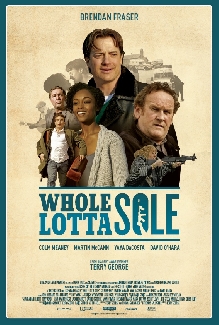
REVIEW: Whole Lotta Sole (2012)


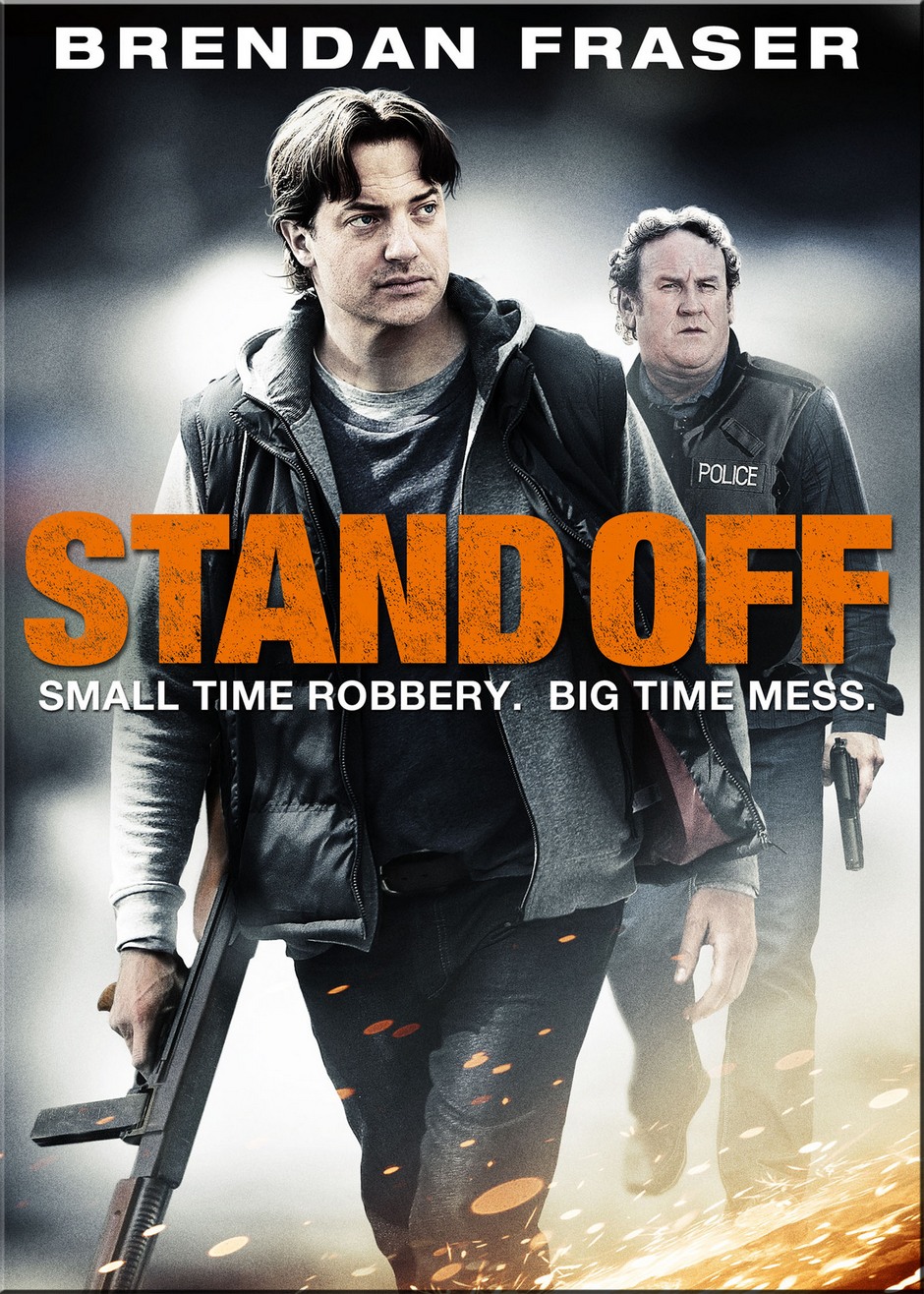
Whole Lotta Sole is Terry George’s follow-up to The Shore, his Oscar-winning short film. Contrasting with the reception of the short (sold-out screenings, a lot of news coverage, rounds of applause), this new feature, filmed in Belfast and Downpatrick, played once locally in the 12th Belfast Film Festival in 2012. Afterwards, it disappeared, wondering into the smaller and more obscure US and UK film festivals, before being released as a straight-to-DVD feature under the pointless title Stand-Off with a blurb that makes no reference to Belfast or The Shore and a remarkably feeble tagline – ‘Will Appeal To Fans of Snatch and The Guard.’ Where The Shore was praised as the great leap forward for a viable film industry in Northern Ireland, George’s follow-up seems to have given a lie to that notion.

As the DVD has it: In an attempt to protect his family and pay off his gambling debts to a local gangster, Jimbo robs the local fish market unaware that it s owned by the gangster. On the run, he hides out in an antique shop where he takes hostage a group of people, including Maguire (Brendan Fraser) who may (or may not) be his father. Surrounded by the police, the SAS and the gangsters crew Jimbo must use his wits (and some antique guns) to try and stay alive.

Jimbo, by the way, is played by Martin McCann, one of the more talented local actors, but presumably not a big enough name for the back of the DVD.

Anyway, the film, such as it is, is very much a crime comedy, a staple of Irish cinema since I Went Down did so well. Since then, however, the genre hasn’t produced many greats, merely a few fun but disposable gangster comedies. Only In Bruges managed to be properly subversive and create something dark and original out of these kinds of tropes. The villain of Whole Lotta Sole is a gangster called Mad Dog Flynn (David O’Hara) so it was never particularly promising. The story of the film – as it plays out in the film and not as described on the DVD – is slightly off-kilter and the opening moments throw in so many strange characters that the film might only prove unconvincing to a local audience and bewildering to everyone else. Father and son policemen, the Wellers, (Colm Meaney and Michael Legge) are introduced long before they are needed and a family of over-the-top gypsies seem to be there for no reason until midway in the film. Maguire seems to be the main character but the film never takes the time to introduce him – the plot unfolds slowly with a lot of twists and turns, which requires many of the characters to be initially unknowable – and he disappears from the screen for long periods of time. Sophie (Yaya Alafia), Maguire’s love interest, has nothing whatsoever to do. The dialogue is poor too, with mostly vague lines given by characters who often appear confused and lost. An early confrontation between Flynn and Jimbo’s wife Annie (Mary McCrossan) seems either to be full of meaning or awkwardly made up on the spot. The plot, when it is all revealed, relies heavily on odd circumstance and coincidence and the stand-off of the DVD title is devoid of tension since it is all played as slapstick.

As a comedy though, it is only slightly diverting. Detective Weller’s exasperation with the SAS is a comic nod to Northern Ireland’s current situation and it is believable but lacking in wit. Weller is equally exasperated that no one recognises that quote from Cool Hand Luke. Colm Meaney is stuck with more bad dialogue about ‘those days’ though it isn’t as embarrassing and morally dubious as the truly awful A Belfast Story – which, incidentally, got a cinema release. Weller is also exasperated by his son’s secret conversion to Catholicism, which seems to be trying to make light of The Troubles and the divisions still prevalent in Northern Ireland (if not spuriously attempting to suggest that they no longer exist) but it doesn’t go anywhere. In fact, most of the references to The Troubles in the film are bizarrely pointless, some possibly even misguided. When the twists have played out and all is revealed, the film has nowhere to go so it just wraps up with a few bangs haphazardly done and a truly awful ending in which the characters pose awkwardly in front of a fake holiday backdrop and wave to the audience in a last ditch attempt to charm a gypped audience.

Some far as acting goes, Meaney is better here than in A Belfast Story and Legge is decent. Brendan Fraser, presumably here for complicated co-production reasons, has nothing to do. The two kids Petie and Paulie (Jamie Kierans and James Napier respectively) are quite good but too many scenes rely too heavily on them for cheap laughs, while their parents (Amanda Hurwitz and Frankie McCafferty) are over-the-top. Martin McCann continues to prove himself as a talented and convincing actor, but he still hasn’t got a role to properly showcase his abilities. In certain scenes, he acts everybody off the set. He is also the only actor who doesn’t play it as a comedy and is the best for it.

Whole Lotta Sole is, then, another wasted opportunity for Northern Irish cinema – not as bad, or as funny, as A Belfast Story but nothing to be proud of. Like The Shore, it builds itself up and then goes nowhere. Neither of these films seems like the work of the Terry George who wrote In The Name of the Father and Hotel Rwanda – though it does feel like the Terry George who wrote The Boxer. The film’s release seems like a bewildering mistake until one actually sees the film – a ramshackle and uneven mess that is just plainly badly made. A lacklustre, misleadingly designed straight-to-DVD release being probably the most appropriate.

See also:
Perrier's Bounty
Jump
The Guard

Sunday, 29 September 2013

REVIEW: A Belfast Story (2013)


A Belfast Story is a bizarre film in more ways than one. It is a silly by-the-numbers thriller that does genuinely try to engage in the political situation in Northern Ireland, but it is remarkably unsophisticated in its rhetoric and uncertain in its tone.

Colm Meaney, giving the film some much needed marquee value, plays a Loyalist-inclined detective in modern day Belfast. Someone is killing retired IRA members and Meaney is taken off the shelf to find the killers. But does he want to find them?

A Belfast Story is billed as a Todd family film, and while it speaks volumes for a burgeoning local film industry, it is just not good enough. It is a thwarted attempt at a political thriller, but it is equally flawed as a thriller. Where to start?

The script is heavy with exposition and cliché. We are not five minutes in before someone has called Meaney the “last of his kind.” We know what Meaney’s feelings about the legacy of the Troubles are because he talks about it in a strange soliloquy while alone in a room – all that’s missing is for him to finish his sentences with “Terry” to recall Jimmy Rabbitte interviewing himself in The Commitments. Todd had already begun his film with a speech about the Troubles, a nervous attempt to justify making a Troubles-themed thriller, and is merely repeating himself unnecessarily. There is a lot of repetition. The First Minister (Tommy O'Neill), bizarrely an ex-IRA Republican, will says things about “moulding peace from the ashes of the past.” Meanwhile his secretary (Susan Davey), when told that she is too young to understand, will say back, “Yes, I am. Too young to let the past mould the future.” Todd seems worried that his audience will miss something or possibly misread his intentions. The irony of ex-IRA police station bomber Tim McGarry – really, really miscast – banging on the doors of a police station, desperate to let in, is very evident - and then it is spelled out. Heavy-handedness is forgivable, especially to a debut, but where A Belfast Story ultimately fails is in its own confusion.

Initially the film has some interest. Meaney’s character is left intriguingly unclear – will he catch the killer or would he rather give them his tacit approval? This ambiguity is too-frequently referred to, as if the filmmakers have nothing else to go on, however. It is also terribly resolved. Instead of Meaney changing his opinions, everyone around him changes theirs. The murders are allowed to continue, Malcolm Sinclair’s Chief Constable deciding that Northern Ireland is better getting rid of some old pensioners. In the end, the killers get away with it and, worst of all, a united Ireland is achieved. The logic is clear, but ridiculously fantastical. If Northern Ireland got rid of its ex-paramilitaries (though there are no equivalent Loyalist murderers mentioned), whom are exerting too much of an influence on the country’s present and future, then a peaceful and moderate government would shortly achieve a united Ireland. But the film has to ignore a lot of details to make this point – a point it is hard to imagine sitting well with Martin McGuinness and Gerry Kelly in the unlikely event of either of them bothering to pay any attention to it. (1) Would everyone really be quite so cavalier about the assassination of the First Minister; (2) would the nationalist population be happy with the renamed Northern Ireland Police Service’s (NIPS?) tacit approval of vigilante murder; (3) would the unionist population not protest vigorously against a united Ireland, especially considering the degree of anger over the removal of a flag from City Hall. In fact, it is barely worth writing about. In its politics and its assessment of how Northern Ireland ‘works’, A Belfast Story loses all believability (if any is left following the scene of death by poison pasty), but also all credibility. It bemoans the tit-for-tat violence of the Troubles (although IRA violence alone is put under scrutiny) but in the end attempts to justify a series of murders as without consequence, politically expedient and, worst of all, somehow noble. Here, it is a laughable, immensely stupid disaster - much like the stunt PR campaign which included sending film critics fake nail bombs and balaclavas.

As a side note, it is interesting to note that the film begins with a story about the messiness of the violence of the Troubles in which an apologetic gunman murders a man in front of his family. However, the murders actually depicted in the film are freed of such complications by having the victims all live alone, seemingly without any family or friends whatsoever.

Too clichéd to be a decent thriller and too insultingly simplistic to say anything about Northern Ireland’s complicated politics, A Belfast Story is a train-wreck of a film that could only come out of post-peace process Northern Ireland. Its politics are ludicrous, tearing the film apart since it robs the thriller of a pay-off. Meaney lets the killers go, they kill the First Minister and send him a nice letter, one that needlessly explains their insane motivations and Ireland is united. Ignoring politics, the film need not exist narratively speaking. Someone is killing people, but everyone seems to be OK with it. A cop investigates and then decides he doesn’t need to. His boss intends to hang him out to dry but then doesn’t have to because he and everyone else in Northern Ireland seem to agree that the murderers shouldn’t be stopped. The murderers (Gordon Mahn and Patrick Buchanan) don’t want to live in a country in which they have to explain to their children that the head of state used to be a murderer. So they prefer to explain to their children that they are murderers themselves – their weapons of choice being nail bombs, sniper rifles, bricks and a poison pasty.

Independent cinema is finally showing its face in Northern Ireland but it is a real pity that A Belfast Story should be one of the first to be produced. Even Hollywood IRA thrillers are more sensible and realistic than this; Hollywood wouldn’t get away with A Belfast Story and not just because of the portentous title. It is a shame that Northern Ireland seems to be telling its own cinematic stories so shoddily. On freedom of speech, George Orwell wrote that, “If liberty means anything at all, it means the right to tell people what they do not want to hear.” A Belfast Story insures that there is a voice in Northern Irish cinema for the wingnuts.

Wednesday, 15 May 2013

REVIEW: Endless Life (2013)


Endless Life is a Northern Irish independent film made on location in Belfast on a budget of £2,000. With an emphasis on improvisation and open-ended resolutions, it recalls the work of John Cassavetes, an oddly enduring influence throughout Ireland (see also: What Richard Did and Dollhouse). Where other locally produced films, though undeniably admirable for getting made at all, have been less than successful – Kieran Majury’s Deadville and Michael McNulty’s Toothbrush – does Endless Life hold up in its own terms?

Eva (Karen Kinghan) is a young woman who lives in Belfast with flatmate Claire. As Claire’s career and her relationship with her boyfriend David become more serious, it becomes evident that Eva, still very much interested in parties and drinking, will have to move out. The prospect of a place opens up when her ex-boyfriend Will (played by Michael MacBroom, the writer and director) returns from aboard. Eva and Will had an acrimonious break-up following a miscarriage the year before and Eva’s friends wonder if the rekindling of this relationship is the best thing for the increasing hedonistic and directionless Eva.

Deadville and Toothbrush failed primarily was in their inability to maintain a consistent tone. Deadville had a few moments of surprisingly bleak drama that were ruined by some really terrible masturbation gags and Toothbrush was all over the place. Endless Life improves on these two by its clear artistic purpose and by its seriousness, surprising since a lot of the film seems to be improvised by the cast. MacBroom clearly wants to make a film that will be taken seriously, not one that will merely amuse his mates.

Endless Life is essentially a portrait of a young Belfast woman on the verge of responsibility – she knows she has a limited time left to emulate her student days before life takes over. The obvious counterpoint is Claire, with her career, her fiancée and her dinner parties in which the other guests are, significantly, older. However, MacBroom is not such a dogmatic filmmaker and he does allow life’s messiness into his fiction, since there is the much more ambiguous figure of Eva’s best friend Liza – who has a job yet manages to match Eva almost drink for drink. MacBroom does not offer any overt explanations for Eva’s behaviour and, most refreshingly, does not make any judgements. When Will confronts Eva about her lifestyle, it is difficult know why he is so angry or towards whom MacBroom himself is most sympathetic. Endless Life tries to tackle humanity as a multifaceted and constantly fluctuating series of moods and desires, which are often unpredictable, even somewhat unknowable. The film’s ambiguities are less the result of a conscious stylistic choice and more a means of expressing the complexities of life. Never clear-cut, Claire’s dinner party, for example, is played for laughs but throughout maintains a degree of uneasiness and an underlying sadness. Meanwhile, a scenic holiday ends up being so self-consciously romantic that it becomes awkward, almost bitter.

This leads us to the main flaw in Endless Life, or, possibly, as in Cassavetes, where a second viewing will help most – the film becomes so ambiguous as to be rather vague. Will shifts from not expecting anything from Eva (though this is hard to believe even as he says it) to complaining about her disregard of him much too fast. There are two scenes in which this shift can be seen to be developing, in which Will talks to a friend who acts as his sounding board, but they are fairly inexpressive. Similarly, the film’s ending is a little too open, with too many inferences cancelling each other out, leaving it feeling unintentionally meaningless. Endless Life may have been better if it had been longer, having the benefit of more time to develop. That said, MacBroom finishes with a nice little touch of wiping the protagonist off the screen just before the end, of which Antonioni (see Blow-Up, L’eclisse and The Passenger) would have approved. The only other flaw, fairly minor, was technical – the sound levels were set much too high, making Eva’s laughter hurt the ear and the closing of a car boot sound like an explosion.

Endless Life is an ambitious and serious film by a local independent filmmaker who has proved himself to be someone to watch. It is great to see that, in Northern Ireland, there is an independent voice to counter the disappointingly mainstream Jump and Good Vibrations, especially one that is open to the complexities of real life instead of generic or post-modern references. I look forward to his next film and wish him luck with it.

Endless Life was screened as part of the Cathedral Quarter Arts Festival and now has a website.

See also: Husbands

Wednesday, 10 April 2013

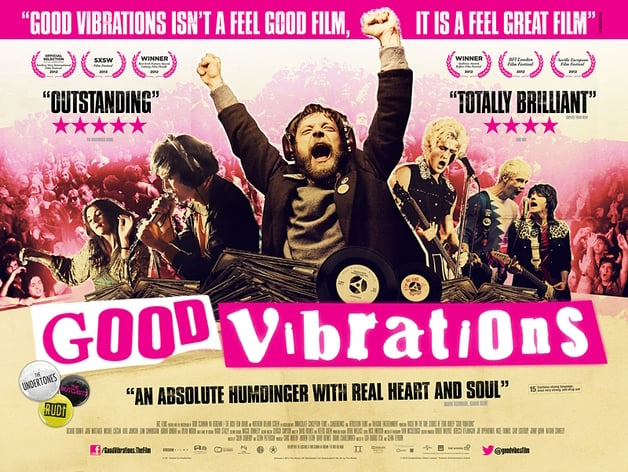
REVIEW: Good Vibrations (2013)


Good Vibrations takes its name from a record shop opened by Terri Hooley (played here with a lot of charm by Richard Dormer) on Great Victoria Street at the height of the Troubles – back when the street was known as “Bomb Alley”, the most bombed half-mile in Europe. After having an epiphany during a Rudi concert, Hooley starts making his own records, creating a punk legacy in Belfast, which managed to cross the sectarian boundaries like nothing else. The key moment, of course, is when he meets a small band from Derry with a song called “Teenage Kicks.”

Good Vibrations makes it clear from the very beginning where it stands on the Troubles – horrified non-participation. Hooley simply ignores it, having fallen out with all his political friends who have split to join divergent paramilitary groups. Hooley’s mission is to bring people back together through music – something that is taken a little too literally in an awkward scene in which Hooley makes peace with his old friends by handing them a pile of free records – rather than reach some kind of political or social calm. This is fair enough, obviously, since the film is more about a man trying to bring punk to Belfast. However, the film grows entirely unconvincing by its conclusion.


The Belfast Telegraph has declared that Good Vibrations is the best Northern Irish film ever made. This, I think, is unfair. Leaving aside the loose definition of what constitutes a Northern Irish film - since its budget and locations come from both sides of the border – this declaration gives the film too much praise. It makes the film appear to be something it isn’t. Surely the “greatest” Northern Irish film ever made should be more than just a cheeky little pop movie – it should be a film that says something profound or important about Northern Ireland itself. To digress briefly, two Irish documentaries produced years ago provide a good comparative example: one, Mise Eire, celebrated the successful revolutions that brought independence to most of Ireland; the other, Rocky Road to Dublin, criticized Ireland for its stagnation since independence, claiming that the legacy of the heroes of the past was just as guilty as the Catholic Church, lacklustre politicians and rampant state censorship for a country stuck in the past. Sadly, Good Vibrations is Mise Eire’s fictional Northern brother, a celebration of a country that is still broken. With gleeful, optimistic denial, Good Vibrations ends with a note saying that the Troubles are now over and ignores that Northern Ireland is still divided and deeply sectarian. The film becomes a politician-and-tourist-board-friendly film that gives Northern Ireland and its people, whatever race or creed, the big pat on the back that it does not yet deserve.

Obviously, it is silly to watch Good Vibrations and expect a cogent political assessment of the here and now, but it remains part of an irritating trend in Northern Ireland of celebrating small achievements and ignoring big failures, of assuming everything is all right despite today’s widespread protests and the dissident violence that has not yet gone away.

Having said that, Good Vibrations is undeniably a feel-good movie. Dormer’s plucky performance – it’s hard to remember him playing a heavy in last year’s Jump - makes the whole thing thoroughly likable and the film’s mood, one of sorrow and horror at the violence and yet retaining a deliberate, almost oppositional, sense of fun, is recognisable. The sequence in which “Teenage Kicks” is finally played is note-perfect and almost brings a tear to the eye. The helicopter-spotlight as super trouper idea makes for one of the movie’s most memorable moments. Though the directors, Glenn Leyburn and Lisa Barros D’Sa, do play around with the imagery a little too much, a failing that made their previous debut feature Cherrybomb such a palpably shallow experience, they show a real talent in their use of music.

However, the film’s greatest weakness is a threadbare plot in the film’s second half when things get more serious and the profane cheerfulness of the humour that is so recognisably Belfast disappears. The film isn’t consistently funny and yet seems impatient with the more dramatic moments – Jodie Whittaker, playing Hooley’s wife, has a non-part that requires her to unsuccessfully try to put manners on Hooley and then disappear. By the time the film ends with a concert in the Ulster Hall, it has over-romanticised its subject into fantasy.


Good Vibrations is a sign that Northern Ireland will begin producing films regularly, rather than the fits and starts that saw something as great as Peacefire come and go. Who doesn’t want a healthy domestic cinema and, in time, a masterpiece even? Good Vibrations is a lot of fun and has two or three rather moving moments, but it is nonetheless a film that gives a country a pat on the back when what it really needs is a kick up the arse.


Monday, 23 July 2012

REVIEW: Jump (2012)


  Jump is a 2012 film from Kieron J. Walsh, best known for When Brendan Met Trudy. While his previous film was informed by the French New Wave and the Celtic Tiger, his new, darker film seems much more in the thrall of the American independent cinema of the 1990s and early 2000s.

  Jump, a typical narrative-bending fashion, delves into two different stories, which occur in slightly different timelines. Memento-like, we see the effects of a particular action before we see the action itself. The plot itself is more by the numbers. Someone has stolen money from a scary gangster Frank Feeney (Lalor Roddy – in everything from Middletown to Hunger, Five Minutes of Heaven, Cherrybomb, Ditching, Sensation, The Good Man and Grabbers). He enlists two men (Richard Dormer – Mapmaker, Puckoon, The Mighty Celt, Middletown, Five Minutes of Heaven, Good Vibrations; and Ciarán McMenamin – Titanic Town, County Kilburn, Sunday, One Hundred Mornings and Outcast) to look for it and the person responsible. Meanwhile, Feeney’s daughter Greta (Nichola Burley) is considering suicide, meeting Pearse (Martin McCann – Closing The Ring, Swansong: Story of Occi Byrne, Whole Lotta Sole, Killing Bono, Shadow Dancer), who has a grudge against Feeney, when he stops her jumping off a bridge. Meanwhile, her two friends (Charlene McKenna – Breakfast on Pluto, Middletown, The Tiger’s Tail, Small Engine Repair, and Dorothy Mills; and Valene Kane – The Fading Light) have a night out in Derry that quickly takes a dark turn.

  Judging by its influences, the film feels hopelessly out of date, like a film that has spent so long in development hell that it is no longer relevant. The teenage angst coupled with darker and more evil forces and unnecessary and quite irritating stylistics is a direct lift of the dull Donnie Darko while the scary yet funny hit men was a mix of Quentin Tarantino and some of his less successful imitators. As a result, the film jumps from dark angst and suicide to grim violence and remorse via ghostly hallucinations and a comic night out in Derry that goes horribly wrong for two girls. Taken as a single piece, the film is often hopelessly messy, the distancing tonal shifts seeming more like the work of a bored script editor than the writers or director might have intended. The cross-section of up-and-coming Irish actors gamely leap through the story’s many hoops, but they don’t have characters that seem to exist. Consider Martin McCann’s character – an innocent with a dodgy brother, beaten up and angry but brave enough to take his revenge against an evil gangster while also being full of enough cheer to stop a potential suicide and promptly fall in love. It would be disastrous even for a film that had more time to believably develop and introduce these different strands than Jump gives itself. That McCann is at least likeable – and that a cruel twist of fate does appear recklessly cold-hearted on the part of the filmmaker’s – is a credit to the actor’s abilities if not his choices.

  The rest of the cast are somewhat one-note though their characters could have Inception-like one-word posters. The Party Girl goes from dull cliché to unbelievable plot point – her movements would be out of character if there were a character to being with. Ultimately, too much happens to each character – and each comes loaded with some hang-up or another, which range from believable in the movie-movie fashion to totally unnecessary and fatuous – for them to settle on one particular mode for long enough, except for Roddy, who settles on evil movie gangster and doesn't budge. Time is something that Jump, for all its temporal hi-jinks, seems to have very little of.

  However, the film, taken as a product of 1995 or 1996, is not terrible, much like the dopey, cruel but quite enjoyable Things To Do In Denver When You’re Dead. Films that played with time were fun for a while but, unlike Tarantino with his current fixation with ‘bad cinema’, we all grew out if it. Jump is dated because it does not offer anything that we haven’t already seen…fifteen years ago. It can be funny and might even be a little moving if you tell your brain to shut up, but it is a film that begs for your involvement and your tolerance instead of just seizing them for itself. It’s the kind of film that tries to convince you to care and whether you do or not, whether against your better judgement or not, is absolutely down to the individual’s tastes and not down to the film at all.

  Kieron J. Walsh is a fun though hopelessly undisciplined filmmaker. If anything, in the ten-year gap between When Brendan Met Trudy and Jump, he has gone backwards. It is not terrible and it might even be quite good, but why is that enough for filmmakers to make it and audiences to see it. Instead, watch Things To Do In Denver When You’re Dead, a film that feels old because it actually is.

Thursday, 8 March 2012

REVIEW: Trapped/ Anton (2012)

  Trapped AKA Anton is a low-budget straight-to-DVD Irish film, originally entitled Anton, which was shot in 2008 on location in Cavan. Trapped is set in 1972, beginning on the day after Bloody Sunday, and deals with the Troubles and its effect on one man’s family.

Anton O’Neill (played writer/co-producer Anthony Fox) returns from a long time away at sea, after hearing the call of his homeland, an initially idyllic little Cavan town near the North-South border. There, he is reunited with his brother Edward (Cillian Roche), his old friend Brendan (Andy Smith) and his wife Maria (Laura Way). However, it is not long before Anton begins to get bored with this slow rural life, where farming and drinking seem to be the only preoccupations.

Anton falls back with Brendan, an angry young man who is adamant to go up North and help in the struggles against the British Army. Anton is unconvinced until the army stops his family on the road and proceeds to humiliate them. Following that, Anton and Brendan rob a post office across the border. This crime throws Anton into an increasingly violent conflict with the menacing and bigoted local Gardai detective Lynch (Gerard McSorley) and a ruthless IRA man Diarmuid (Vincent Fegan), just as his family needs him the most.

Though the plot outline above may seem fairly easy to follow, the film’s awkward pacing leaves a lot of questions unanswered. In the space of the first ten minutes, we are introduced to Anton as well as every character named above and the political and historical setting is established. The film opens with one of Anton’s letters to Maria, telling her that he is returning because he feels the call of his wife, his family and his country. However, he is almost immediately swayed into crime and away from his family. Anton’s motivations completely shift and the only conceivable reason for this is a rather uneventful and somewhat comically overplayed run-in with the British Army. It is unclear whether it is boredom or anger or the influence of others that leads him to neglect his family and dabble in terrorism and murder.

However, this problem is easily forgotten as the film bombards you with more and more information. Maria finds out about the robbery, Anton is beaten by Lynch’s men, Edward is sexually abused with a truncheon by Lynch’s men, Maria has a run-in with the British, Anton and Edward are captured by the IRA and then Maria has a miscarriage. All of this happens in the next ten minutes and the one impression that all of it leaves is that the film is a hopeless mess. One particularly long prison/asylum plot strand is disastrous. In fact, the whole film feels like the backstory until seventy minutes in, at which time every character is finally where they need to be and the film itself can begin. In the final twenty minutes, the film does improve and might actually make you care, if by then you really want to.

The film’s plot, which is it’s most problematic aspect, continues in this manner for most of the film, and leads to the film’s second problem. Trapped has no characters. As the film is packed with incident, it has no time to slow down and create believable characters, ones that an audience might want to emphasize with. We only know that we should feel bad for Anton because the score tells us too. And though a miscarriage would normally make a character rethink their priorities, no sooner has Anton found out about it that he is off to Belfast to hear Diarmuid tell him why the IRA is so brilliant. However, Anton is not the only character that does not make sense. Edward goes from tortured informant to happy country bumpkin who only wants to have a family to gun-toting sidekick. Worst, however, is the character of Detective Lynch, played by Gerard McSorley, presumably to give the film some marquee value. McSorley was brilliant in the 2004 TV film Omagh, but he is less than convincing as a hardened and bigoted thug. However, the filmmakers themselves seem to become aware of this, as Lynch’s character becomes softer and softer. Eventually he is actually concerned about Anton’s plight, despite having not too long before assaulted Edward with a truncheon and poked a gun into a pregnant Maria’s stomach. Though most of the cast equip themselves reasonably well, none of them have been given roles to really sink their teeth into.

The third problem with the film is its refusal to engage with the politics of the situation. Not unlike Godard’s great Le Petit Soldat, in which a French spy during the Algerian War becomes disillusioned with politics, Trapped seems to be a film that is trying to present a politically confused character caught between two violent sides. We never know quite why Anton decides to join the IRA, but maybe Anton doesn’t know either. However, at one point, Anton rather comically states, “I made a difference to people who didn’t have the rights of a dog.” By this point, it is known to the audience that Anton has done nothing but foul up. Anton becomes not merely a politically confused character, but a rather troubling one. The filmmakers don’t address how Anton could possibly think he has done anything of worth, instead offering only the typical Hollywood lesson about the importance of family. Anton becomes only a cipher and the filmmakers’ own politics and morals come under question - are they trying to suggest that Anton is a hero, a thug, a schizophrenic or a hopelessly foolish innocent? If Trapped is a film about a politically confused character, it suffers from becoming politically confused itself. Though this may be cleared up by the film’s end, it remains unclear why the filmmakers took such a vacuous and rather thoughtless approach to what was such a problematic time.

Trapped wants to be a thriller about one man trying to save his family during the Troubles, but it overloads itself with plot and refuses to have any understandable or likeable characters. Their motivations constantly shift to accommodate the film’s terrible plotting. Along with some questionable politics and a stodgy script, the film is messy, bland and unconvincing.