Showing posts with label greece. Show all posts

Wednesday, 15 October 2014

LONDON FILM FESTIVAL: Oxi: An Act of Resistance (2014)


This short review appeared on The Upcoming website here as part of their coverage of the BFI London Film Festival.

Oxi: An Act of Resistance is an essay film by Ken McMullen and it takes a unique and experimental view of the economic turmoil in Greece.

The film strives to draw a parallel between Greece’s economic problems and the tragedies of Sophocles and Aristophanes, suggesting that Greece, and the EU in general, have departed from the values of the past and that this is what has lead in the current crisis. The Greek classics espoused democracy and a politics based on love and understanding rather than a politics of economics and party lines, as shown by the democracy of Pericles, which was, among other things, the original welfare state.

The film is interspersed with quotations from Thucydides, which remain remarkably relevant for a text that is two and a half thousand years old. The film opens with one quotation which claims that human nature, being the way that it is, is always going to repeat itself – indicating, first, the historical precedents for the inequalities of today and, second, suggesting that these classics contain important lessons for today. This point is made succinctly as the camera lingers on some ancient Greek landscapes, suggesting a permanence between the past and the present. Several interviewees argue for the return of the values of these ancient writings, often passionately and with inspiration.

The film is at its best, then, as an extended lesson in classical literature and its relevance today. But where it is less successful is in its attempts to restage scenes from these plays, updating them for a new audience. It becomes an exercise in performance, which looks a lot more artificial and cerebral than the impassioned and moving testimonies of real people. Worse still is the fictional element in which a detective, Inspector Pinon (Dominique Pinon), horrified that anyone would dare ‘steal’ the words of Sophocles and Aristophanes and make them relevant for today, castigates writers and actors. The point is that these classics are not set in stone, but live and breath today, but the way the film attempts to demonstrate this is both pretentious and somewhat contradictory.


The film works best as a dialogue between classic Greek literature and the current problems in the world. The people interviewed call for the return of the principles of the past and the film is a moving and fascinating testament to what we have lost. But it often uses too much artifice to tell a plain and simple truth.


Tuesday, 22 July 2014

REVIEW: Miss Violence (2014)


In 1997, Michael Haneke made a psycho thriller called Funny Games that exhorted the audience to leave the cinema and then told those who remained that they were culpable for the suffering onscreen. Then in 2009, Yorgos Lanthimos made Dogtooth, a film that seemed to be cashing-in on the Josef Fritzl scandal (though the script was written before the story came out) but which primarily blamed the family and the façades of bourgeois normality that we all put up. Now comes Alexandros Avranas’ Miss Violence, which deals with suicide, incest and paedophilia but without any real intellectual weight or compassion for the victims. And as always, the complacent viewer and their bourgeois lifestyle are the real villains.

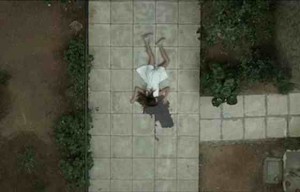
On the day of her birthday, eleven year-old Angeliki (Chloe Bolota) commits suicide by wordlessly jumping out of a window during the family celebrations. The rest of the family – including the domineering Father (Themis Panou) and the silent mother Eleni (Eleni Roussinou) – claim not to know why she did this horrible thing, but as the film plays out, the horrors of this dysfunctional family are laid bare.

The film builds slowly following the suicide. We are invited into this family’s home (the film begins with a door opening and ends with a door being locked to emphasise our entry into a private sphere) and we slowly pick up on certain incongruities and oddities. Father is strict, domineering and unwavering in his rule. When he leaves the room, everyone sits in silence waiting uneasily for his return. The film is ultimately about control and how everyone loses when someone enforces their will. Or something like that – the film and the director are not entirely clear on this point, beyond a few short scenes that could be interpreted as socially aware in which Father tries to keep a demeaning job. It is a dishonest film because, I suspect, none of this stuff really keeps Avranas awake at night.

Ultimately, Miss Violence is a hopelessly misguided work. Avranas tells the story with long, steady takes, the look of intellectual cinema, but it seems like only a mere gesture. To me, his film is little more than a series of shock tactics intended only to enhance the director’s international reputation – a gambit that proved doubly successful when one considers the film’s two top awards from the Venice Film Festival.

There is no intellectual weight to match the intellectual look, only surface imitations of previous films. Characters stare out at the audience to suggest their complicity in moments straight out of Funny Games. One horrible scene in which a paedophile leads away a small girl in order to rape her (in one long take following relentlessly behind as the child is lead away) is followed by a scene in which Mother (Reni Pittaki) looks directly at the camera and, by implication, tells the audience to go back to sleep – as if the audience, having been confronted with the brutal, indigestible facts of modern society, must forget about what they have seen in order to continue being entertained. Equally foolish is the director’s insistence that the victim is as violent as the victimiser – as ridiculous a statement as it is badly made. Add to this the wholly inhuman performances and the heartless, exploitative representations of abuse and we have an incredibly stupid film that is little more than an exercise in cynical cruelty.

When one looks at these kinds of films – in which horrible acts of violence and extreme suffering are shown in gleefully explicit detail, carefully choreographed, shot and edited for maximum effect (rewatch the opening to this film, or the shock gang rape scene with this in mind) only for the end result to be not a film that deals compassionately with suffering or honestly with violence but a meta-fictional critique of the audience and what they get out of this kind of film. However, with films like Funny Games, Dogtooth, Amour and now Miss Violence one should wonder if it really is the audience or the bourgeoisie or the family that is to blame and not the filmmaker themselves. Or maybe it is an arthouse market in which a taboo breaking, boundary-stretching cinema of cruelty is the only kind that breaks into foreign markets. Either way it seems like a cinematic dead-end, and in the case of Miss Violence, with its exploitative use of sexual abuse and paedophilia for its own uses, it is as bad and as insensitive as a rape joke.

A shorter review is available here.


Friday, 18 July 2014

SHORT REVIEW: Miss Violence (2014)


This short review appears on The Upcoming website here.

MissViolence_560In 1997, Michael Haneke made a psycho thriller called Funny Games that exhorted the audience to leave the cinema and then told those who remained that they were responsible for the crimes onscreen. Then in 2009, Yorgos Lanthimos made Dogtooth, a film that seemed to be cashing-in on the Josef Fritzl scandal (though the script was written before the story came out) but which primarily blamed the family and the façades of bourgeois normality that we all put up. Now comes Alexandros Avranas’ Miss Violence, which deals with suicide, incest and paedophilia but without any real intellectual weight or compassion for the victims. And as always, the complacent viewer and the bourgeois lifestyle are the real villains.

On the day of her birthday, eleven year-old Angeliki (Chloe Bolota) commits suicide by wordlessly jumping out of a window during the family celebrations. The rest of the family – including the domineering Father (Themis Panou) and the silent mother Eleni (Eleni Roussinou) – claim not to know why she did this horrible thing, but as the film plays out, the horrors of this dysfunctional family are laid bare.

The film builds slowly following the suicide. We are invited into this family’s home (the film begins with a door opening and ends with a door being locked to emphasise our entry into a very private world) and we slowly notice certain incongruities and oddities. Father is strict and abusive and the film is ultimately about control and how everyone loses when someone enforces their will.


But the film is hopelessly misguided. Avranas tells the story with long, steady takes, the look of intellectual cinema, but it seems like a gesture. The film seems little more than a series of shock tactics intended only to enhance the director’s international reputation – a gambit doubly successful when one considers the film’s two top awards from the Venice Film Festival. There is no intellectual weight to match the intellectual look, only surface imitations of previous films. Characters stare out at the audience to suggest their complicity in moments straight out of Funny Games and the director’s insistence that the victim is as violent as the victimiser is a ridiculous statement badly made. Add to this the heartless, exploitative representations of abuse and we have an incredibly stupid film that is little more than an exercise in cynical cruelty.


Wednesday, 12 March 2014

REVIEW: Only Lovers Left Alive (2014)


The Twilight films, in their depiction of untroubled romanticism, finished with a large question mark hanging over them, one that the first film’s poster referred to without addressing – “When you can live forever, what do you live for?” Jim Jarmusch, despite giving assurances in the March issue of “Sight and Sound” that he has not seen the Twilight films (or any vampire film and TV series more recent than Tomas Alfredson’s turgid Let The Right One In), sets out to look at this question in more detail.

Adam and Eve (played by Tom Hiddleston and Tilda Swinton) – named more in reference to the length of time that they have been on the planet rather than for any religious significance – are two vampires stuck in the modern world. Adam is a Romantic and a moody rocker, disillusioned with life and with the humans he is surrounded by (he calls them ‘zombies’), and considering suicide. Eve is older, much older, and has a more Classical bent, still boundlessly curious and excited by the world and content with the awareness of the circularity of life, having an apocalyptic relish for the coming fall of the West. Both are fairly reclusive and, despite Adam living in Detroit and Eve living in Tangiers, are very much in love.

The film is primarily about the wealth of knowledge and interest that the world has for people and, in this way, it is disarmingly optimistic. Eve believes that the humans, particularly the West, will soon lose their battle against the Earth and that some kind of apocalyptic reversal is coming, though having seen all sorts of plagues and floods (as well as the Inquisition) she doesn’t seem particularly bothered. However, she is boundless excited about being alive. When she packs for a trip abroad, she fills her suitcase with her favourite books – two books that are easily discernible are Cervantes’ “Don Quixote” and David Foster Wallace’s “Infinite Jest”, showing her ability to still be inspired. Adam, meanwhile, is depressive and contradictory and allows himself to get bored. He pretends that he has no heroes, although he has a wall covered with framed photographs of people who could only be heroes – Kafka, Proust, William Burroughs, Neil Young and Buster Keaton among them. Adam’s centuries-old ennui is made the butt of a few jokes, the kind that may bring only a murmur of appreciation from some of the audience but are welcome nonetheless. However, when Eve discovers his plans for suicide via a specially designed wooden bullet, she is outraged. In one great scene, she tells Adam about what makes her want to keep living, before putting on a record to which they both dance, and not at all like amateurs. The heart of the film is in this scene, creating a sense that curiosity and the joy of discovery is where the value and meaning of life lies – ultimately the film is about being glad to be alive.

The film has an infectious love of culture and science and, particularly, music and many of the film’s best scenes are simply moments revelling in these simple pleasures. Adam and Eve’s breadth of reference is not the product of snobbery, as Eve’s sister Ava (Mia Wasikowska) mistakenly claims, but the entirely enviable product of time well spent. The appearance of Ava midway through the film gives a sense of urgency and heightens the plot in a way that was not entirely necessary, since the film was enough fun when Adam and Eve were merely hanging out.

In a timely fashion, the film is able to create a sense of the destruction and desolation of the earth by the zombies. The film shows Detroit as an empty wasteland, full of cavernous abandoned buildings, the real world equivalent to the Gothic castles of tradition but equally a sign of the zombies’ destruction and waste. Despite their obvious political resonance, these sequences do not feel as heavy-handed as they may seem since any ancient vampire with an ounce of nostalgia would be angered by a huge music hall's relatively immediate transformation into a car park. Adam frequently derides the zombies’ ability to ignore or undo their own great achievements such as Detroit’s auto industry or the works of Nikola Tesla, thanks to whose work Adam has found the means to develop a machine that creates clean energy and which he is too bitter to share with the rest of humanity. However, Only Lovers Left Alive is an optimistic film, and where Detroit may represent the decline of American industry – though the music still seems to be pretty vibrant – and of the West in general, Tangiers represents a kind of hope. Though similarly crumbling and full of vice but nonetheless multicultural and very much alive, Tangiers seems to suggest that the zombies can still surprise – especially towards the end when Adam is moved by a performance by Lebanese singer Yasmin Hamdan.

Jim Jarmusch has not always been the easiest filmmaker to like – the inclusion of Neil Young on Adam’s wall of heroes can only bring back memories of the awful Year of the Horse. With Only Lovers Left Alive, he has made a film that is unexpectedly romantic, funny and excited by life. It has an infectious love of music – the music choices feel slightly dated but totally assured – and for writing. Optimistically, it suggests that love and culture can make life worth living and that time should be spent wisely lest any of it be missed. Only Lovers Left Alive does not have a highly original message, but it is one worth transmitting and if the method of transmission is as pleasing and imaginative as this, why complain?


Thursday, 4 July 2013

REVIEW: Before Midnight (2013)


More successfully than in Truffaut’s Antoine Doinel series and more legitimately than in Satyajit Ray’s Apu trilogy, Richard Linklater has been faithfully charting how time and age changes characters (his true antecedents are the talking films of Eric Rohmer and Michael Apted’s documentary series Up). He follows the story of a romance through a series of films of which Before Midnight is the third in eighteen years. 1995’s Before Sunrise and 2004’s Before Sunset were romantic, lovely films – the first full of the excitement of youthful idealism and the second more urgent and wary of life’s difficulties – which charted the development of two characters as they and the actors playing them (and writing their dialogue along with Linklater) aged. This resulted in two surprisingly truthful and dialogue-heavy films which are both absolutely captivating in their own ways. The third film picks the story up nine years on and both Jesse and Celine (Ethan Hawke and Julie Delpy) are in their forties.

If you have seen the previous two then chances are you will not want the third one to be spoiled. And justifiably so. It is rare for a series of films to not only maintain but also increase one’s emotional attachment to fictional characters. So much so that while a third film was never out of place (and indeed a possible fourth, fifth and sixth), there was always a risk that it would sell its characters short and, worse still, tarnish the fantastic and note-perfect ending to Before Sunset. However, there’s not much point in writing a serious review if you can’t go into detail so turn away now if necessary.

Jesse did miss his plane and he and Celine have been together ever since. They have two twin daughters and they are on their last day of a six-week holiday in Greece. However, Jesse and Celine’s relationship is far from what it was in the last two films. The typical problems of a long-term relationship are almost immediately evident and will become more and more so as the film continues.

The third film is harsher than its predecessors. It accepts that the romance of the first two films was an almost idyllic and rather dated phenomenon – after all, nowadays the younger Jesse could have simply found Celine on any one of those new fangled social networking sites. This is addressed early on through a young Greek couple (Ariane Labed and Yiannis Papadopoulos) that have been apart spatially and yet were never technically separated. They also have a cavalier attitude to their relationship, that it is fun now but not destined to last forever. This is far from a hopeful message for Jesse and Celine, one made even more melancholy by a subsequent, heartbreaking monologue from another Greek housemate, powerfully played by Xenia Kalogeropoulou. This is the key subject of Before Midnight and it addresses it to quietly devastating effect. A long-term romantic relationship, though not a dated concept in itself, is a difficult thing to maintain in the modern world and petty resentments and vicious arguments may be as common as moments of genuine warmth and passion. Indeed, the sequences in which Jesse and Celine just walk and talk feel like rare events, both for the too often distracted characters and for an audience that hasn’t seen them do it in nine years. This gives these scenes a highly melancholic air and they are worth savouring.

Sadly, Jesse and Celine are not entirely the same people – they have entered middle age, they are noticeably careworn and their relationship is a lot less surefooted. Happy, casual scenes (of “just bullshitting” as Jesse describes them) often give way to arguments and vicious accusations. Far from the easy communication of the first two films, it now seems that Jesse and Celine can barely understand each other anymore, frequently missing the point of what the other is saying or reading veiled attacks in each other’s suggestions. However, their arguments do not have the ironic showboating of a Who’s Afraid of Virginia Woolf? but a horrible realism that is all too recognisable. Having created such an attachment to these characters and their relationship, it is devastating to see how time has changed it though it was an inevitability we all preferred to ignore. The film refuses to shy away from Jesse and Celine’s very real problems, making it a sober, somewhat brave film. It is a very powerful reappraisal of Jesse and Celine’s relationship and a realistic depiction (complemented brilliantly with some very long takes and scenes) of any long-term relationship. Before Midnight avoids the wishful thinking and addresses, with sadness but acceptance, the uglier side of any romance.

Having said that, it remains a Jesse and Celine film and the two characters (and actors) remain thoroughly charming and the film is still thought provoking and witty, filled with perfectly rendered and believable dialogue. Though it is tougher and more resigned than the previous two, it remains an enjoyable and worthy addition to the series, which seems to be getting wiser and wiser with each instalment. When it ends, it leaves its audience sadder not only because of its melancholy ending but also because it’ll probably be another nine years before we can spend time with them again.