Showing posts with label anne hathaway. Show all posts

Wednesday, 29 January 2014

ARTICLE: The Oscars - One Big Whinge


I find it very hard to care about the Oscars. And it isn’t particularly because they make bad decisions (they do, more often than not) or because they are so highly considered (they are, but just why is never clear). It is because they are unavoidable.

Level-headed film critics (few of those) always write and talk about the Oscars when they are closing in, always predicting that this film and this performance will make the nominations or get the award. Most reviews end up sounding the same, with a typical review of, say, 12 Years A Slave merely ending up a list of the Oscars that the critic thinks it will win. Lupita Nyong’o and Chiwetel Ejiofor are not so much acting as preparing acceptance speeches. And why not since the film is so geared to the Oscars with its For Your Consideration trailer of the people in the film that you might want to remember later to the long scenes of Oscar-friendly clips - Chiwetel Ejiofor talking about freedom and hope and Michael Fassbender going all method as a drunken lout, who is really only falling over and shouting.

Meanwhile, Lupita Nyong’o, who delivers a performance of some power and depth, is written about only as a newcomer who is sure to hit it off with the Academy, as if it wasn’t a performance in a film at all, but a carefully calculated career move – see also Anne Hathaway in Les Miserables. The same went for Barkhad Abdi’s performance in Captain Phillips, which had everyone writing about Oscars. And, to tell the truth, having seen both films before the hype really started to get moving, neither performance was particularly good. And certainly not the Top 5 in their category for the year, although Best Supporting Actress has had a fairly limited field in recent years.

It all reeks of a certain degree of stage-managing. Having recently read ‘Manufacturing Consent’ by Noam Chomsky and Edward S. Herman, it is hard not to get a sense that some publicist somewhere wrote that Lupita Nyong’o and Barkhad Abdi (and 12 Years A Slave, Michael Fassbender, Leonardo DiCaprio, Jonah Hill, Cate Blanchett and Sally Hawkins to name a few others) were deserving of Oscar attention. The first critics, with little to go on but the film’s press materials and their own opinions, which seem to be valued less and less in critics these days, end up rewriting what the publicists say, creating word-of-mouth about the very performances handpicked by the publicists and elevating them to the kind of attention that gets them the nominations. And the Academy takes note because they’ve made bad decisions in the past that has hurt their reputation and are constantly under scrutiny to pick a winner. Suddenly an average-to-good performance becomes exalted and it is impossible to watch the film without some awareness that the thing to look out for is Lupita Nyong’o, Barkhad Abdi, Michael Fassbender, Leonardo DiCaprio, Jonah Hill, Cate Blanchett or Sally Hawkins. Which means that the Oscars become predictable at a stage in the year when everything should be absolutely up in the air. Meanwhile, something like 12 Years A Slave (decent, not great) becomes ‘one of the greatest films ever made’ and a must-see, promoted blindly by critics trying to get in on the hype before there even is a hype, and destined to slowly but surely fall from grace until it becomes known as just another bad Oscar decision. Which, I believe, is detrimental to the film and unfair as well as being a total waste of time.

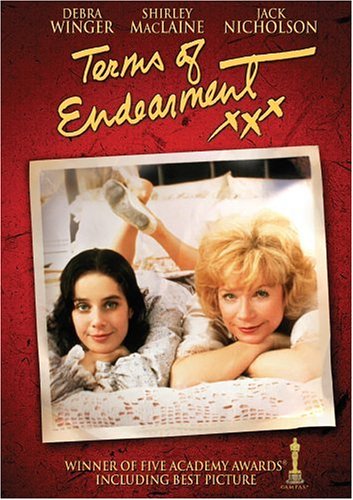
This is how some films can be elevated way beyond their station – for instance, Driving Miss Daisy over Do The Right Thing. One is a simplistic drama about race that hides some sort of message of tolerance in the presumably much more palatable tale of a rude old woman while the other is complex, controversial, realistic and left unresolved like the issues it addresses. Now, Do The Right Thing probably didn’t have the publicists that something like Driving Miss Daisy would have had. And it wasn’t such an easy sell to the Academy that liked Terms of Endearment (the ultimate “give me an Oscar” film) and Out of Africa (Meryl Streep’s most cumbersome accent) only a few years before. It was also a much more complete work – in other words, it couldn’t be broken down into that performance and that clip. Plus, it was stylistically experimental, which never helps. In other words, a film’s quality is second to whether or not that film can be easily marketed and endorsed as Oscar material.

Other big publicist moments include getting Martin Scorsese an Oscar (for The Departed but not for Who’s That Knocking On My Door, Mean Streets, Alice Doesn’t Live Here Anymore, Taxi Driver, Raging Bull, King of Comedy or Goodfellas) and awarding The Lord of the Rings: The Return of the King with thirteen Oscars, not for the film but for the entire trilogy. Bruce Dern has finally got the recognition he deserved - as if only the Oscars can make a worthwhile tribute. The publicist can, hence, create a controversy around the Oscars, create a sense of a wound that needs to be dressed. Ever since Crash won over Brokeback Mountain, the Academy has intentionally sought out the less obvious choice, the more adventurous choice, in an effort not to make the same mistake again, picking The Departed, No Country For Old Men and Slumdog Millionaire over more traditional winners like The Queen, Atonement and The Reader. But it isn’t so much that these choices are better or worse, it is that they were wanted. There was a public pressure to give the Oscar to something less obvious. And it was the publicists that created it from absolutely nothing.

Public pressure created from nothing? Think about the Oscar mistakes as independently and truthfully as you can and then ask yourself whether you really care. Do you really care about Ordinary People beating Raging Bull? Dances With Wolves over Goodfellas? The English Patient over Fargo or Secrets & Lies? Shakespeare in Love over Saving Private Ryan? Crash over Brokeback Mountain? The loser in each case is almost invariably the more loved and the better seen. And also, crucially, the more influential, the Oscar loss never diminishing that film’s acclaim. Ultimately, in terms of film history, the Oscars mean absolutely nothing. Hazarding a guess, more people have seen Duck Soup or King Kong (neither even nominated) but not Cavalcade (which won that year). Out of Africa or Back to the Future. In short, the Oscars are insignificant and have pretty consistently failed to provide an accurate, or even worthwhile, insight into film history as it happens. Who really thinks Argo is the best film of 2012? Really? Deep down. So insignificant are the Oscars that it is the publicists who work to convince you that they matter – otherwise why promote their films to the Academy at all. They make up controversies where there weren’t any, because most people couldn’t care less.

This is not to propose that the Oscars should be scrapped, since the film industry has so few ceremonies that celebrate cinema. But, instead of wasting so much time trying to second guess the Oscars and repeating opinions endorsed by film publicists, wouldn’t it be more worthwhile to think about each film as a finished product and not a horse that has still got a race to run? To debate the merits of a film as a piece of art or entertainment or as the latest innovation without trying to give your arguments some kind of misjudged credence by writing about its awards chances. When, apart from during the Oscars, does anyone let a group of people you don’t know pick nine or ten American or British films at random for them to get excited about?

According to the Academy, the cream of US/UK cinema is 12 Year A Slave, American Hustle, Captain Phillips, Dallas Buyer’s Club, Gravity, Her, Nebraska, Philomena and The Wolf of Wall Street. None of these films are bad (I haven’t yet seen American Hustle, Her and Philomena) and there are at least two great ones, but it isn’t a particularly diverse or interesting list. It would suggest that cinema is healthy but fairly stagnant. These nine films are the fruits of the labour of the publicists, who managed to promote these nine films over edgier, more difficult, more interesting films. The Oscar choices ultimately ignore much more than they reward and they limit cinema to what is most easily marketed.

So ignore them and stop writing about them.


Wednesday, 9 January 2013

REVIEW: Les Miserables (2013)


Les Misérables is an adaptation of the hugely successful stage musical based on Victor Hugo’s massive book of the years following the French Revolution. The film has already been feted with critical success and a lot of awards buzz, much of that based on director Tom Hooper’s decision to record the songs live and often in long close-ups.

The film begins in 1815, 26 years after the start of the French Revolution and a king back on the throne, where Jean Valjean (Hugh Jackman) has been in prison for 19 years for stealing a loaf of bread. He is overseen by the tyrannical Inspector Javert (Russell Crowe). Valjean is paroled and quickly falls back into a life of crime until a kindly bishop (Colm Wilkinson) inspires him to change his life. Valjean breaks his parole and embarks on a just life, doggedly pursued nonetheless by Javert.

The film begins with the massive spectacle of a not entirely convincing CGI ship being pulled to shore by a chain gang. The film’s starts epic but remains largely intimate for the rest of the film, it’s best moments nearly all shot in close-up. However, Hooper seems ambivalent about being too intimate and, not unlike Andrew Dominik’s direction in Killing Them Softly, frequently shows that he can do spectacle. As a result, the camera soars into the air to show a large Parisian cityscape, often when a close-up would have been more revealing. Similarly, the film can be horribly choppy – again, the film’s best moments often come in long drawn-out shots. Valjean jumps from prison to the mountains to a meeting with a parole officer to an attack by the police to the bishop’s stable in barely any time and his subsequent robbery, capture and salvation is rushed despite its narrative significance. The film often comes to resemble a shallow MTV music video more than the intimate and emotional musical that it clearly wants to be.

Victor Hugo’s novel seems like an adaptation nightmare and yet there have been numerous versions of the story, most played straight. Hooper’s film moves through 33 years of French history and makes an attempt to be faithful to the novel’s wide range of incidents and characters. As a result, the film can be very messy and certain shifts in perspective feel quite bumpy, such as when Valjean steps aside and the revolutionary youth Marius (Eddie Redmayne) and the heartbroken Eponine (Samantha Barks) take centre stage. Similarly, there is a problem with the film’s tone, which shifts awkwardly from Anne Hathaway’s damaged, undoubtedly Oscar-worthy rendition of  “I Dreamed A Dream” and Hugh Jackman’s moving “Who Am I?” to the bawdy farce of “Master of the House.” Sasha Baron Cohen and Helena Bonham Carter, playing Monsieur and Madame Thenardier, are undeniably funny, but they go some way towards destroying the film’s seriousness and its emotional impact. While they take up way too much screen time, Amanda Seyfried’s Cosette is too often sidelined. Equally, the plot keeps her at unawares until the very end of the film, where Claire Danes’ Cosette in the admittedly more mundane 1998 version is given a lot more attention and intelligence. Similarly, the ending awkwardly turns around Valjean and Marius hiding Valjean’s past from Cosette, an unnecessary subterfuge that robs Cosette of any real role in the film. In the 1998 version, Claire Danes is told about her past fairly quickly and becomes a co-conspirator rather than a brainless symbol of innocence.

Hooper’s film favours Marius and the rather redundant Eponine and yet is no more attentive to these characters. Eponine is swiftly introduced and dispatched and her singing solo is not very interesting, while Marius is practically unknowable. Here we have an ardent revolutionary and a brave fighter and yet he is not above a glitzy bourgeoisie wedding only days after the violent destruction of his revolution. He returns to his father, a rich man who was previously openly contemptuous of everything that his son stood for. The film ends hopefully with the suggestion that the student’s sacrifice will breed further revolutions in the people and yet Marius, one of the revolution’s staunchest creators, will not take part. Coming out during the current political climate, the film cannot help but bring to mind the Occupy movement yet the film’s finale, a spirited and moving reprise of “Do You Hear The People Sing?”, is as rousing as it is insincere.

Les Misérables is a film that aims for greatness and every now and then that greatness does manage to seep through, yet the overall impression is of an unsubtle and cack handed emotional barrage in which many potentially moving scenes are either botched or overblown. Anne Hathaway and Hugh Jackman are both very good, intermittently able to portray an emotional honesty despite the often too obvious Oscar stage-managing. Indeed, Les Misérables is undeniably powerful, though it seems that oftentimes this is more down to Victor Hugo’s original work than the adaptations of Alain Boublil, Claude-Michel Schönberg or Tom Hooper. Ultimately, the film had a lot of potential but it was too often thwarted by a director who seems more interested in cinematic device than emotional undercurrent, becoming merely a great hits collection of heightened Oscar clips rather than a sustained emotional experience.

Wednesday, 1 August 2012

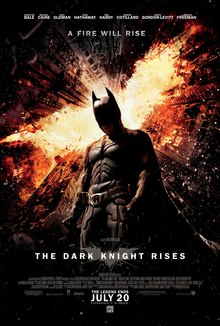
REVIEW: The Dark Knight Rises (2012)


  With The Dark Knight Rises, Christopher Nolan apparently closes his retrospectively named Batman trilogy. Nolan has long been credited with making intelligent blockbusters that engage the mind as well as delivering all the thrills and spectacle that the Hollywood big budget production line demands. With The Dark Knight and Inception, Nolan has managed to create blockbusters that are oftentimes complex and open to many interpretations. Does his fondness for clever action spectacle shine through in The Dark Knight Rises?

  Eight years after the events of The Dark Knight, Bruce Wayne (Christian Bale) has become a Howard Hughes-like recluse. Older and frailer, he has left Gotham City to the care of the police. However, Commissioner Gordon accidentally discovers an underground army, run by Bane (Tom Hardy), which threatens to rise and attack the very fabric of Gotham’s existence.

  Initially, the film is a bit of a mess, hurriedly introducing several new characters, who will all become important later, with several different plot threads which will all tie up in some unlikely ways. The film is slow to find its footing and it is frequently wrong footed as the convoluted plot carries on, making varying degrees of sense as it goes. Rarely does the film manage to find a key scene and stick with it, with several scenes that should be have much more significance being lost in a fast-paced montage of several, much more functional scenes. Even key emotional scenes, like those between Wayne and his butler Alfred (Michael Caine) appear rushed, intended to important context or motivation, disappear from the screen and, often, from memory much too quickly. The film is rarely allowed to breathe and never really recovers from its rushed and often rather hackneyed pacing and storyline, becoming, in the final analysis, a film without a core.

  Much less comprehensible is the film’s final point. Critics, in particular, pride themselves in identifying Nolan as a blockbuster director with smarts, but The Dark Knight Rises is a shallow film. Yes, it references the economic downturn and the culpability of the rich, but they are exactly that – references without any real conclusions being drawn. The same can be said for the film’s politics. One of the more difficult things about The Dark Knight was an ending that advocates lying to the public in order to get the job done, epitomized in this film with the Dent Act. Put simply, Batman and Gordon are lying to the people of Gotham City for their own well-being, a difficult proposition not so long after the WMD controversy. The Dark Knight Rises does ultimately disown the previous film’s conclusion and the Dent Act, but instead it starts talking about the people. Batman frequently talks about the importance of the Batman as a symbol for the downtrodden and about what he must give to the people of Gotham (a typical exchange being – Catwoman: “You don’t owe these people anymore. You’ve given them everything?” Batman: “Not everything. Not yet”; an apparent suggestion that he can still give his life). Similarly, Bane preaches to these same people that Gotham City is theirs for the taking and that they must fulfil their own destiny, one without the lies and falsehoods of Batman and Gordon and the Dent Act. However, where are these people of Gotham and who are they? We never see them (even when Bane’s minions attack innocent people, they are clearly the rich and privileged) and when Bane takes control of Gotham, are we to assume that the people are all collaborators? We never see them rebel against Bane, like the police ultimately do. And if they have joined Bane, then why is it so important for Batman to save them? In fact, the only so-called people of Gotham that we see are two construction workers who are openly colluding with Bane. There is a message somewhere in The Dark Knight Rises, one that is ultimately a humanist one about the importance of looking after each other and helping people in need (this does come across towards the end in a clipped conversation between Batman and Gordon), but it is lost in the flow of (too much) information and by the typically Hollywood need to move along quickly to the next money shot or action sequence. Nolan might be credited with pioneering the clever blockbuster lately, but with The Dark Knight Rises, he has made a rather facile action film that superficially presents real-world problems and fails to cohere around any central point.

  When it wasn’t being silly, The Dark Knight proved surprisingly adept at being exciting. Aside from many well-constructed action sequences, the film was an often stirring and fascinating examination of terrorism, psychosis and widespread hysteria with many scenes that matched the sweep of Michael Mann’s classic Heat with a complexity and intensity that seemed to defy conventional blockbuster rules. The Dark Knight Rises is clearly aware of what made The Dark Knight’s best scenes work so well, but it has given itself too little space to successfully replicate them, with even the film’s action scenes paling in comparison. However, the film is not a total write-off. After all, the performances are still of a high standard, particularly, as with the two previous films, Gary Oldman, the direction is broad and interesting and the cinematography is flawless. But it smacks hopelessly of expectations not met and of the bar having been raised too high.

  The Dark Knight Rises is a messy film that could have used a tighter, tougher script and more consideration as to what the film is supposed to be about. The typical Nolan ambiguous ending really should have worked but feels botched, if only because certain revelations make Batman’s actions seem odd. The film fails ultimately to measure up to The Dark Knight, a film whose flaws were outnumbered by its graces. With too few graces to make it work, The Dark Knight Rises is ultimately beaten down by its flaws, which are often too big to ignore.