Showing posts with label michael fassbender. Show all posts

Monday, 21 December 2015

REVIEW: Macbeth (2015)


‘Macbeth’, the play, is difficult to get right. It isn’t that it’s a bad story – the warning about ‘vaulting ambition’ is, of course, still relevant, the trickery of the witches feels cruel and modern in its existentialism, the endless cycle of suspicion, jealousy and murder. But the play is not flawless. In place of character development, the play favours soliloquys about the tasks to be done – Macbeth too quickly turns to murder where most of us would not. The best film versions of the play are distanced. Orson Welles’ adaptation is Brechtian in how obviously stagey it is, while Kurosawa’s Throne of Blood is heightened beyond all recognition. Justin Kurzel’s new version strikes a balance between modern re-reading and overblown supernatural spectacle and doesn’t come off at all.

Michael Fassbender is a grieving Macbeth, who has just lost his only child (thus robbing the brutal, vengeful ambiguity of Macduff’s line “He has no children” in Act 4, Scene 3). He and his wife, Lady Macbeth (Marion Cotillard) then fall on the plan to assassinate King Duncan (a clueless David Thewlis) and set themselves up as king and queen, taking the idea from some deeply suspicious witches. Once crowned, however, the couple descend into bitterness and madness.

There isn’t much that really works with this new Macbeth. Fassbender plays the character mostly as a raving sociopath – the line ‘full of scorpions is my mind’ has never before sounded so sinister – but it doesn’t hold the film together, getting instead repetitive. We understand that the witches’ prophecy gives hope to a man who has lost an heir, but it isn’t convincing – especially when we see Macbeth putting Macduff’s family, including some youngsters, to the stake. Cotillard has one good scene, where she performs the ‘out damned spot’ soliloquy more as an act of sheer despair than of anything else. This works, but the film doesn’t have the material to make a believable transition from her earlier talk of smashing a baby off a wall (how this line works with a grieving parent is anyone’s guess) to this depression. Equally, Malcolm (Jack Reynor) and Macduff (Sean Harris) are left with little to do.

The battle scenes are admirably grotty and unheroic, but there is a feeling of dullness about them. They resemble too many other films (Braveheart, Gladiator, The Lord of the Rings and Game of Thrones and on and on) and they are not peopled with enough characters that we care about. The orange-tinting of some sequences and the sudden slo-mo don’t help, giving more a feeling of stylistic desperation.

Finally, the film emphasises the play’s secondary subtext about violence begetting violence (a cheap theme that has been used to praise such tawdry films as The Last House on the Left) over the warning about ambition, but it doesn’t do much with it beyond suggesting that all this violence and murder is a bit extreme and offering a silly ending with Fleance. This new adaptation then offers little that we haven’t seen before and many of its chief innovations don’t really work. Fassbender and Cotillard do fine work, but it is hard to credit them, given that they are playing characters that fundamentally do not make sense. By the end of the film, the characters are exhausted and fed up and it is not hard to feel their pain.


Monday, 19 May 2014

REVIEW: Frank (2014)


Is it easier to make a ‘fun’ film than a dark and serious one? And if a filmmaker is good at making a particular type of film, is it a bad thing for them to try something new, to take a risk and make something totally unlike anything that they have done before. As with Paul Thomas Anderson’s The Master – or, at least, as it appears – is the weight of expectation sometimes just too much for a working filmmaker to bear? In my review of What Richard Did, I wrote that Lenny Abrahamson was “Ireland’s most important living filmmaker.” A big statement and, on balance, a deeply unhelpful one – isn’t it better after all to have a range of interesting voices than a single “most important” one? Whether Abrahamson was afraid of being typecast – I suppose directors can be typecast too – as the director of low budget dark dramas or he just wanted to have fun, the result is Frank – one of this year’s most pointless films.

Jon (Domhnall Gleeson) is trying to get into music but he doesn’t really have all that much talent. He ends up joining a band, the unpronounceable Soronprfbs, headed by Frank – a damaged man in a giant papier-mâché head (played by Michael Fassbender). No one else in the band (including Maggie Gyllenhaal, Scoot McNairy, François Civil and Carla Azar) likes Jon very much. They go to Ireland and live in a remote cabin for almost a year in order to record an album. Jon films the process on his phone and his videos become popular on Youtube, which thrusts the band into the limelight. But are they ready for it?

Some have said that Frank is the kind of film that half the audience will love and the other half will hate, though that is overly simplistic. Some certainly seem to love it and others will certainly hate it, but my own reaction was merely initial disappointment followed by boredom. For me, it was deeply uninteresting, it wasn’t funny or engaging. It is one of those heavily ironic films that seem to enjoy their own company – not unlike Wes Anderson films – and smugly disregard the audience, secure in the knowledge that someone somewhere will love it and be vocal enough about it to make it a cult film. Frank is one of those films that will be trendy and might even be talked about in almost religious terms twenty years from now – like The Big Lebowski is today. All the naysayers who saw it when it came out and who didn’t get it will be stuck with some kind of old conservative label – their reviews quoted ironically in the same way that Pauline Kael’s negative review of Star Wars is now a T-shirt. All of that sounds bitter so suffice it to say that Frank is one of those films that has nothing much to say about anything, doesn’t go anywhere interesting and doesn’t bother to make you care.

Those who will love Frank have probably already made up their minds about going to see it, though I wonder if Lenny Abrahamson was the deciding factor for many of them. It is probably just as well because there is very little of what made Abrahamson’s previous work so good. There are no interesting characters. The comedy falls flat and the drama is only semi-successful at the very end of the film, in which the re-formed Sonorprfbs play one last song as Jon looks on. It is a decent conclusion to a film that spent the previous ninety minutes wondering around, looking for an idea and a point. Ultimately, the film is about how we tend to deify artists, how fandom (and social media) can exaggerate aspects of an artist’s life and work beyond all proportion – Kurt Cobain is a good example as is (I suppose) calling Lenny Abrahamson “Ireland’s most important living filmmaker.” So Frank, then, is an intentionally poor film designed to make Abrahamson’s life a little easier. Maybe. Probably not. But Frank leaves you with very little else to think about.

For me, music films don’t tend to work. You probably have to be in a band or at least have some kind of ambition in that direction to fully appreciate Almost Famous (its just OK) or that other terrible film now gaining a cult following (these days films don’t wait twenty years to become rediscovered gems) Scott Pilgrim vs. The World. Frank has nothing interesting in it and it isn’t as funny or as emotionally involving as it might think it is – assuming any thought went into it whatsoever. Taken as a whole, it is just gibberish, unfocused and annoying. It isn’t a film I hate, it’s just one that did absolutely nothing for me. Which is a pity because I really like Lenny Abrahamson’s other films – whether they are millstones or not.


Wednesday, 29 January 2014

ARTICLE: The Oscars - One Big Whinge


I find it very hard to care about the Oscars. And it isn’t particularly because they make bad decisions (they do, more often than not) or because they are so highly considered (they are, but just why is never clear). It is because they are unavoidable.

Level-headed film critics (few of those) always write and talk about the Oscars when they are closing in, always predicting that this film and this performance will make the nominations or get the award. Most reviews end up sounding the same, with a typical review of, say, 12 Years A Slave merely ending up a list of the Oscars that the critic thinks it will win. Lupita Nyong’o and Chiwetel Ejiofor are not so much acting as preparing acceptance speeches. And why not since the film is so geared to the Oscars with its For Your Consideration trailer of the people in the film that you might want to remember later to the long scenes of Oscar-friendly clips - Chiwetel Ejiofor talking about freedom and hope and Michael Fassbender going all method as a drunken lout, who is really only falling over and shouting.

Meanwhile, Lupita Nyong’o, who delivers a performance of some power and depth, is written about only as a newcomer who is sure to hit it off with the Academy, as if it wasn’t a performance in a film at all, but a carefully calculated career move – see also Anne Hathaway in Les Miserables. The same went for Barkhad Abdi’s performance in Captain Phillips, which had everyone writing about Oscars. And, to tell the truth, having seen both films before the hype really started to get moving, neither performance was particularly good. And certainly not the Top 5 in their category for the year, although Best Supporting Actress has had a fairly limited field in recent years.

It all reeks of a certain degree of stage-managing. Having recently read ‘Manufacturing Consent’ by Noam Chomsky and Edward S. Herman, it is hard not to get a sense that some publicist somewhere wrote that Lupita Nyong’o and Barkhad Abdi (and 12 Years A Slave, Michael Fassbender, Leonardo DiCaprio, Jonah Hill, Cate Blanchett and Sally Hawkins to name a few others) were deserving of Oscar attention. The first critics, with little to go on but the film’s press materials and their own opinions, which seem to be valued less and less in critics these days, end up rewriting what the publicists say, creating word-of-mouth about the very performances handpicked by the publicists and elevating them to the kind of attention that gets them the nominations. And the Academy takes note because they’ve made bad decisions in the past that has hurt their reputation and are constantly under scrutiny to pick a winner. Suddenly an average-to-good performance becomes exalted and it is impossible to watch the film without some awareness that the thing to look out for is Lupita Nyong’o, Barkhad Abdi, Michael Fassbender, Leonardo DiCaprio, Jonah Hill, Cate Blanchett or Sally Hawkins. Which means that the Oscars become predictable at a stage in the year when everything should be absolutely up in the air. Meanwhile, something like 12 Years A Slave (decent, not great) becomes ‘one of the greatest films ever made’ and a must-see, promoted blindly by critics trying to get in on the hype before there even is a hype, and destined to slowly but surely fall from grace until it becomes known as just another bad Oscar decision. Which, I believe, is detrimental to the film and unfair as well as being a total waste of time.

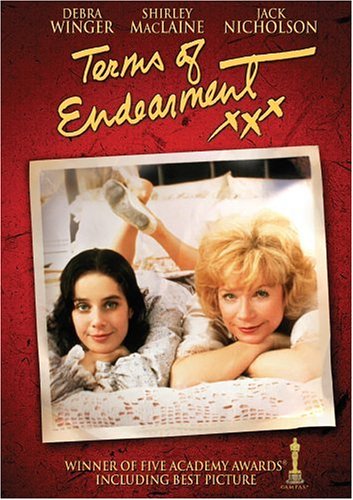
This is how some films can be elevated way beyond their station – for instance, Driving Miss Daisy over Do The Right Thing. One is a simplistic drama about race that hides some sort of message of tolerance in the presumably much more palatable tale of a rude old woman while the other is complex, controversial, realistic and left unresolved like the issues it addresses. Now, Do The Right Thing probably didn’t have the publicists that something like Driving Miss Daisy would have had. And it wasn’t such an easy sell to the Academy that liked Terms of Endearment (the ultimate “give me an Oscar” film) and Out of Africa (Meryl Streep’s most cumbersome accent) only a few years before. It was also a much more complete work – in other words, it couldn’t be broken down into that performance and that clip. Plus, it was stylistically experimental, which never helps. In other words, a film’s quality is second to whether or not that film can be easily marketed and endorsed as Oscar material.

Other big publicist moments include getting Martin Scorsese an Oscar (for The Departed but not for Who’s That Knocking On My Door, Mean Streets, Alice Doesn’t Live Here Anymore, Taxi Driver, Raging Bull, King of Comedy or Goodfellas) and awarding The Lord of the Rings: The Return of the King with thirteen Oscars, not for the film but for the entire trilogy. Bruce Dern has finally got the recognition he deserved - as if only the Oscars can make a worthwhile tribute. The publicist can, hence, create a controversy around the Oscars, create a sense of a wound that needs to be dressed. Ever since Crash won over Brokeback Mountain, the Academy has intentionally sought out the less obvious choice, the more adventurous choice, in an effort not to make the same mistake again, picking The Departed, No Country For Old Men and Slumdog Millionaire over more traditional winners like The Queen, Atonement and The Reader. But it isn’t so much that these choices are better or worse, it is that they were wanted. There was a public pressure to give the Oscar to something less obvious. And it was the publicists that created it from absolutely nothing.

Public pressure created from nothing? Think about the Oscar mistakes as independently and truthfully as you can and then ask yourself whether you really care. Do you really care about Ordinary People beating Raging Bull? Dances With Wolves over Goodfellas? The English Patient over Fargo or Secrets & Lies? Shakespeare in Love over Saving Private Ryan? Crash over Brokeback Mountain? The loser in each case is almost invariably the more loved and the better seen. And also, crucially, the more influential, the Oscar loss never diminishing that film’s acclaim. Ultimately, in terms of film history, the Oscars mean absolutely nothing. Hazarding a guess, more people have seen Duck Soup or King Kong (neither even nominated) but not Cavalcade (which won that year). Out of Africa or Back to the Future. In short, the Oscars are insignificant and have pretty consistently failed to provide an accurate, or even worthwhile, insight into film history as it happens. Who really thinks Argo is the best film of 2012? Really? Deep down. So insignificant are the Oscars that it is the publicists who work to convince you that they matter – otherwise why promote their films to the Academy at all. They make up controversies where there weren’t any, because most people couldn’t care less.

This is not to propose that the Oscars should be scrapped, since the film industry has so few ceremonies that celebrate cinema. But, instead of wasting so much time trying to second guess the Oscars and repeating opinions endorsed by film publicists, wouldn’t it be more worthwhile to think about each film as a finished product and not a horse that has still got a race to run? To debate the merits of a film as a piece of art or entertainment or as the latest innovation without trying to give your arguments some kind of misjudged credence by writing about its awards chances. When, apart from during the Oscars, does anyone let a group of people you don’t know pick nine or ten American or British films at random for them to get excited about?

According to the Academy, the cream of US/UK cinema is 12 Year A Slave, American Hustle, Captain Phillips, Dallas Buyer’s Club, Gravity, Her, Nebraska, Philomena and The Wolf of Wall Street. None of these films are bad (I haven’t yet seen American Hustle, Her and Philomena) and there are at least two great ones, but it isn’t a particularly diverse or interesting list. It would suggest that cinema is healthy but fairly stagnant. These nine films are the fruits of the labour of the publicists, who managed to promote these nine films over edgier, more difficult, more interesting films. The Oscar choices ultimately ignore much more than they reward and they limit cinema to what is most easily marketed.

So ignore them and stop writing about them.


Wednesday, 8 January 2014

REVIEW: 12 Years A Slave (2014)


12 Years A Slave is the third feature film from artist turned director Steve McQueen, who is developing into a surprisingly mainstream filmmaker, following the somewhat esoteric Hunger and the challenging yet disappointingly conventional Shame. 12 Years A Slave is initially off-putting, being too much of an Oscar-friendly drama to fit easily alongside McQueen’s other work. In fact, it is when one forgets McQueen’s involvement that the film begins to work in its own right, an odd example of an auteur’s disappearance.

Based on a true story, the film follows Solomon Northup (Chiwetel Ejiofor), a free man in 1841 New York, who is kidnapped and sold into slavery. Over the next twelve years, he is passed between a variety of masters, learning along the way to keep his head down and tell no one about his previous situation. Northup thus leads a dangerous and precarious existence at the hands of white masters in the Deep South.

Steve McQueen’s films have always stridden a thin line between the art house and the multiplex. Hunger and Shame were both bleak and muted in a rather minimalist way and yet both remain fairly conventional in terms of story arcs. Shame fit neatly into a three-act structure and even offered rather simplistic explanations for its protagonist’s urges. It is difficult to see 12 Years A Slave as anything other than a Hollywood drama – something that is not helped by one traditional crane shot’s dodgy CGI landscape or by a few rather manipulative scenes. McQueen’s trademark long takes are still present, though they are much shorter and more embedded within the film’s storyline. Aside from some extreme violence, which is justified for the purposes of realism but which nonetheless represent a breaking from the tradition of the Hollywood drama, 12 Years A Slave is almost entirely conventional. The star cameos (Paul Giamatti, Paul Dano, Benedict Cumberbatch, Michael Fassbender and Brad Pitt) are often off-putting, their sudden appearance taking you out of the film just when you were beginning not to notice the mechanics of the screenplay and direction.

That said, the film's moral complexity confronts the audience, forcing them to question their own feelings about the action onscreen, suggesting that American slavery was not a battle between innocent slaves and the evil white slave owners. Benedict Cumberbatch's Ford is a less obviously loathsome character than Fassbender's Epps - but then he is all the worse for his moralising does not extend as far as the question of slavery. As compassionate as he is, he is happy to turn a blind eye to what cruelty and suffering when he needs to. Steve McQueen is too good a filmmaker to let Ford off the hook, but neither does he openly berate him, instead showing the more corrosive side to the evil of slavery. Meanwhile, other slaves hold the whips and openly collude with their evil bosses. As well as this, the film offers a much more violent and bleak representation of American slavery yet seen, McQueen refusing to look away in order to represent what slavery is like without any respite for the audience. As a result, the film can be depressing and suffocating but then what true representation of slavery wouldn't be?

The film’s primary focus is on how Solomon Northup survives his ordeal and the alterations in his personality that are required to do this. Initially, Northup is outraged and indignant. Soon realizing that his past could be dangerous to him, he must act like a normal slave and not allow his masters to see him as anything different. He is thrown into a series of morally compromising situations and is constantly in danger of losing any sense of who he was. The film also focuses on his despair and his decision not to give up in the face of his apparently hopeless future. The film requires a strong performance to bring across this character’s duality and it has one in Ejiofor’s work, which avoids big Oscar-friendly histrionics (where other actors in the film itself may not) in favour of a quiet pain and anguish that is all the more believable. These themes coupled with a great central performance ensures that 12 Years A Slave succeeds both as a drama designed for mass entertainment and as something more interesting.

It is interesting to note that, in Django Unchained, Tarantino tries to develop a similar idea of the adapting that Django must overcome in order to survive – though he fails since he is much more interested in film references, long bouts of monologue and exploding bodies. Conversely, it is difficult to watch 12 Years A Slave and not wish for the kind of bloody satisfaction so gleefully though tediously doled out by Tarantino, although McQueen makes short shrift of the idea of violent revolution all too quickly and, it has to be said, convincingly. It is difficult to watch 12 Years A Slave so soon after Django Unchained – especially since one early scene in the former looks identical in terms of lighting and framing to the latter. 12 Years A Slave works in some ways as a riposte of Django Unchained, particularly in its much more honest focus on the victims of slavery, in their much more three-dimensional characterization and in the fact that Solomon Northup survives thanks to his own skills and not through the advice and assistance of a nice white man.

As a drama, 12 Years A Slave is most effective in its quiet moments, McQueen showing a flair for the more subtle drama of single scenes as well as in the more uncompromising scenes of institutional racism and brutality. As a whole, 12 Years A Slave moves through a variety of registers usually under the influence of its performers. Fassbender, Dano and Sarah Paulson overplay their scenes and the film seems over the top when they are centre stage, while it plays best when Ejiofor, Lupita Nyong’o and Adepero Oduye are given the space to act. Since it is tied so closely to its performances, 12 Years A Slave ultimately succeeds or fails on the quality of the work of its actors in individual scenes, making it a flawed and overblown yet effective and moving drama.


Tuesday, 21 February 2012

REVIEW: A Dangerous Method (2012)

  David Cronenberg’s work is better known for exploding, rather than talking, heads, so his new film, A Dangerous Method, might be hard for some of his fans to take. However, it still remains the work of a great director working with a great script and is Cronenberg’s best film since Crash.

  The film largely follows Carl Jung (Michael Fassbender) from the years 1902 to 1913, a psychologist who is trying out the ‘talking cure’ invented by Sigmund Freud (Viggo Mortensen). His most responsive patient is Sabina Spielrein (Keira Knightley), an intelligent young woman who wants to study to be a psychiatrist, but who suffers from hysteria. After making some progress, Jung consults Freud about the case and a rewarding friendship develops in which Jung joins Freud as the two major figureheads of psychoanalysis. However, Freud is rather conservative about the direction that their research should take, fearful of giving his enemies any ammunition with which to attack their research. Angered at Freud’s caution, Jung starts to develop a new methodology for psychoanalysis, which might destroy both the movement and his friendship with Freud.

  An interest in psychology and the early days of psychoanalysis might help, as A Dangerous Method is a very wordy film with a brilliantly literate script from Christopher Hampton (Dangerous Liaisons), which analyses the philosophical and political contexts of psychoanalysis. The key scenes in the film, as well as the most fascinating, are merely conversations between Freud and Jung about the minutiae and the direction of their research. Far from dramatic or rhetorical, these scenes are primarily educational, being a biopic of the early days of psychoanalysis.

  However, the film is far from a lecture and is rewarding in other ways. The film begins with an expertly filmed carriage race to a psychiatric ward as Spielrein suffers a bout of hysteria. Though her star persona is initially off-putting (just as Daniel Radcliffe’s was in The Woman in Black), Keira Knightley turns in a convincing and unsettling performance as a young hysteric. Her chin protrudes to an amazing degree, becoming a physical manifestation of a psychological activity, one of Cronenberg’s trademarks. In all, though it is a role that Hampton and Cronenberg seem to lose track of during the film’s middle section, Knightley’s performance is surprisingly good and a bit of a risk. Alongside Knightley, Fassbender and Mortensen give fine performances, managing to convey stuffy and bickering psychologists with a huge amount of integrity and a nicely judged amount of humour. Fassbender’s Jung never descends into silliness, even though it is a role that seemed destined to do just that. Even when he reveals an interest in telepathy and soothsaying, it is presented as a wish to create a scientific basis to mysticism, rather than a belief in superstition. Vincent Cassel, in a small role as hedonist Otto Gross, is very good too.

  The film is also brilliantly directed, with Cronenberg fully aware of when to move the camera and when to keep still and let the actors do the work. He shows a certain subtlety that is not often accredited to the director of Shivers, Rabid and The Brood. A Dangerous Method might even be his most successful break from the body horror subgenre that he helped create – especially since Spider was a film that didn’t seem to know where it wanted to go. Seemingly incidental moments play like some of his best work, such as when he lingers on a shot of a bay window to indicate Jung’s desire for the person inside without the grounding of a shot of Jung looking at it. Or when Jung describes a dream to Freud during a voyage to the USA and Cronenberg keeps the camera distant and the setting just fantastical enough to make us wonder if we are watching Jung describe the dream or the dream itself. Both moments seem to have grounding in psychoanalysis itself. Cronenberg knows when you direct like a dramatist and when to direct like an intellectual, a differentiation that many arthouse directors seem to be unable to make.

  However, despite Cronenberg, Fassbender, Mortensen and, yes, even Knightley, the film’s true calling card is Hampton’s writing, which manages to make a wordy script endlessly fascinating. It is probably as much Hampton’s skill as Cronenberg’s that A Dangerous Method does not feel the slightest bit claustrophobic. Despite a few story hiccups in the mid-section and an awkward ending where Jung seems to predict World War I, A Dangerous Method manages to be a film that is both intellectually and emotionally stimulating.

Tuesday, 31 January 2012

REVIEW: Shame (2012)

  Shame is Steve McQueen and Michael Fassbender’s follow-up to Hunger. While their earlier film looked at political and/or religious fundamentalism, Shame looks at another form of obsession – sex addiction.
  Brandon (Michael Fassbender) is a sex addict, living in New York in a bland, minimalist apartment, with a high-powered though anonymous job. Fearful of emotional attachments of any kind, Brandon prefers one-night stands, porn and sex with prostitutes. When his troubled sister Sissy (Carey Mulligan) comes uninvited to stay in his apartment, Brandon finds that his solo, emotion-free lifestyle is becoming harder and harder to maintain.

  When The Long Weekend, Billy Wilder’s still-disturbing 1945 film about alcoholism, came out the figure of the helpless drunk was merely a figure of fun. The fact that alcoholism might be a disease was not considered. Shame looks set to do the same thing for sex addiction. McQueen and Fassbender’s main aim is to look at sex addiction seriously and expose it as the disease that it is, making Shame a film that is trying to raise awareness. Aside from that, McQueen maintains a level of subtlety throughout the film, refusing to judge Brandon or to make him entirely sympathetic. The film is also open to a number of interpretations. Is Brandon sex addiction a result of an earlier childhood trauma or is it merely a figment of a wider greed inside the current capitalist system. Shame is, by its very nature, an enigmatic film, but its refusal to adopt a stance, any stance, makes it a somewhat unrewarding film.

  The major problem with Shame is that it suffers from a very conventional storyline, one of entrapment and a bid for escape. Brandon is clearly trapped by his inability to communicate with people on an emotional level. Conversations with his work colleagues are nothing but macho bravura and when he tries to develop a relationship with a woman, he is almost hopelessly shy and awkward. The arrival of his sister marks the beginning of Brandon’s attempts to nurture relationships that are not based on sex, with the obstacles being his shyness, inexperience, his addiction and the shame and self-loathing that soon follows any hedonistic fulfilment. Ultimately, Brandon may learn and grow, though the film leaves it up to its audience to decide whether Brandon really has overcome his addiction or not.

  Due to the film’s conventionality, it is difficult to be surprised or swept up by anything that happens in the film. Scenes that should be moving can be seen coming from a mile away, while the more tabloid-baiting ‘shocking’ sequences are tamed somewhat by a narrative dedicated to explaining why they are so necessary. Other moments suffer from McQueen’s own artistic preoccupations, not unlike Hunger. McQueen employs several techniques, ones that were new in the 1960s, but which are quite transparent today, such as remaining focussed on Brandon’s tangled bed linen long after he has left the frame. The film is also full of slow-panning shots following Brandon, usually naked, as he wanders around his apartment. While they may do something for the film’s tone and pacing, they feel like rather mechanical shots put in only because of a pre-ordained aesthetic. In fact, McQueen is much more able during the more apparently spontaneous moments such as a beautiful and cinematic long take showing Brandon running down New York streets at night or a fixed shot of a restaurant date between Brandon and Marianne (Nicole Beharie), recalling a similar sixteen-minute take from Hunger, both of which work because they do not feel so controlled.

  Though the performances are undeniably very good with Fassbender obviously a standout, the film itself fails to cover any new ground or to be surprising, shocking or particularly moving. McQueen’s tendency towards clinical and enigmatic filmmaking seems a poor fit for both the subject matter and the storyline. Though it is well made and sometimes beautiful, Shame is a well-intentioned and convincing film that just doesn’t manage to be as memorable or thought provoking as it should have been.